

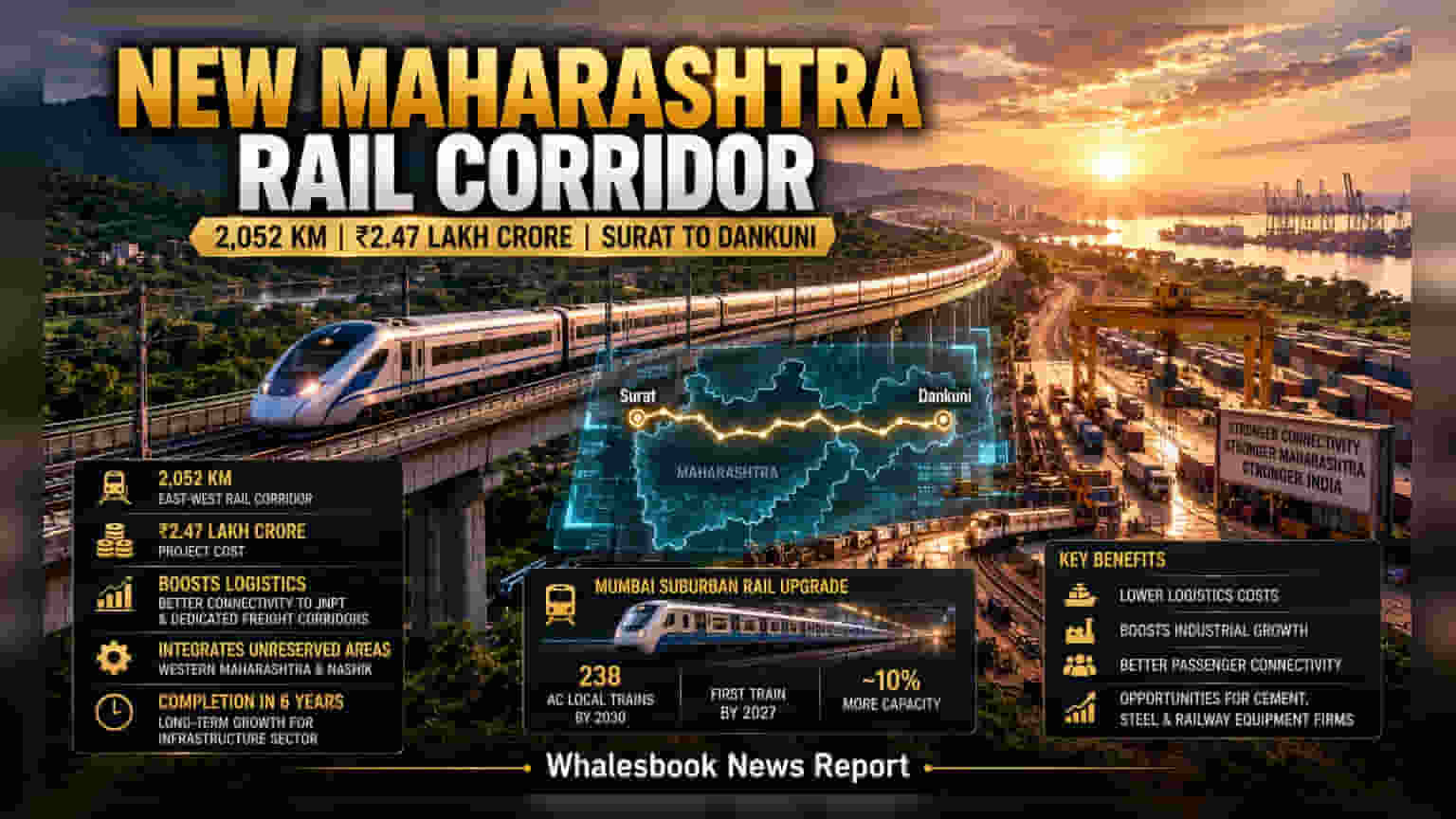
The government has unveiled plans for a massive 2,052 km East-West rail corridor connecting Surat and Dankuni. With an investment of ₹2.47 lakh crore, the project aims to improve logistics and industrial connectivity, potentially impacting construction, engineering, and railway equipment sectors.
The Ministry of Railways has announced a significant infrastructure project, launching a new East-West rail corridor stretching approximately 2,052 km from Surat to Dankuni. This project, estimated to cost ₹2.47 lakh crore, is designed to integrate unserved areas in western Maharashtra and Nashik into the national rail network. By creating a dedicated path for both freight and passenger services, the government aims to enhance the structural foundation for industrial growth across the region.
Boosting Logistics and Port Efficiency
A primary goal of this corridor is to improve logistics connectivity to the Jawaharlal Nehru Port Trust (JNPT). The government expects that linking this new infrastructure with the existing Dedicated Freight Corridors will streamline cargo movement to northern and central India. For industries reliant on the port, this initiative is intended to lower transportation costs and improve the speed of cargo transit, potentially supporting higher industrial activity in the Mumbai metropolitan region and its surrounding hinterlands.
Mumbai Suburban Rail Upgrades
Beyond the long-distance corridor, the Ministry has set a plan to transform Mumbai’s suburban rail network. The roadmap includes an aggressive target to introduce 238 next-generation air-conditioned local trains by 2030, with the first expected to arrive by 2027. These efforts, which also involve upgrading signaling systems, are aimed at increasing capacity by approximately 10 percent to handle rising passenger traffic. This modernization drive relies on manufacturing support from the Integral Coach Factory in Chennai.
Implications for Investors and Sector Trends
For investors, large-scale infrastructure projects like this East-West corridor typically carry long-term implications for the capital goods, construction, and railway equipment sectors. Companies involved in civil engineering, cement, steel, and rolling stock manufacturing often see increased order book visibility during such infrastructure pushes. The project is scheduled for completion over the next six years, suggesting a long runway for government spending in this space.
However, investors should remain aware of the common risks associated with large infrastructure development in India. These include the risk of delays in project execution, land acquisition challenges, and potential cost overruns, which are common in multi-year, multi-state projects. While the long-term goal is to lower logistics costs, the immediate focus for the market will be on how quickly contracts are awarded and the pace of actual on-ground work.
The next important developments for tracking this project will be the release of specific tender documents, the timeline for contract awards, and updates on land acquisition progress. These milestones will provide a clearer picture of the execution timeline and the potential beneficiaries among private engineering and construction firms.