

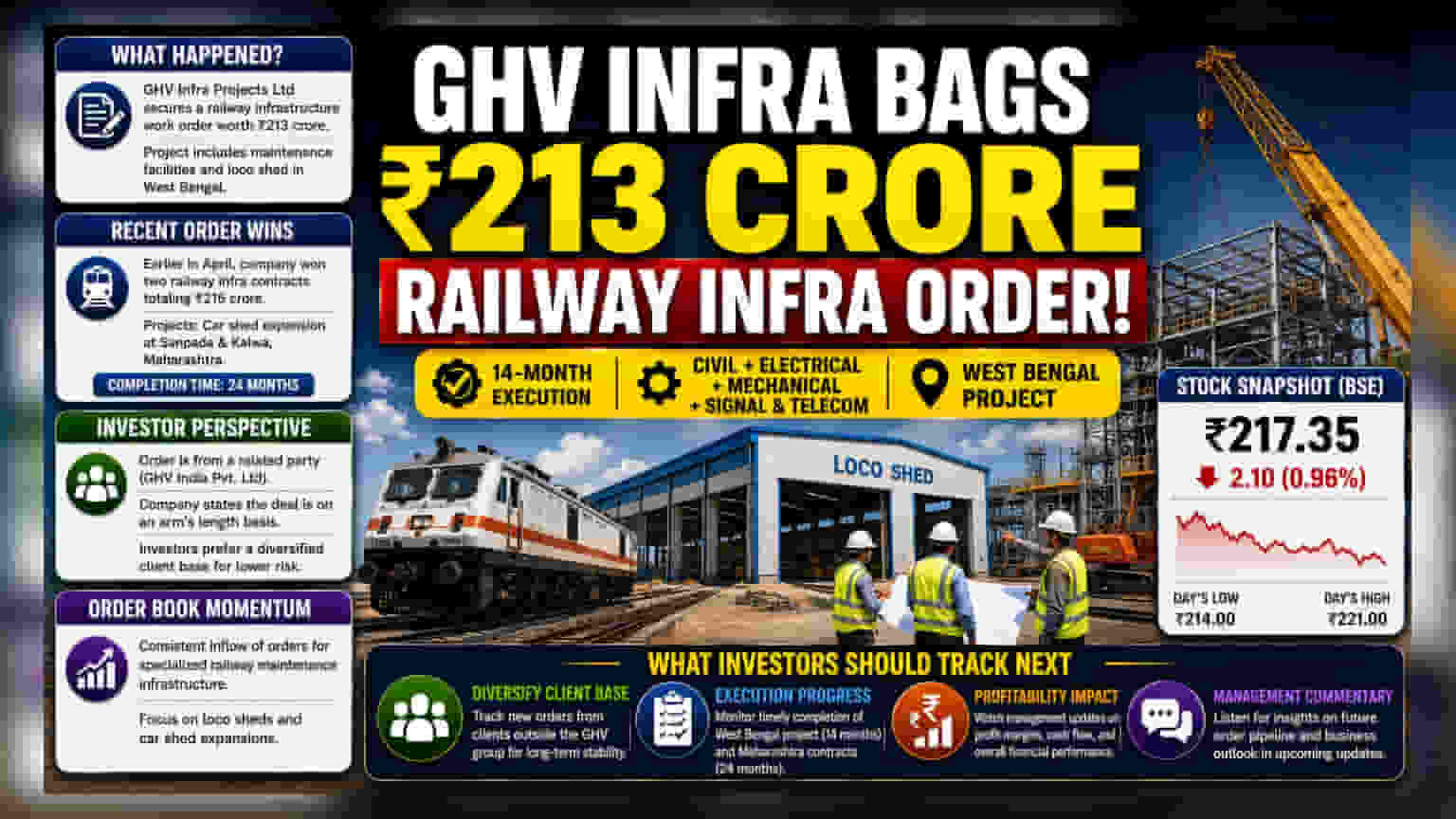
GHV Infra Projects has secured a ₹213 crore railway infrastructure contract in West Bengal, scheduled for completion in 14 months. While the order expands the firm's project pipeline, investors often closely examine the nature of related-party transactions. Shares closed lower by 0.96% on Monday.
What Happened
GHV Infra Projects Ltd has secured a railway infrastructure work order valued at approximately ₹213 crore. The contract, announced on Monday, covers a wide range of services including civil, electrical, mechanical, and signal & telecom works. The project is located in West Bengal and involves the development of maintenance facilities and the construction of a loco shed. The company has a 14-month timeframe to complete the project from its start date.
The Order And Business Context
The company has reported a consistent flow of orders from GHV (India) Private Limited, which is the awarding entity for this project. Earlier in April, the company won two separate railway infrastructure contracts totaling ₹216 crore for car shed expansion in Sanpada and Kalwa, Maharashtra. These previous contracts have a 24-month completion timeline. These wins indicate that the company is focusing on specialized railway maintenance infrastructure.
How Investors May View This
Investors often look closely at the source of new business. In this case, the awarding entity is a related party. While the company stated that this transaction is conducted on an arm’s length basis—meaning the terms are meant to be consistent with deals between unrelated parties—reliance on related-party contracts is a standard point of review for shareholders. Investors typically prefer to see a mix of orders from diverse, independent clients to reduce the risk of relying too heavily on one business partner for revenue.
Stock Performance Snapshot
On Monday, shares of GHV Infra Projects Ltd traded on the Bombay Stock Exchange (BSE), closing at ₹217.35. The stock recorded a minor decline of ₹2.10, or 0.96%, during the session. While the order book is expanding, the final financial benefit to shareholders will depend on the company’s ability to execute these projects on time and within the estimated budget.
What Investors Should Track Next
The primary monitorable for investors is the company’s ability to secure future projects from clients outside of the GHV group. Diversifying the client base is important for long-term business stability. Additionally, monitoring the execution progress of both the newly announced West Bengal project and the previously awarded Maharashtra contracts will be essential. Investors may also track management commentary in future earnings updates to see how these new infrastructure commitments affect the company's profit margins and cash flow.