

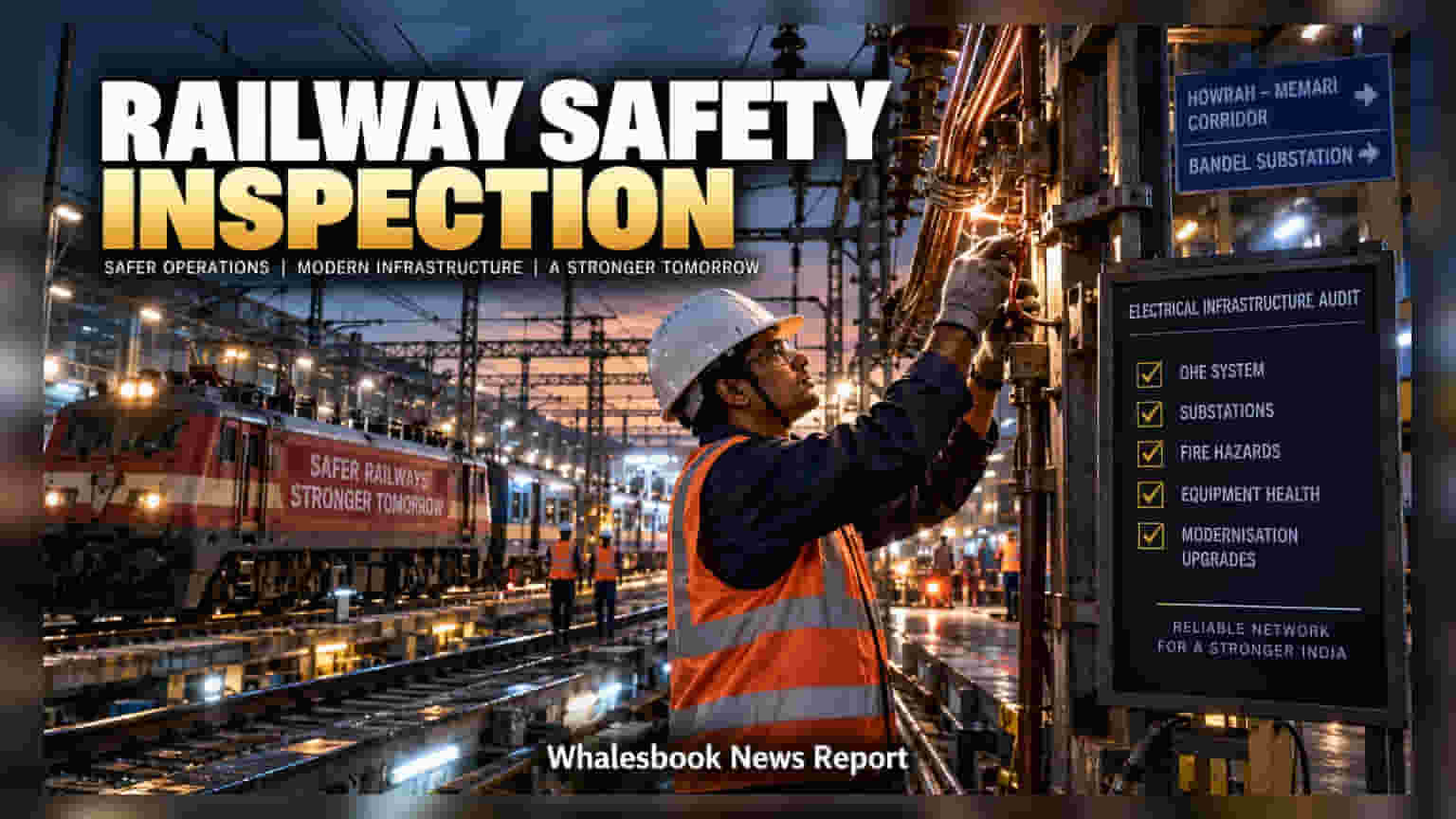
The Railway Board has begun a safety audit of Eastern Railway’s electrical assets following concerns over equipment failures and fire risks. The zone is accelerating a shift to Head On Generation (HOG) technology and replacing aging wires to cut diesel costs and improve capacity. This push highlights the ongoing national focus on rail infrastructure modernization, which often drives demand for private sector equipment and technical services.
The Railway Board has launched a rigorous technical audit of Eastern Railway’s electrical infrastructure to address frequent service disruptions caused by overhead equipment failures. The inspection, led by Additional Member Ramendra Kumar Tewari, focused on critical transit points such as the Howrah-Memari corridor and the Bandel substation. The primary goal is to identify fire hazards and equipment degradation that have historically affected operational reliability in the region.
Beyond safety inspections, the zonal administration is aggressively pursuing a technical modernization strategy. A major focus is the transition from End On Generation (EOG) to Head On Generation (HOG) technology. Currently, many trains use noise-heavy, diesel-powered generator cars to supply electricity for lighting and air conditioning. Under the HOG system, coaches draw power directly from the train’s overhead lines. By removing the need for generator cars, the railway aims to slash diesel consumption and carbon emissions, while simultaneously increasing passenger capacity by replacing generator coaches with additional seating cars.
For the Indian rail sector, this modernization effort reflects a broader, ongoing capital expenditure cycle. While Eastern Railway is a government-operated entity, these initiatives create a recurring demand for private sector suppliers in the railway equipment, electrification, and civil construction space. Companies specializing in substation equipment, power management systems, and specialized catenary wires often benefit from these systemic upgrades. The push to modernize, which includes replacing aging contact wires and building technical competency hubs, supports a steady flow of maintenance and upgrade contracts.
However, the primary risk for the network remains the challenge of execution. Upgrading infrastructure without disrupting one of the world's busiest railway networks is a complex task. Investors typically monitor how efficiently the Railways manages these timelines and the pace at which tenders for materials and technical services are issued. The next important update for the industry will be the scope of the material procurement and the speed at which these electrical upgrades are commissioned across other high-traffic zones.