

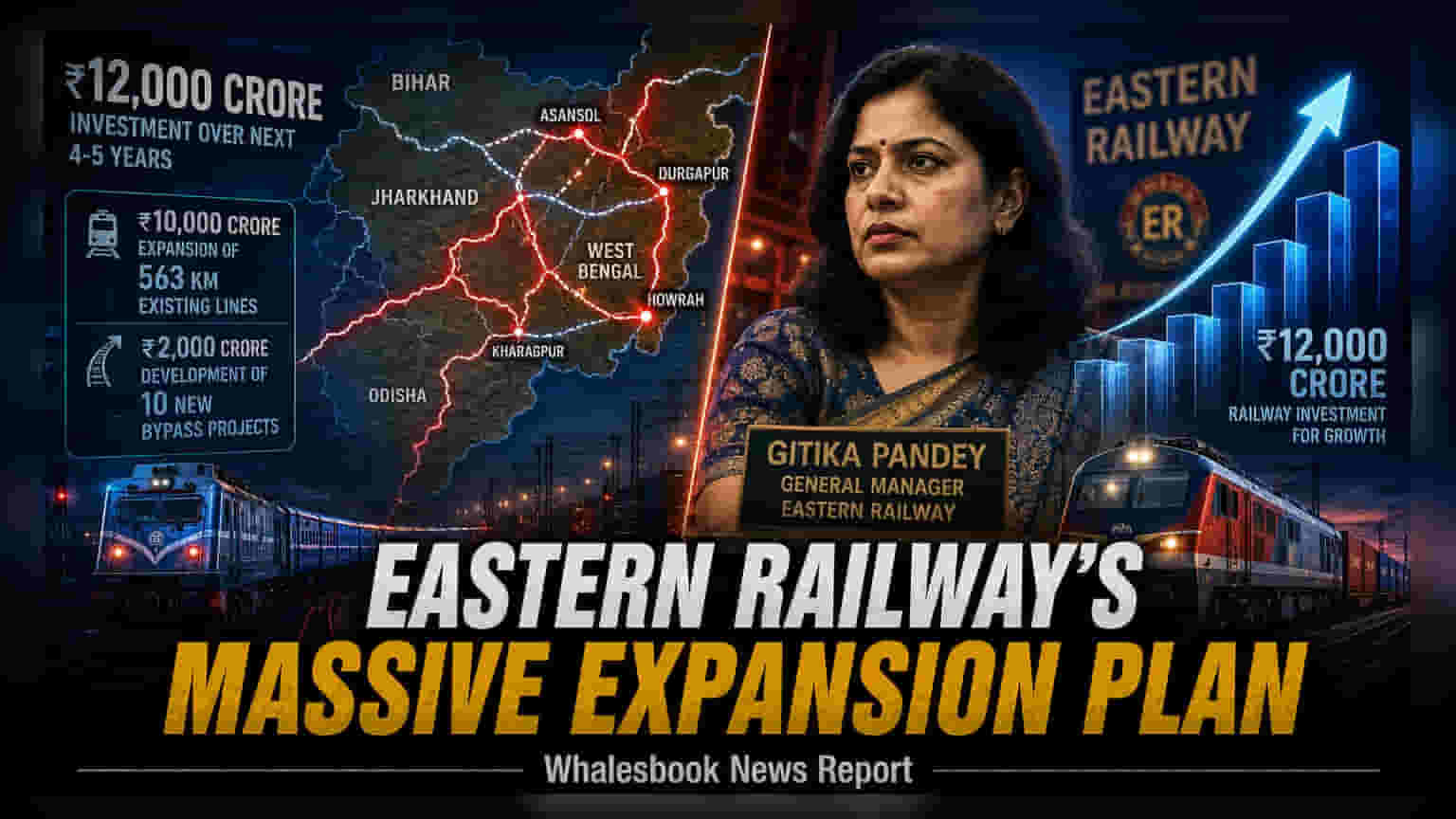
Eastern Railway has announced a ₹12,000 crore expansion project to be completed over the next five years. The plan focuses on enhancing network capacity through new line expansions and bypasses to improve logistics. While the entity is government-run, this significant spending creates potential business opportunities for infrastructure, construction, and logistics firms that participate in the railway supply chain.
Eastern Railway (ER) is set to initiate a major capacity expansion project, earmarking ₹12,000 crore for infrastructure development over the next four to five years. The announcement was made by General Manager Gitika Pandey at the CII Rail Synergy & Bengal MSME Vendor Connect Summit 2026, highlighting a strategic move to address congestion and improve freight movement across the network.
Infrastructure Spending Breakdown
The bulk of the allocated capital, approximately ₹10,000 crore, is dedicated to expanding 563 kilometers of existing railway lines. This is a critical step in increasing line capacity, which allows for more trains and smoother traffic flow. Additionally, ₹2,000 crore has been set aside for the development of 10 new bypass projects. Bypasses are essential in railway networks because they allow freight trains to avoid congested city terminals, thereby reducing travel time and improving overall logistics efficiency.
Economic and Industrial Impact
The initiative is designed to support broader national economic goals by reducing logistics costs for the manufacturing sector. When railway connectivity improves, the cost and time required to transport goods drop, which can help businesses operate more competitively. During the summit, officials emphasized that a robust rail network is a primary driver of economic growth. The summit also touched on the role of the MSME (Micro, Small, and Medium Enterprises) sector, encouraging smaller vendors to innovate and contribute to the railway's infrastructure needs.
What This Means for Market Participants
While Eastern Railway is a government-operated entity and not a listed company, its massive capital spending has a clear ripple effect on the private sector. Investors and market observers often track such announcements because they generate demand for several key industries:
- Infrastructure and EPC Companies: Large railway projects require engineering, procurement, and construction (EPC) support. Companies involved in track laying, electrification, and civil construction often see increased order books when such state-led spending is announced.
- Raw Material Suppliers: Sustained railway expansion drives demand for cement, steel, and other construction materials.
- Logistics and Supply Chain: Improved rail infrastructure helps logistics companies optimize their transportation networks, potentially improving their operational efficiency.
Potential Risks and Challenges
Investors monitoring this sector should remain aware of the typical challenges associated with large-scale railway infrastructure projects in India. These include the risk of execution delays, often caused by the complexity of land acquisition, obtaining regulatory and environmental clearances, and coordinating construction in high-density operational zones without causing massive traffic disruptions. Furthermore, the project's success depends on consistent funding from the central government and efficient budget utilization over the five-year period.
The next important developments for market participants to track will be the release of specific tenders related to these projects and the timelines set for the completion of the line expansions and bypasses.