 Whalesbook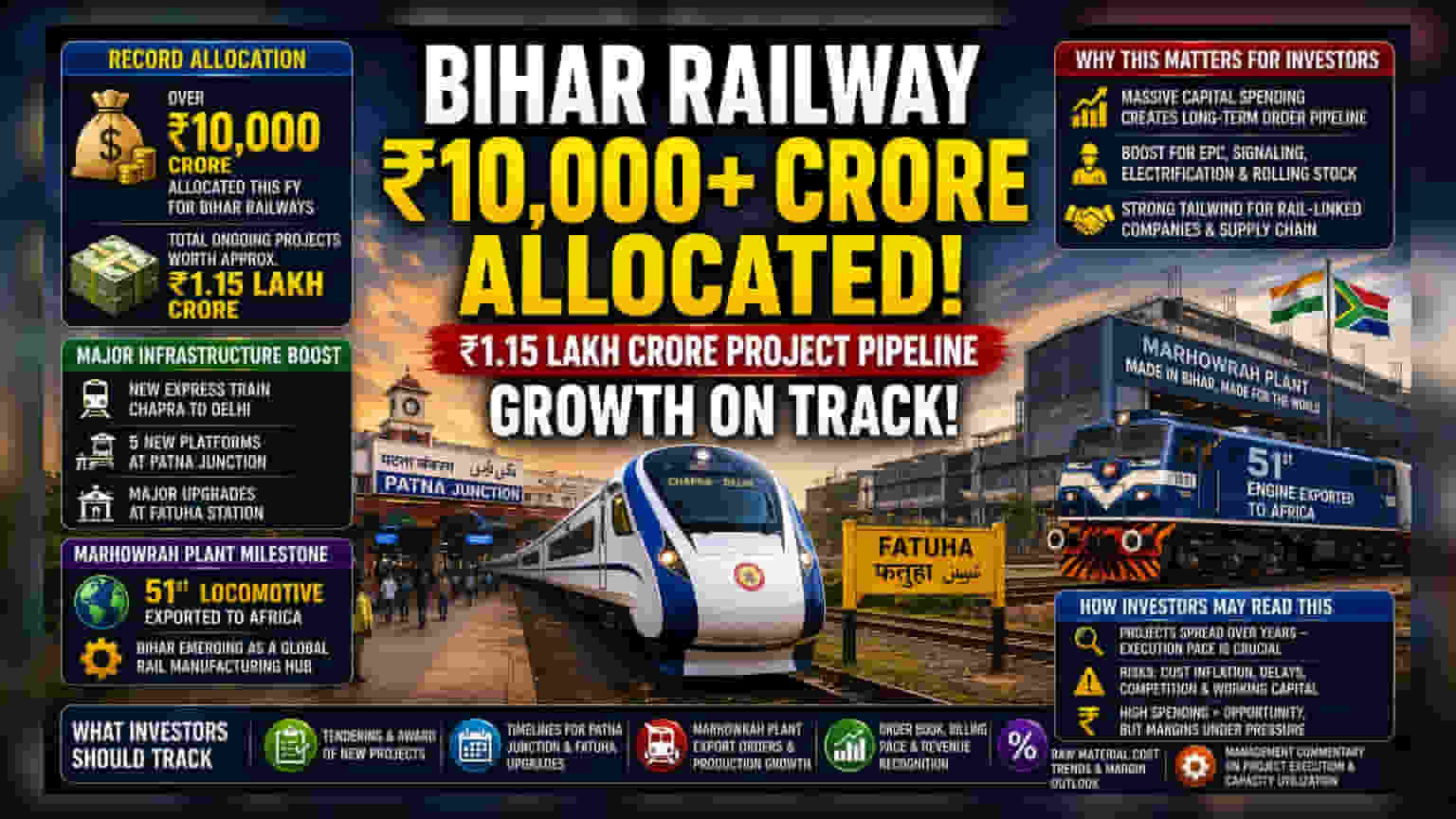
The Union Railway Ministry has announced a record ₹10,000 crore allocation for rail infrastructure in Bihar. With ₹1.15 lakh crore in ongoing projects and rising locomotive exports from the Marhowrah plant, this development signals a significant push for industrial and connectivity growth in the state, impacting various rail-focused infrastructure and manufacturing companies.
What Happened
Union Railway Minister Ashwini Vaishnaw has announced a record financial allocation exceeding ₹10,000 crore for Bihar’s railway infrastructure in the current financial year. This comes as part of a larger, massive investment plan, with ongoing railway projects across the state now valued at approximately ₹1.15 lakh crore. The plan includes a new express train connecting Chapra to Delhi, the addition of five new platforms at Patna Junction to handle higher passenger traffic, and major upgrades to the Fatuha railway station.
Industrial Growth at Marhowrah
Beyond basic infrastructure, the government highlighted the growing industrial significance of the Marhowrah plant in Bihar. This facility, known for producing high-capacity locomotive engines, recently hit a milestone by exporting its 51st engine to an international market in Africa. This demonstrates the state’s potential as a manufacturing hub for railway equipment, moving beyond domestic utility into global supply chains.
Why This Matters For Investors
A massive push in railway capital spending typically benefits a wide range of companies. These include firms involved in railway construction, signaling, electrification, and rolling stock manufacturing. The concentration of projects worth over ₹1 lakh crore suggests a long-term order pipeline for companies engaged in engineering, procurement, and construction (EPC) contracts within the railway sector.
Investors often monitor such announcements to gauge the demand for rail equipment and infrastructure services. When the government allocates record funds, it generally supports the order books of companies like Rail Vikas Nigam Ltd (RVNL), IRCON International, and other private players in the wagon and component manufacturing space. However, the actual benefit to individual companies depends on their ability to win contracts, execute projects on time, and manage cost pressures.
How Investors May Read This
While the government spending is a strong tailwind, investors should look at the broader picture. Large infrastructure projects are often spread over several years. The key for shareholders is not just the announcement of an allocation, but the actual pace of project implementation.
Companies in this sector must navigate challenges such as raw material price volatility, project execution delays, and the competition for limited tenders. High capital spending is positive, but it also creates pressure on companies to maintain healthy profit margins while dealing with large working capital requirements. If a company takes on too many projects without sufficient cash flow or strong project management, it can lead to debt pressure.
What Investors Should Track
Moving forward, market participants will be watching for the actual release of these funds and the status of project completion. Key monitorables include the tendering process for the new infrastructure work, the timeline for the Patna Junction and Fatuha station upgrades, and whether the Marhowrah plant continues to secure international export orders. Investors should also watch for management commentary from rail-linked companies in their quarterly results, specifically regarding their current order book, billing pace, and any updates on cost inflation that might impact their operating margins.

