

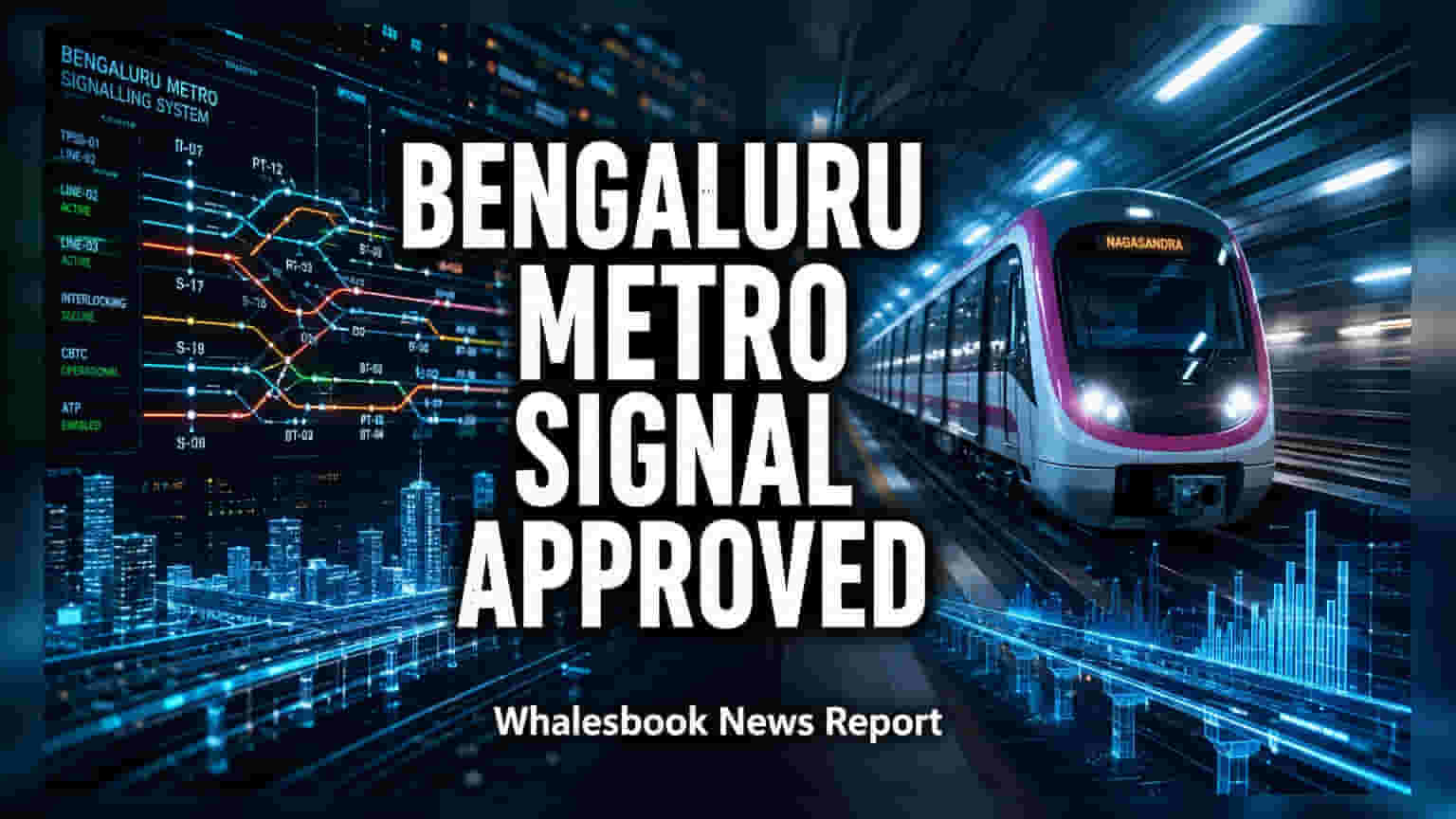
The Railway Board has granted in-principle approval for the Communications-Based Train Control signalling system for Bengaluru Metro’s Pink and Blue lines. This clearance is a vital step toward final safety inspections and eventual operations. While this progresses the airport-linked infrastructure, BMRCL has faced previous project delays that stakeholders in the construction and signaling supply chain typically monitor.
The Railway Board has issued in-principle approval for the Communications-Based Train Control (CBTC) signalling system for the Bengaluru Metro Rail Corporation Limited (BMRCL). This approval covers the entire Pink Line, stretching from Kalena Agrahara to Tavarekere, and the Blue Line phases 2A and 2B, which will eventually provide connectivity to the Kempegowda International Airport.
For BMRCL, an unlisted government-owned entity, this clearance is a critical technical milestone. It allows the corporation to move forward with essential safety testing and certifications, which are prerequisites before any metro line can be opened for public travel. The signalling system is fundamental to operating high-frequency train services, and the approval allows BMRCL to coordinate with the Research Designs and Standards Organisation for speed certification and the Commissioner of Metro Rail Safety for the final rolling stock inspection.
The approval holds significance for the infrastructure and engineering sector, including specialized technology providers like Alstom, which has been associated with the implementation of the CBTC system for these lines. Timely progress on these segments helps clear uncertainties regarding project delivery schedules for contractors and suppliers involved in the metro's development.
However, the project’s execution history remains a key consideration for those tracking the infrastructure sector. The Pink Line has previously missed multiple launch deadlines, highlighting the inherent challenges in executing large-scale urban transit projects. These delays often stem from complex regulatory requirements, land acquisition issues, or construction bottlenecks. Additionally, BMRCL relies heavily on government funding and debt financing to sustain its capital-intensive expansion. Any shift in budget allocations or delays in project commissioning could potentially influence the financial flexibility of the entity, a dynamic often watched by industry analysts.
With this signalling clearance now in place, the focus for the project shifts to the next phase of operational readiness. Investors and sector observers will track the progress of trial runs, the upcoming safety inspections by the Commissioner of Metro Rail Safety, and the final timeline for commercial operations. The efficiency with which BMRCL clears these remaining procedural hurdles will determine when commuters can actually access these new metro corridors.