

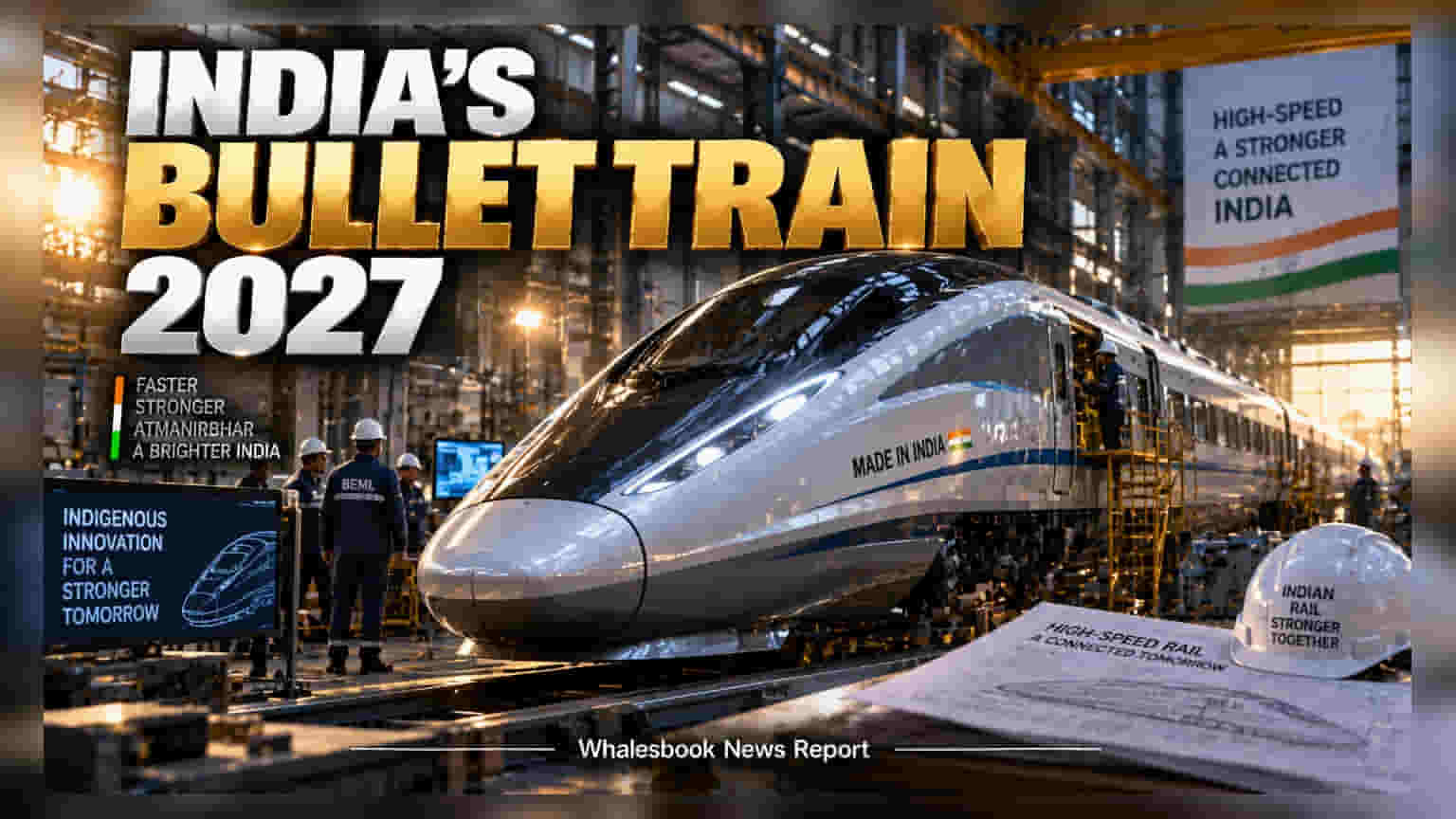
State-run BEML has finished building the first indigenous bullet train body frame, with trials scheduled for May 2027. This move, part of a ₹866.87 crore contract, aims to reduce India's reliance on foreign technology for the Mumbai-Ahmedabad High-Speed Rail project. Investors will be watching how well this domestic unit integrates with the project's existing technical standards.
BEML Limited has reached a major milestone by completing the first indigenous bullet train body frame. This development is a core part of India’s plan to localize high-speed rail manufacturing, which has historically relied on imports. The company, which won a contract valued at approximately ₹866.87 crore to develop two high-speed train prototypes, is now preparing these units for critical track trials set for May 2027.
BEML Drives Domestic High-Speed Rail Ambitions
The project is designed to support the 508-km Mumbai-Ahmedabad High-Speed Rail (MAHSR) corridor, often referred to as the bullet train project. While the corridor is being built with significant financial backing from the Japan International Cooperation Agency (JICA) and follows Japanese Shinkansen standards, the government is pushing to create a domestic ecosystem. By successfully designing and building these train sets locally, BEML aims to prove that Indian manufacturing can meet the demanding safety and speed requirements of 250 to 320 km/h.
For investors, the success of this project is significant. If these indigenous prototypes clear the upcoming trials, it could pave the way for BEML to secure larger production orders as India plans to expand its high-speed rail network. This would reduce the high costs typically associated with procuring specialized train sets from international vendors, potentially improving the project’s long-term financial viability.
Integration Challenges and Future Outlook
While the completion of the body frame is a success, the road ahead includes technical hurdles. A primary concern is how well the Indian-made rolling stock will integrate with the existing infrastructure and propulsion technology, which is based on foreign designs. Ensuring that the domestic frame meets all safety and aerodynamic stability requirements when running at high speeds will be the ultimate test. Any delay in successful integration or technical issues during trials could lead to cost increases or timeline setbacks for the broader MAHSR project.
Furthermore, the long-term profitability of the high-speed rail corridor remains a point of discussion for the industry. High operational costs, combined with the need to price tickets competitively against other modes of transport like air travel, create a challenging financial environment. Investors should monitor the May 2027 trial results closely, as the performance data will be a key indicator of whether the government proceeds with mass production orders for domestic trains or continues to depend on foreign imports.