 Whalesbook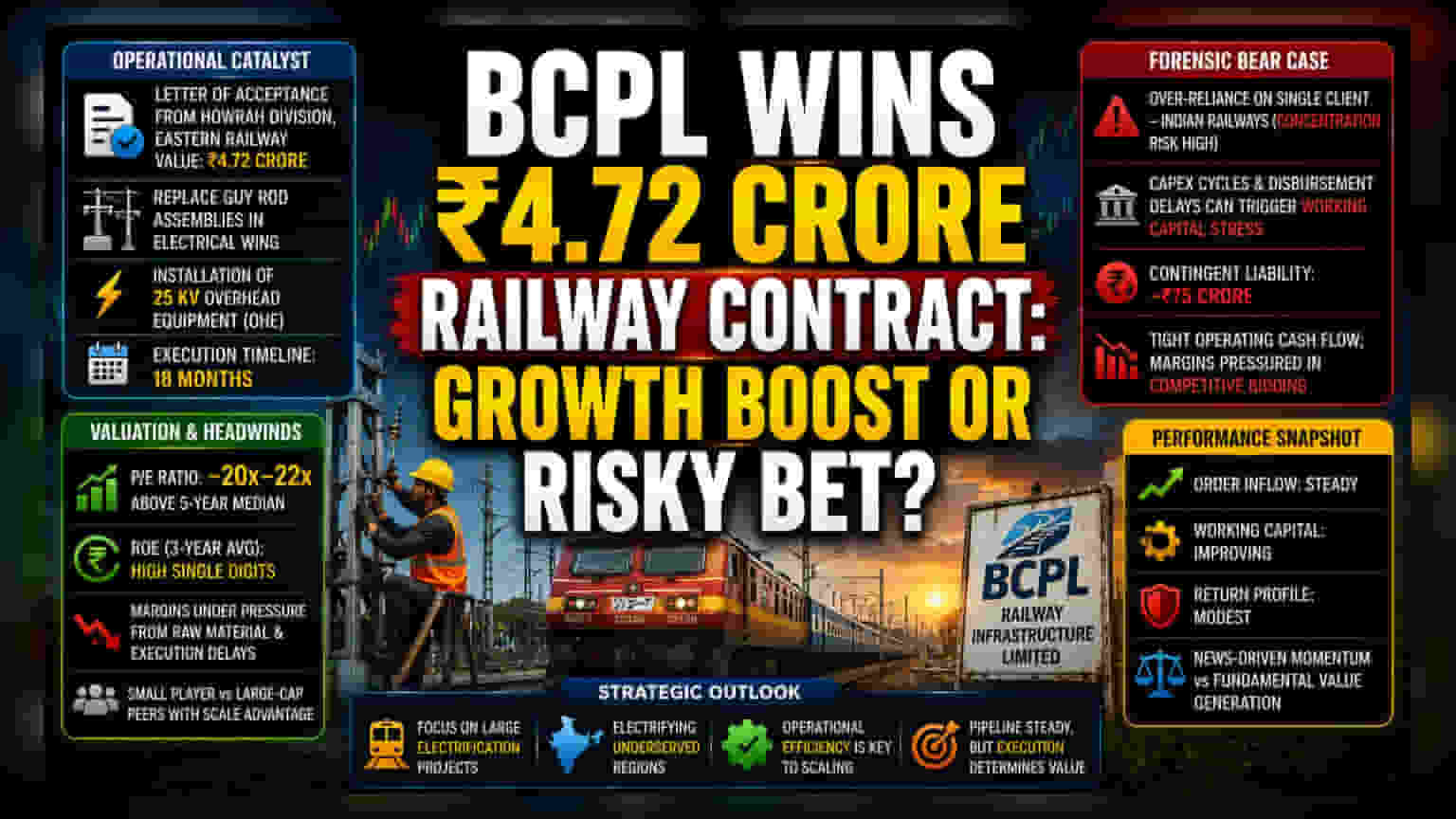


The Operational Catalyst
BCPL Railway Infrastructure has secured a ₹4.72 crore letter of acceptance from the Howrah Division of Eastern Railway, tasked with replacing aging Guy Rod Assemblies within the electrical wing. The project mandates the installation of 25 KV overhead equipment (OHE) and carries a strict 18-month execution timeline. This contract serves as a tactical move to maintain the firm’s foothold in the essential electrification segment, a niche it has occupied since the mid-1990s. While such wins provide necessary top-line activity, the market is increasingly focused on the conversion of these modest project values into sustained bottom-line growth.
Valuation and Sector Headwinds
The company currently trades at a price-to-earnings (P/E) ratio of approximately 20x to 22x, a valuation that sits higher than its five-year historical median. Despite the broader rally in Indian railway stocks driven by the National Rail Plan, BCPL has struggled with performance volatility. Investors are currently weighing the firm’s order inflow against its modest return on equity (ROE), which has hovered in the high single digits over the past three years. Unlike large-cap infrastructure peers that benefit from massive scale and diversified portfolios, BCPL operates in a segment where margins are susceptible to price fluctuations in raw materials and project execution delays.
The Forensic Bear Case
A cynical view of the firm’s prospects highlights several structural hurdles. First, the company’s reliance on a singular, monopsonistic client—the Indian Railways—creates significant concentration risk. If capital expenditure cycles fluctuate or administrative bottlenecks delay disbursements, smaller players like BCPL face immediate working capital stress. Furthermore, historical data indicates a contingent liability profile of approximately ₹75 crore, which warrants close monitoring for potential balance sheet impact. The firm’s operating cash flow remains tight, and while management has successfully reduced working capital requirements, the pressure to maintain competitiveness in a crowded bidding environment continues to weigh on profitability.
Strategic Outlook
Looking ahead, the company’s pivot toward larger railway electrification projects while retaining small-to-mid-sized orders suggests a strategy of portfolio expansion. Management continues to emphasize the electrification of underserved regions as a primary growth driver. However, the ability to scale remains contingent on operational efficiency in an industry where execution is everything. Analysts suggest that while the project pipeline appears consistent, shareholders should differentiate between news-driven momentum and fundamental value generation, especially as the railway sector faces increasing pressure to standardize services and reduce transit costs.