 Whalesbook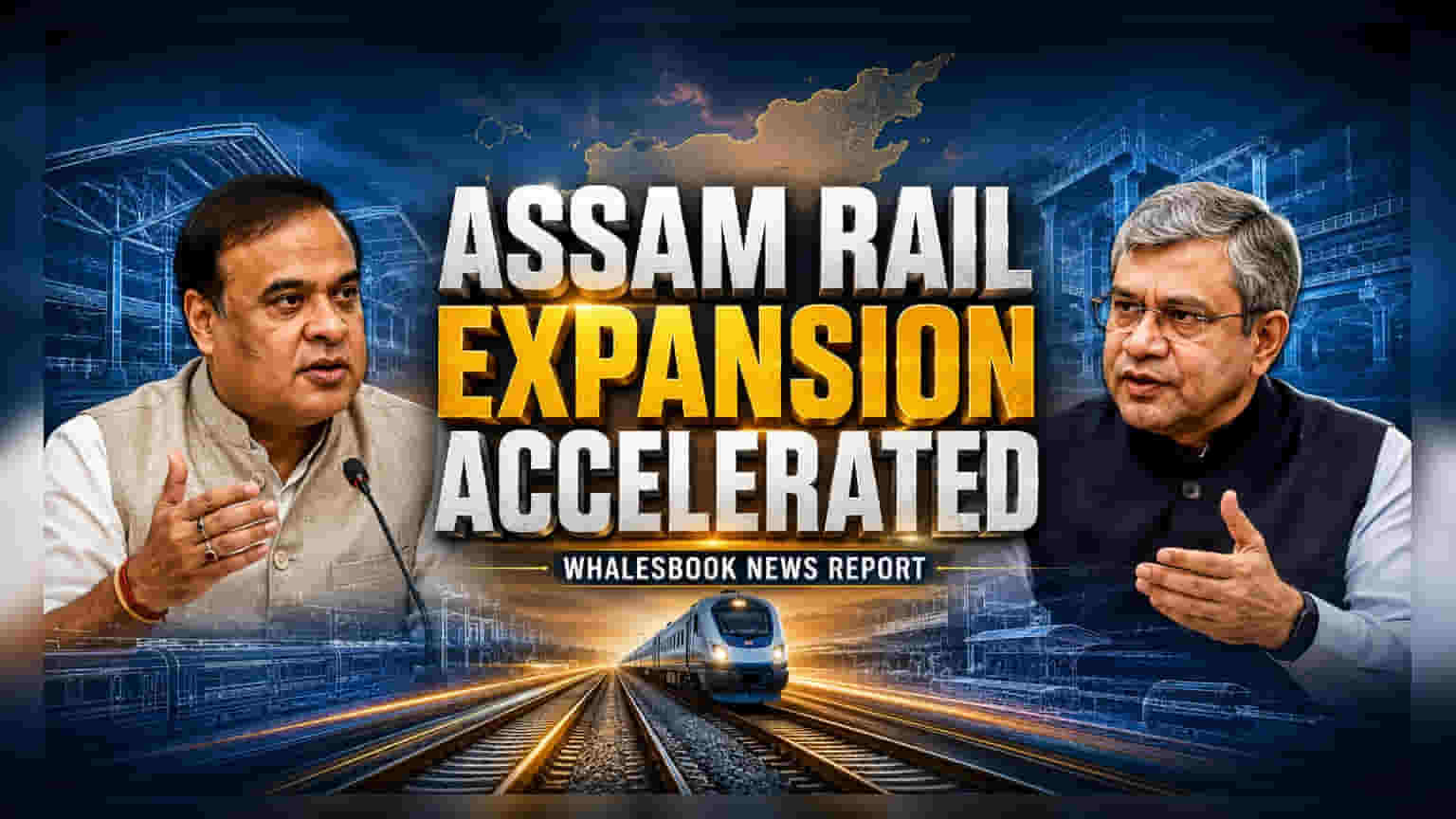


The Infrastructure Surge
The recent high-level coordination between the Assam state leadership and the Union Ministry of Railways signifies a deepening of the Centre-State alliance centered on logistical modernization. The agenda prioritizes the expansion of 1,300 kilometers of railway lines alongside the comprehensive redevelopment of over 50 stations under the Amrit Bharat Station Scheme. This move is designed to integrate the Northeast more robustly into the national rail network, addressing long-standing connectivity deficits that have historically hindered regional trade and freight efficiency.
The Operational Reality
While the scale of these projects is significant, their impact on the broader railway ecosystem is nuanced. The focus has shifted from mere electrification—now nearing saturation across the national broad-gauge network—to capacity augmentation and station infrastructure. Companies such as Rail Vikas Nigam Ltd (RVNL) and IRCON International are increasingly positioned as the primary executors for such state-led infrastructure mandates. Their order books are heavily dependent on these cyclical government capital expenditure cycles. Unlike the rapid momentum seen during the initial phase of the Amrit Bharat rollouts, the current phase requires more complex engineering solutions, including multi-tracking to separate passenger and freight traffic, which is essential for improving overall system punctuality.
The Forensic Bear Case
The narrative of seamless expansion often masks structural risks. A primary concern remains the gestation period of these projects; while foundation stones for station redevelopments provide immediate optical gains, actual execution often lags due to land acquisition delays and complex terrain challenges inherent to the Northeast. Investors should remain wary of margin compression at construction-heavy firms like IRCON, which face rising input costs and the need for significant working capital to manage high-density corridors. Furthermore, while companies like IRFC provide the necessary capital, the long-term debt sustainability of these state-run entities is intrinsically linked to the government’s continued willingness to prioritize rail capex over other competing fiscal demands. Any shift in federal budget priorities or a slowdown in the national rail modernization pace could expose these firms to significant valuation corrections.
Future Outlook
The strategic focus remains on de-bottlenecking the existing network to allow for higher operational speeds and increased throughput. Moving forward, market participants are monitoring the rollout of the B-28 and planned B-35 high-speed trainsets, which represent the next phase of Indian rail evolution. As the industry moves toward these capital-intensive technologies, the ability of listed railway entities to maintain RoE ratios while scaling operations will be the primary indicator of long-term sector health.