

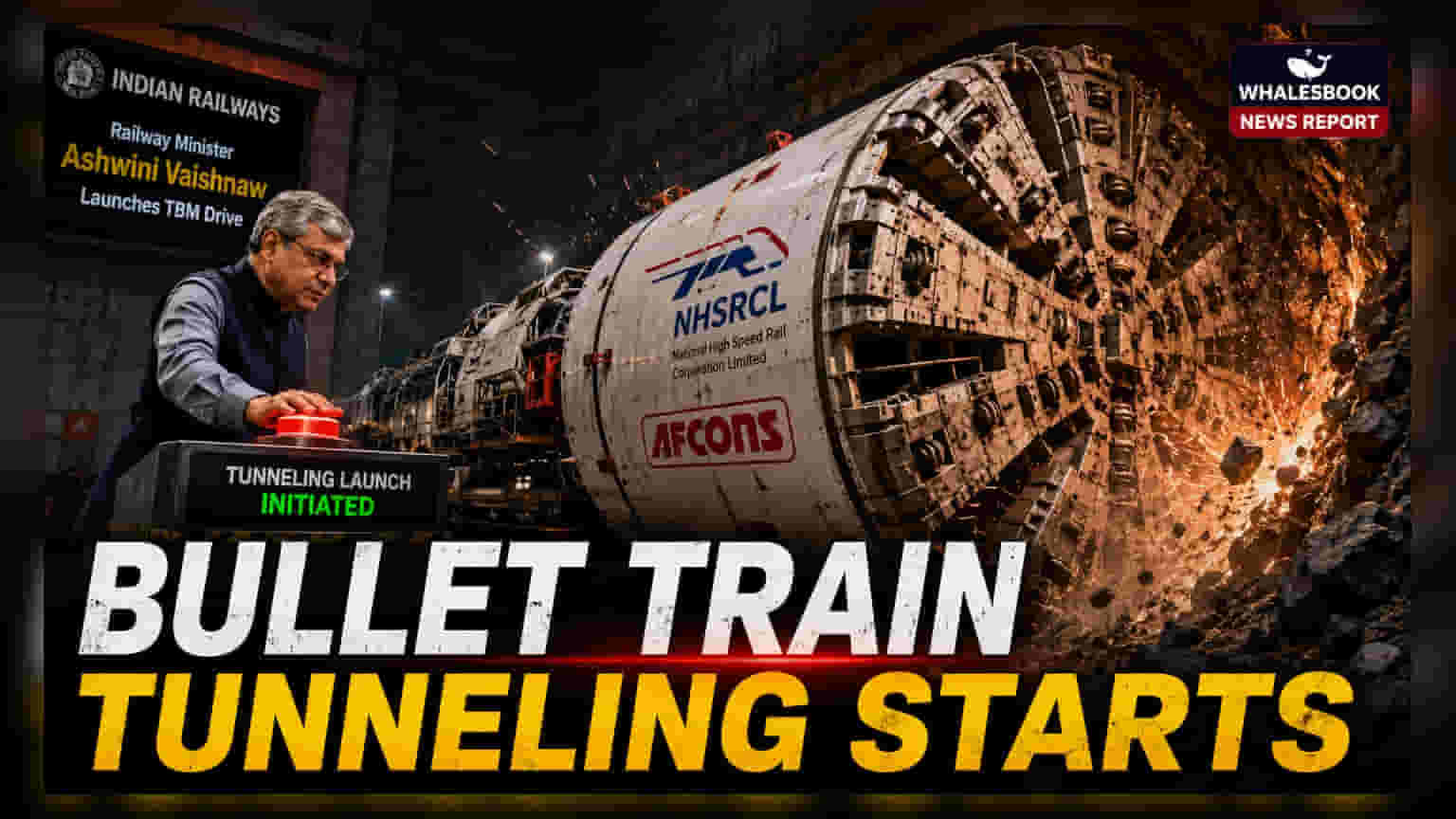
Railway Minister Ashwini Vaishnaw has launched the tunneling operations for the Mumbai-Ahmedabad High-Speed Rail Corridor. Afcons Infrastructure is using massive 13.6-meter German-engineered tunnel boring machines to construct a 20.37-km stretch, which includes a complex 7-km undersea section in Mumbai.
What Happened
Railway Minister Ashwini Vaishnaw has officially inaugurated the tunneling work for the Mumbai-Ahmedabad High-Speed Rail Corridor in Vikhroli, Mumbai. This event marks the deployment of advanced Tunnel Boring Machines (TBMs) to excavate a 5.8-kilometer segment stretching toward the Bandra Kurla Complex (BKC). The work is part of a larger 20.37-kilometer underground project essential for India's first high-speed rail network. The tunneling process involves some of the largest machines ever used in India, featuring a cutter head diameter of 13.6 meters, significantly larger than those typically used for standard city metro projects.
The Engineering Scope
The construction contract for this underground section is being executed by Afcons Infrastructure Limited. The project is notable for its complexity, as it includes a 7-kilometer undersea tunnel, a first for India’s railway infrastructure. Afcons Infrastructure is managing the deployment of these TBMs, with the second machine expected to join operations soon. The company aims to achieve a combined excavation rate of approximately 600 meters per month once both machines are fully operational. The total project involves connecting BKC to Shilphata, with the majority of the stretch—roughly 15.4 kilometers—being built through this specialized TBM method.
Business And Execution Context
For investors monitoring the infrastructure sector, this project represents a massive scale of engineering execution. The Mumbai-Ahmedabad corridor is a high-profile, government-backed project. For a company like Afcons Infrastructure, the successful and timely execution of such a technically challenging tunnel—particularly the undersea portion—serves as a critical indicator of its project management and technical capabilities. Unlike standard road or bridge projects, tunneling operations of this magnitude carry higher risks regarding geological conditions, cost control, and schedule adherence. Any delay in the commissioning of these TBMs or complications during the undersea excavation could impact project timelines and profit margins for the contractor.
Risks And Sector Realities
Large-scale infrastructure projects in India often face risks related to project delays and cost overruns. While the government provides the framework for these developments, the contractors bear the execution risk. Investors should be aware that such projects are highly capital-intensive and require precise management of complex supply chains and specialized equipment. Additionally, while this project showcases the company's ability to handle high-value, complex infrastructure, the overall profitability is highly dependent on managing raw material costs and operational efficiency over the extended multi-year execution period.
What Investors Should Track
Moving forward, investors may want to monitor the pace of the tunneling progress, specifically the monthly excavation rates reported by the company. Key monitorables include the commissioning of the second TBM, any potential updates on the undersea excavation milestones, and management commentary regarding order book execution efficiency. Any official announcements concerning project timeline adjustments or technical challenges during the undersea phase will be critical for assessing the long-term impact on the company's financial performance.