

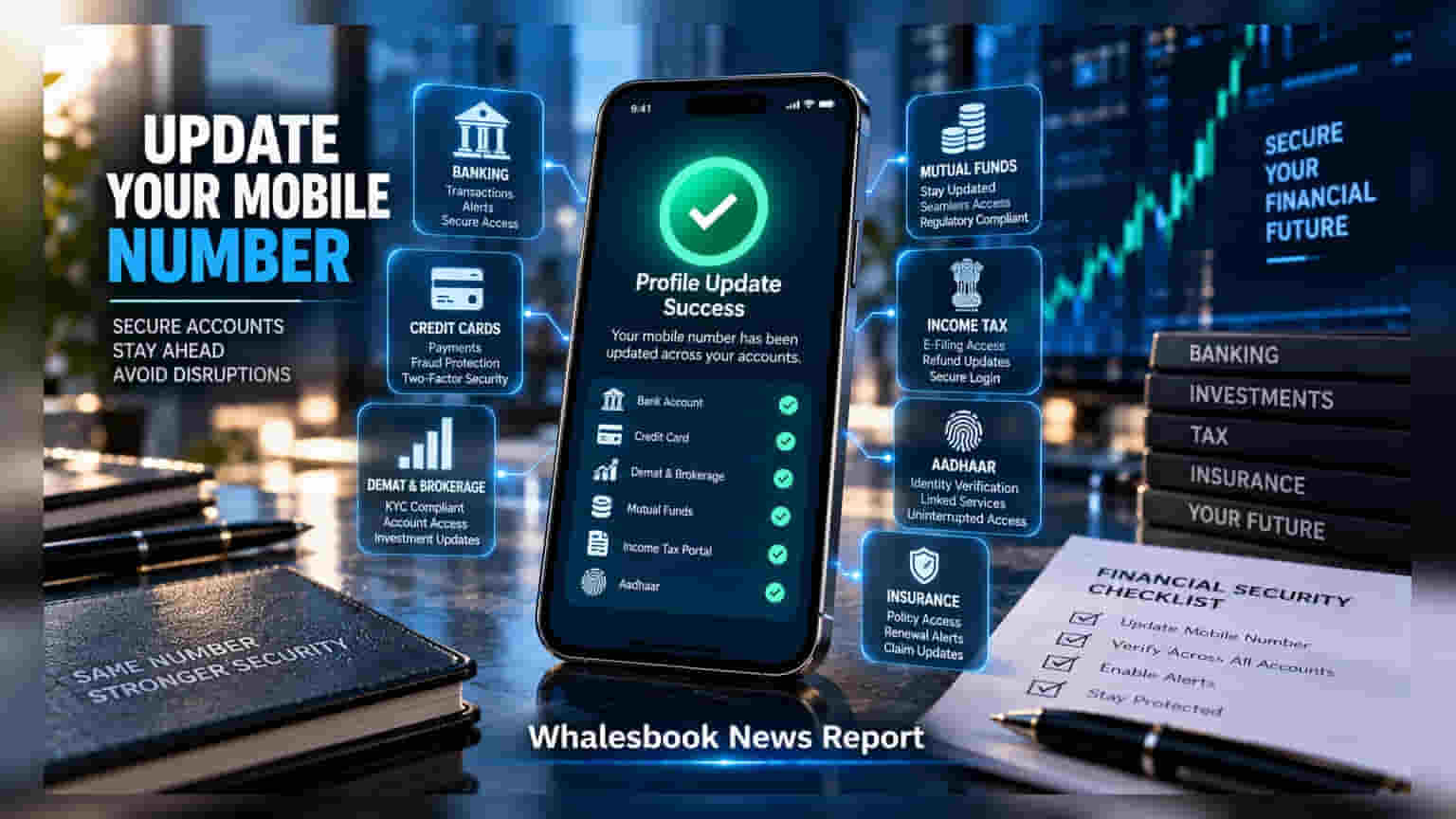
Maintaining updated contact details across financial platforms is vital to secure transactions and ensure regulatory compliance. Investors often overlook that banking updates do not automatically reach brokers or tax portals. This guide details the essential platforms where you must synchronize your contact information to avoid account blocks and security lapses.
In an increasingly digital financial ecosystem, the mobile number serves as the primary gateway for security, authentication, and communication. Many investors treat mobile number updates as a casual administrative task, often waiting until they lose access to an old SIM card before taking action. However, relying on outdated contact information creates severe risks, including the inability to receive transaction alerts, fraud notifications, and the crucial one-time passwords required for secure access.
Banking and Credit Card Security
The immediate priority after changing a mobile number is the primary bank account. Banking systems rely on real-time alerts to notify customers of debit or credit events. If a phone number is outdated, a fraudster could potentially execute unauthorized transactions without the account holder receiving any notification. Credit card issuers operate under strict security protocols where updated contact data is essential for two-factor authentication. Investors should update these details directly through official banking portals or mobile applications before losing access to the previous number, as the recovery process for a locked account can involve time-consuming branch visits.
The Investment Compliance Loop
A common misconception is that updating a bank account automatically updates all other financial records. In the Indian market, financial systems are often siloed. Brokerage accounts, demat accounts, and mutual fund folios frequently maintain separate databases. Under Securities and Exchange Board of India regulations, maintaining accurate and current Know Your Customer data is a compliance requirement. If your contact details at a depository participant or a brokerage do not match your current credentials, you may face difficulties in receiving important regulatory communications or account statements. For mutual funds, investors should verify records with the specific registrar and transfer agent, such as Computer Age Management Services or KFintech, to ensure that the contact information across all fund houses remains synchronized.
Government Portals and the Identity Link
Government and statutory portals represent the most critical layer of financial identity. The Income Tax e-filing portal and the Unique Identification Authority of India require the most current mobile number to facilitate secure access to tax filings and identity verification. Since Aadhaar is increasingly linked to multiple financial services, any mismatch in contact data here can create a ripple effect, causing authentication failures across other linked platforms. While income tax portals often allow for direct profile updates, the Aadhaar system requires a more structured approach, sometimes necessitating a visit to an authorized enrolment centre if the old mobile number is no longer accessible. Investors should consider an annual audit of their contact details across these platforms to maintain digital security and ensure that they are never locked out of their own financial assets during a critical period.