 Whalesbook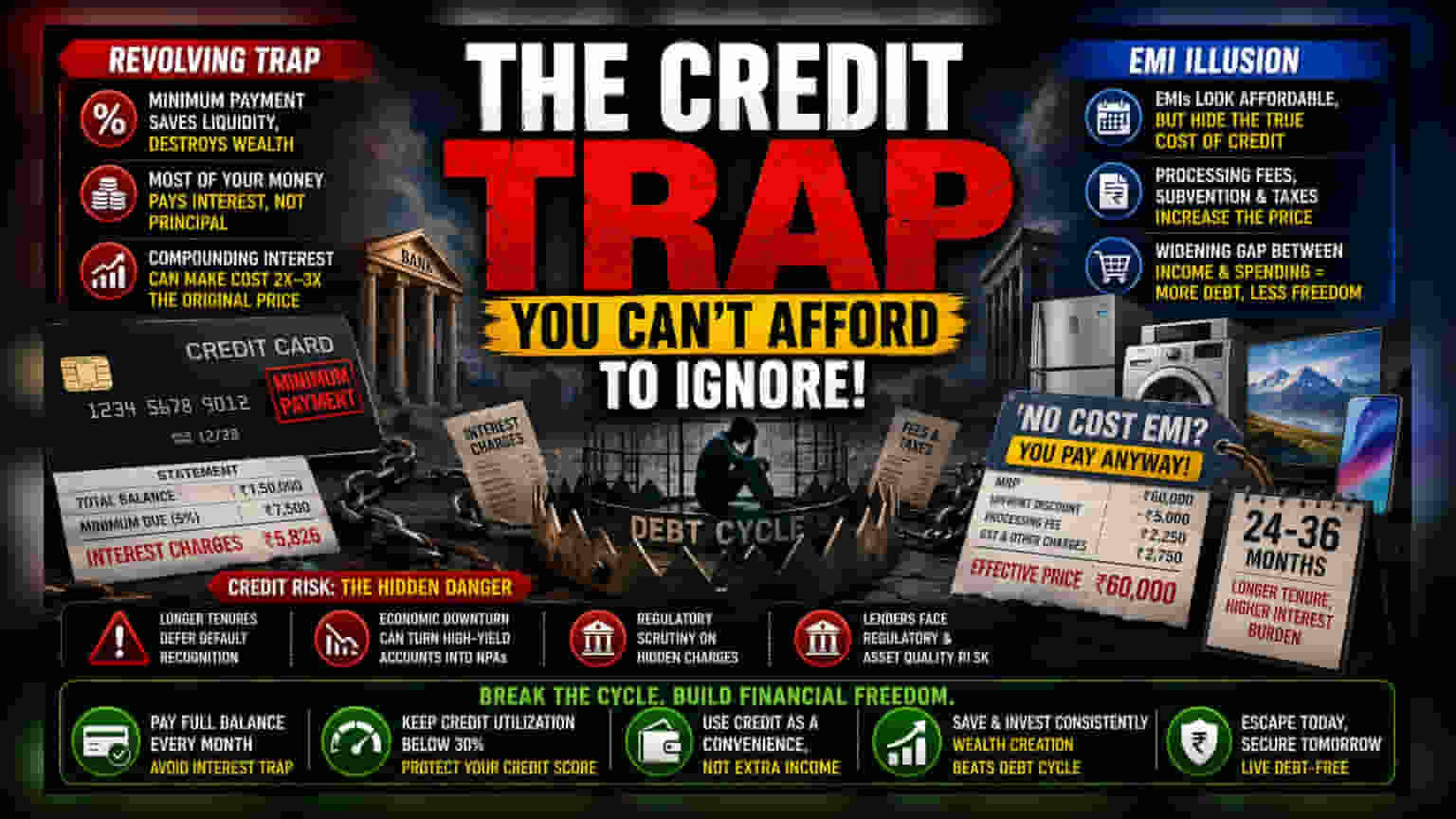


The Economic Mechanics of the Revolving Trap
The allure of the minimum payment is a deliberate psychological construct designed to preserve liquidity for the borrower while maximizing long-term interest extraction for the lender. By tethering repayment requirements to a nominal percentage of the total balance, issuers ensure that a substantial portion of the user's capital is consumed by interest charges rather than principal reduction. This phenomenon transforms everyday consumer goods into high-interest liabilities, where the compounding effect of monthly finance charges frequently renders the total cost of ownership double or triple the original sticker price. Investors often view this behavior as a stable revenue stream for banks, but for the individual, it acts as a silent erosion of purchasing power.
The Illusion of EMI Solutions
Market-wide adoption of Equated Monthly Installment (EMI) programs has fundamentally changed how credit is utilized in India. While these conversions offer a predictable schedule, they often hide the true cost of credit through layers of processing fees, subvention costs, and mandatory tax levies. When a consumer opts for a 'no-cost' EMI, they are effectively paying an upfront discount that has been stripped from the product price, while the lender collects service fees. From a macro perspective, the transition toward EMI-based consumption suggests a widening gap between disposable income and retail spending aspirations, creating a systemic reliance on debt that becomes increasingly fragile as credit utilization ratios climb.
The Forensic Bear Case: Credit Risk and Institutional Exposure
Critics of the current credit expansion argue that the aggressive push toward EMI penetration hides underlying asset quality issues. By allowing consumers to stretch payments over 24 to 36 months, lenders are essentially deferring the recognition of potential defaults. Unlike unsecured personal loans which often have fixed exit points, revolving credit card debt remains an open-ended risk. If economic conditions shift—leading to a spike in unemployment or stagnant wage growth—the high-yield returns that banks generate from these revolving balances could rapidly deteriorate into non-performing assets. Furthermore, the reliance on high-fee EMI programs leaves lenders vulnerable to regulatory crackdowns, as authorities frequently scrutinize the transparency of 'no-cost' marketing claims and the hidden cost structures embedded in these financial products.
Forward Guidance on Debt Management
Long-term financial security requires moving beyond the convenience of minimum payments or structured EMI agreements. Institutional analysts point to the dangers of high credit utilization, which remains a primary factor in credit score degradation. For the average consumer, the most effective strategy involves treating credit cards as a convenience tool rather than an extension of income. Those who fail to clear the full balance each month effectively subsidize the high-yield margins of the banking sector, permanently limiting their own capacity for wealth creation through long-term investments.