

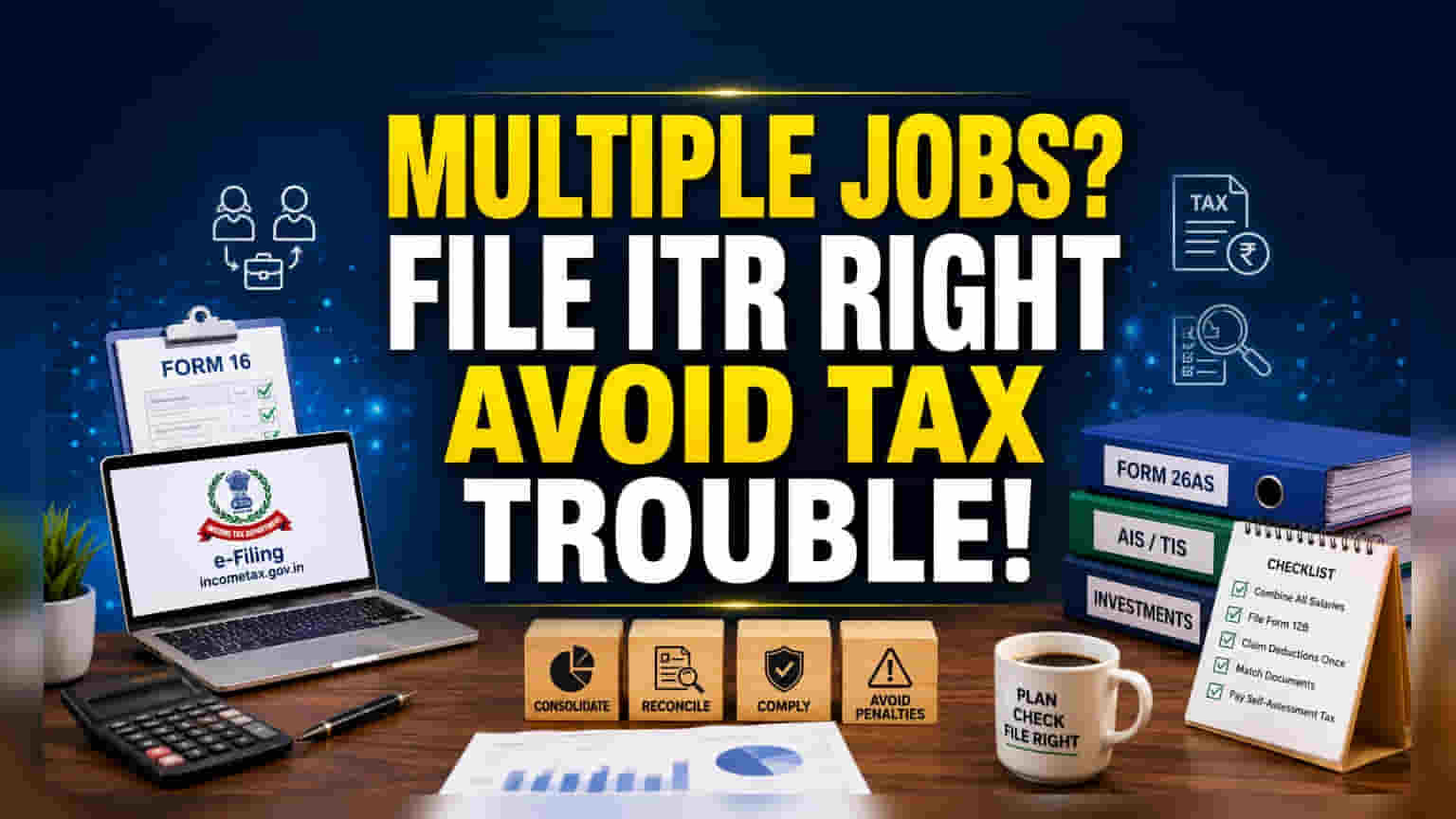
Salaried individuals who switched employers in FY 2025-26 must accurately combine income streams when filing their ITR. Errors like failing to merge salaries or double-claiming tax deductions can trigger department notices and delay refunds. Verifying all documents against the Annual Information Statement is essential for smooth processing.
What Happened
Salaried taxpayers who held more than one job during the financial year 2025-26 need to be extra careful while filing their Income Tax Returns for the Assessment Year 2026-27. When an individual works for two employers in the same year, the income from both sources must be combined into a single tax return. A common point of confusion arises when employees fail to consolidate these figures or inadvertently claim the same tax benefits, such as housing allowances or investment deductions, from both employers. These discrepancies are often flagged by the income tax system, potentially leading to scrutiny, tax demand notices, or significant delays in refund processing.
Why Income Consolidation Is Critical
The Income Tax Department expects taxpayers to treat their total annual salary as one cumulative income stream. When a taxpayer switches jobs, the new employer may calculate tax liability only based on the salary paid by them, unless the employee provides details of their previous employment. To ensure the correct amount of Tax Deducted at Source (TDS) is calculated on the total annual income, employees are expected to submit Form 12B to their current employer. Failure to do this means the tax deducted across both jobs might be lower than the actual liability, leaving the taxpayer to settle the remaining tax burden during the ITR filing process.
The Danger of Duplicate Deductions
Another significant risk for those with multiple employers is the double-counting of exemptions. Benefits such as House Rent Allowance (HRA) exemptions or deductions under Section 80C are annual limits. If a taxpayer accidentally claims these exemptions through both employers, they create a mismatch in their tax records. Tax regulations dictate that these exemptions must be claimed only once for the entire financial year. Duplicate claims are easily identified during the verification process, increasing the likelihood of the return being questioned by the tax authorities.
Why Documents Must Match
Precision during the filing process relies heavily on document reconciliation. Taxpayers should ensure that the salary figures reported in their ITR match the data reflected in their Form 16s, Form 26AS, and the Annual Information Statement (AIS). The AIS and Taxpayer Information Summary (TIS) serve as the central references for the department. Any variance between the salary reported by the individual and the data available in these official statements often acts as a trigger for automated tax notices. Reconciling investment proofs, bank interest, and TDS credits against these official documents before clicking 'submit' is a standard practice to avoid post-filing complications.
What To Watch Next
Taxpayers who have changed jobs should focus on gathering Form 16s from all previous employers for the year. The primary monitorable is the final calculation of tax liability after incorporating income from all sources. If a tax shortfall is identified, it should be paid as self-assessment tax before filing the return to avoid interest penalties. Investors and salaried professionals should also monitor the official ITR forms and utility updates from the income tax portal to ensure they are using the correct annexures for reporting multiple salary heads.