

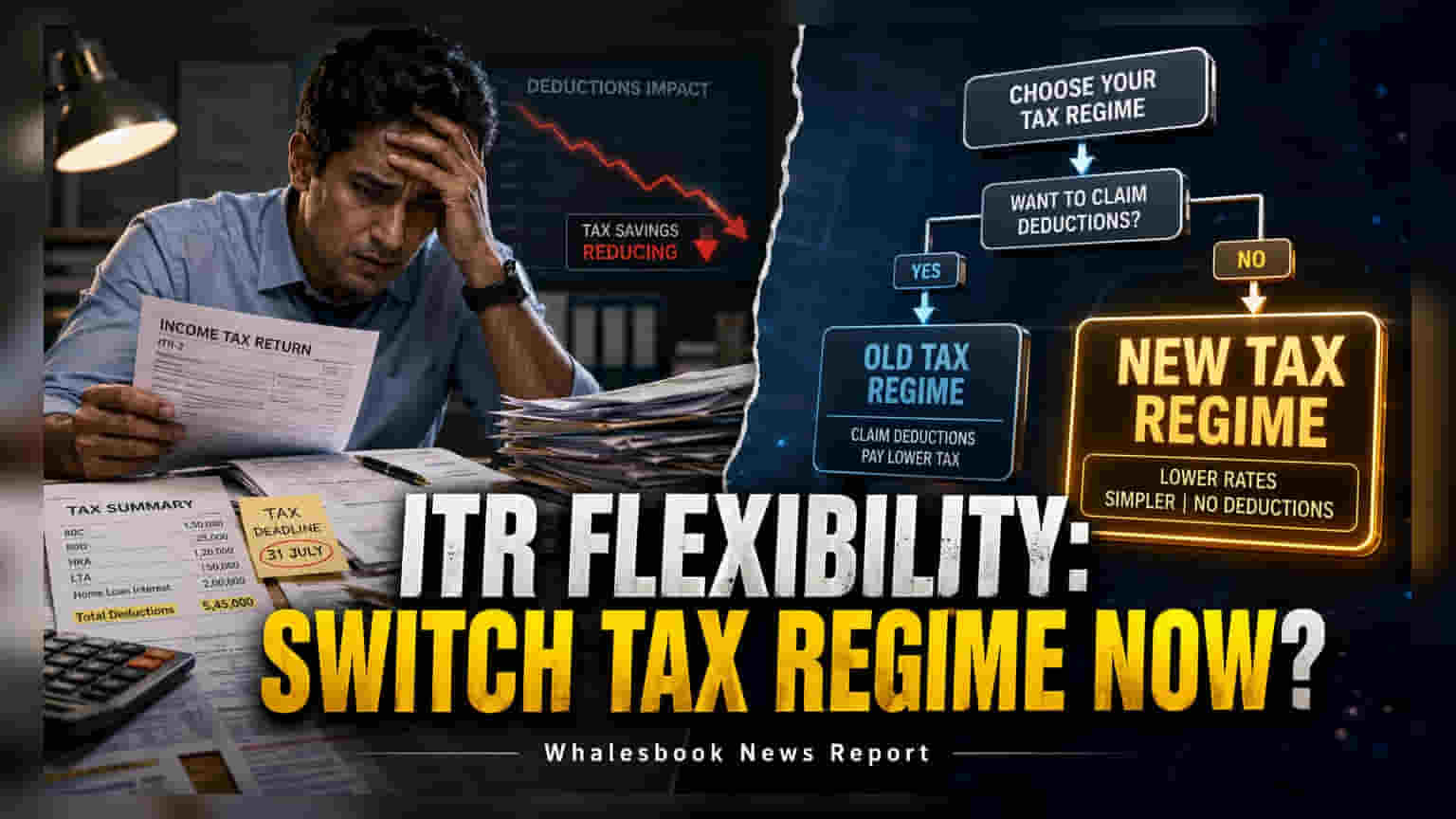
Salaried taxpayers can switch from the old to the new tax regime while filing their Income Tax Return (ITR), even if they declared otherwise to their employer. This flexibility allows individuals to choose the option that lowers their total tax liability. However, switching to the new regime means losing common tax-saving deductions like HRA and Section 80C.
For many salaried employees, the choice between the old and new tax regimes is a significant annual decision. A common point of confusion is whether the tax regime declared to an employer at the start of the financial year is permanent. Financial rules allow taxpayers to change their preference when filing their final Income Tax Return (ITR) for the financial year 2025-2026, providing the freedom to select the system that results in a lower tax outgo.
Comparing the Tax Regimes
Choosing the right regime requires weighing the benefits of each. The new tax regime provides a higher basic exemption limit of ₹4 lakh, whereas the old regime offers an exemption limit of ₹2.50 lakh. However, the trade-off involves tax-saving instruments. The new regime does not permit deductions such as House Rent Allowance (HRA), Leave Travel Allowance (LTA), or common investments under Section 80C like Public Provident Fund (PPF) contributions, tuition fees, and life insurance premiums. These deductions remain exclusive to the old tax regime. Investors should carefully calculate their total eligible deductions before deciding which path offers the best outcome.
Rebate Under Section 87A
Another factor for taxpayers to consider is the rebate available under Section 87A for those opting for the new tax regime. Resident individuals with a total income up to ₹12 lakh may qualify for a tax rebate of up to ₹60,000. It is essential for taxpayers to recognize that this specific rebate is not applicable to all income types. For instance, tax liabilities stemming from long-term or short-term capital gains on listed shares and equity mutual fund schemes remain taxable under the new regime, regardless of the rebate eligibility.
What Taxpayers Should Track
When finalizing their tax strategy, individuals should verify their total income, including salary and capital gains, to see which regime is more efficient. Since the decision made at the time of filing the ITR is final for that assessment year, it is advisable to use the official Income Tax Department calculator or consult a financial professional to compare the actual tax outflow under both options. Keeping records of all investments and income sources is critical for accurate reporting during the filing process.