

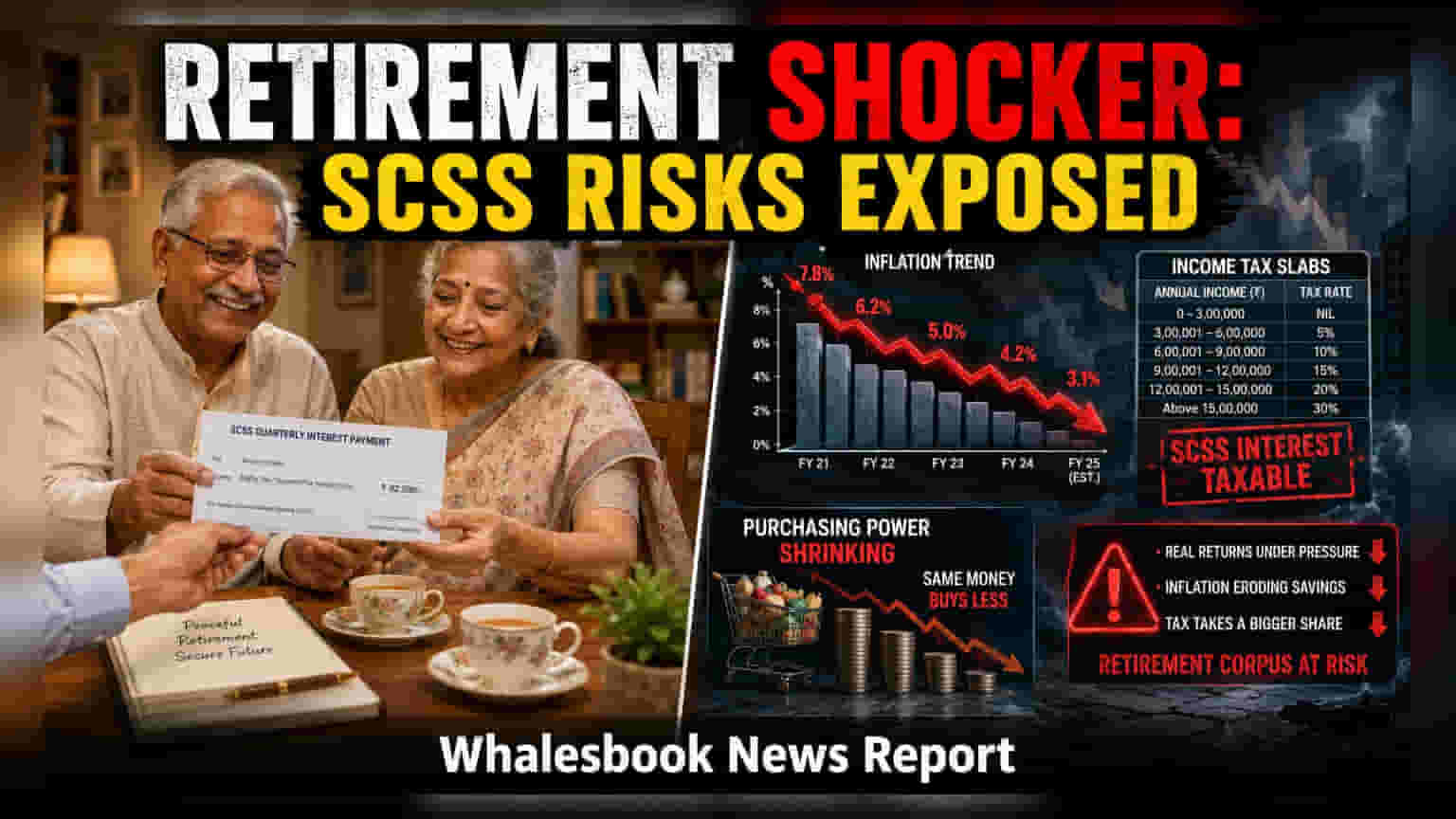
The Senior Citizens' Savings Scheme (SCSS) offers a secure, government-backed 8.2% interest rate, making it a cornerstone for many retirees. However, because returns are fixed and taxable, relying on it alone can pose risks against inflation. A balanced approach that mixes this steady income with growth-oriented assets is often essential for long-term financial health.
The Senior Citizens' Savings Scheme (SCSS) remains one of the most popular investment tools for retirees in India, valued primarily for its safety and regular income. As of August 2026, the scheme offers an annual interest rate of 8.2%, which is paid out on a quarterly basis. It is important for investors to note that the SCSS is a government-backed savings program, not a market-listed stock or corporate instrument. It does not have share prices, quarterly earnings reports, or market volatility in the traditional sense.
Understanding the Income Stream
For retirees, the appeal of the SCSS lies in its predictable cash flow. Investors can deposit a maximum of ₹30 lakh into the scheme, which matures after five years, with an option to extend the tenure for an additional three years. Because it is backed by the Government of India, the principal and interest are considered highly secure. This makes it a preferred choice for managing essential household, medical, and utility expenses without the stress of market fluctuations.
The Inflation and Tax Reality
While the scheme provides stability, experts often warn against using it as the sole vehicle for retirement planning. A primary concern is inflation. The interest rate on the SCSS is fixed at the time of investment and does not automatically adjust to rising costs of living. Over a long period, if inflation rises faster than the fixed interest payout, the real value of the money—its purchasing power—can effectively decline.
Furthermore, the interest earned on the SCSS is fully taxable according to the investor's specific income tax slab. Retirees in higher tax brackets may find that the net, post-tax return is significantly lower than the headline 8.2% rate. Failing to account for this tax liability can leave a gap in the expected monthly cash flow, potentially causing financial strain later in retirement.
Liquidity and Strategic Portfolio Balance
Another practical limitation of the SCSS is liquidity. While the scheme allows for premature withdrawal under specific conditions, doing so often incurs a penalty, which reduces the total return. Consequently, the SCSS is not an ideal parking spot for emergency funds that might be needed at a moment's notice.
Because of these limitations, financial planning usually involves integrating the SCSS into a broader, diversified portfolio. Many retirees use the SCSS to cover predictable monthly costs, while allocating other portions of their savings into instruments that offer liquidity, such as liquid mutual funds or savings accounts, and growth-oriented assets like equity mutual funds or annuities to help combat inflation over time. The decision to allocate funds depends on the individual’s existing pension income, tax bracket, and specific retirement goals.