

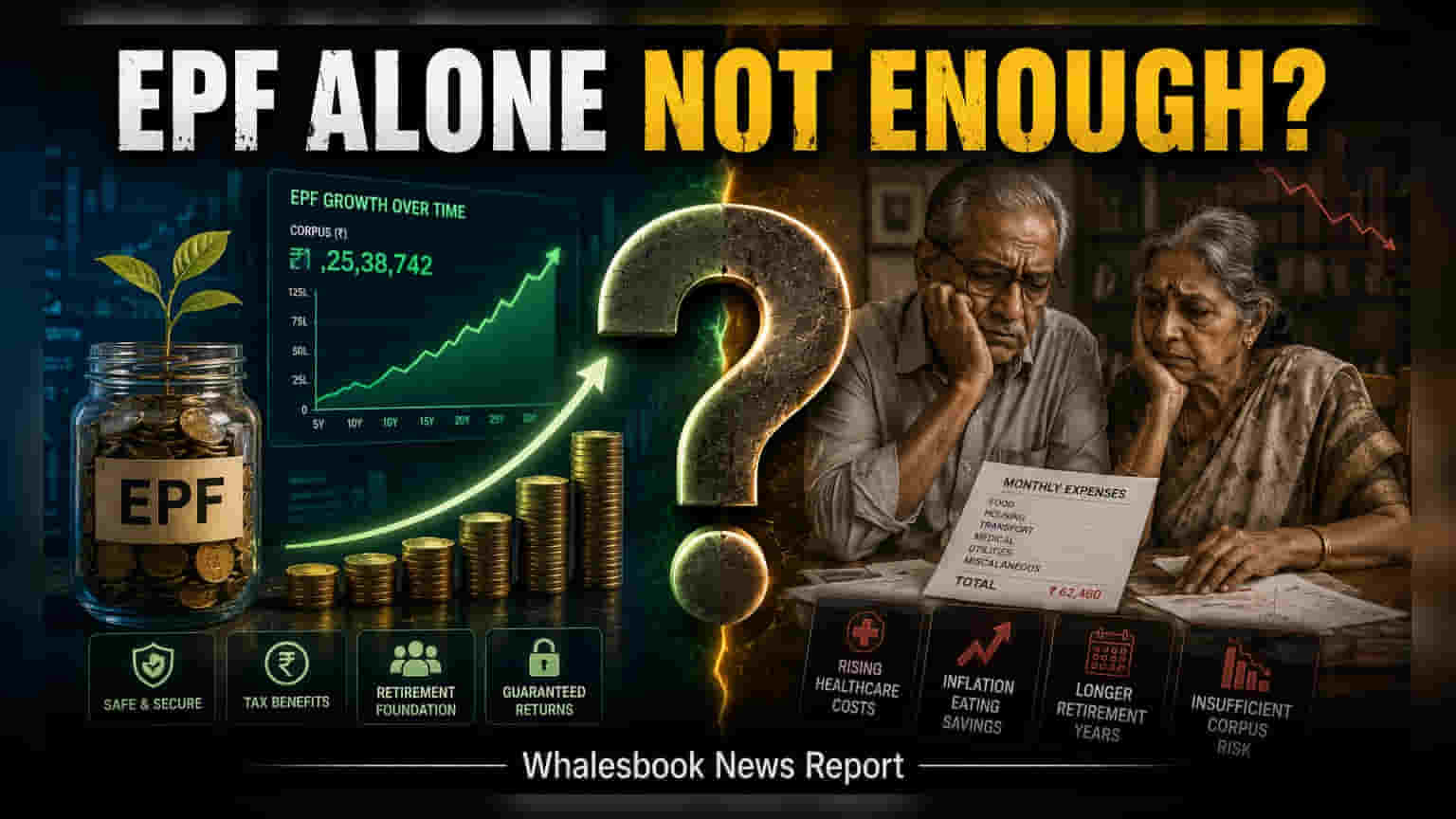
Financial regulators and experts are warning that relying solely on the Employees' Provident Fund (EPF) is often insufficient for long-term retirement needs. Factors like persistent inflation, rising healthcare costs, and longer life expectancies require a more diversified investment strategy. To maintain purchasing power during retirement, individuals are encouraged to look beyond fixed-return instruments and include market-linked assets in their planning.
The Employees' Provident Fund (EPF) remains a cornerstone of retirement planning for millions of salaried Indians. However, financial regulators and planning experts are increasingly cautioning that treating EPF as the sole retirement solution can create significant financial gaps later in life. While EPF provides a secure and steady base, it often lacks the growth potential required to keep pace with the rising cost of living over a multi-decade retirement period.
The Challenge of Inflation and Longevity
The primary risk of relying on a single, fixed-income instrument is the erosion of purchasing power. Inflation quietly reduces the real value of money over time. An EPF balance that appears substantial today may cover significantly fewer expenses in 15 or 20 years. Furthermore, as medical advancements and better living standards extend life expectancies, retirement is no longer a short 10-year phase. Investors must now plan for a post-work life that can last two decades or more, which requires a much larger corpus than traditional savings vehicles might generate alone.
Why Diversification is Essential
Financial planning experts emphasize that a robust retirement plan should not be dependent on a single asset class. EPF operates primarily as a debt-based, fixed-return instrument. While this provides stability and safety, it generally does not offer the growth potential that equity-linked investments, such as mutual funds or the National Pension System (NPS), can provide over the long term. By diversifying into different investment avenues—including public provident funds, mutual funds, and other market-linked products—investors can better manage risk and potentially achieve higher returns that help combat inflation.
Avoiding the Premature Withdrawal Trap
A significant factor that often hinders the accumulation of a sufficient retirement corpus is the tendency to withdraw funds from EPF during mid-career. Whether for housing, education, or other personal needs, premature withdrawals disrupt the power of compounding. Since retirement savings rely heavily on the interest earned on existing interest over many years, even small withdrawals during a career can significantly reduce the final amount available for retirement. Keeping these funds untouched until the intended time is a critical part of ensuring long-term financial security.
Factoring in Healthcare and Contingencies
Retirement planning often focuses heavily on daily living expenses, but regulators highlight that healthcare costs are one of the most volatile and unpredictable factors. Medical inflation typically outpaces general inflation, meaning that health-related expenses in later years can quickly deplete savings if not explicitly planned for. A comprehensive retirement strategy should include specific provisions for medical insurance and an emergency contingency fund that stands separate from the primary retirement corpus. As investors move forward, the most important monitorable is building an inflation-adjusted portfolio that evolves with their age, income level, and risk tolerance, rather than relying on a one-size-fits-all approach.