

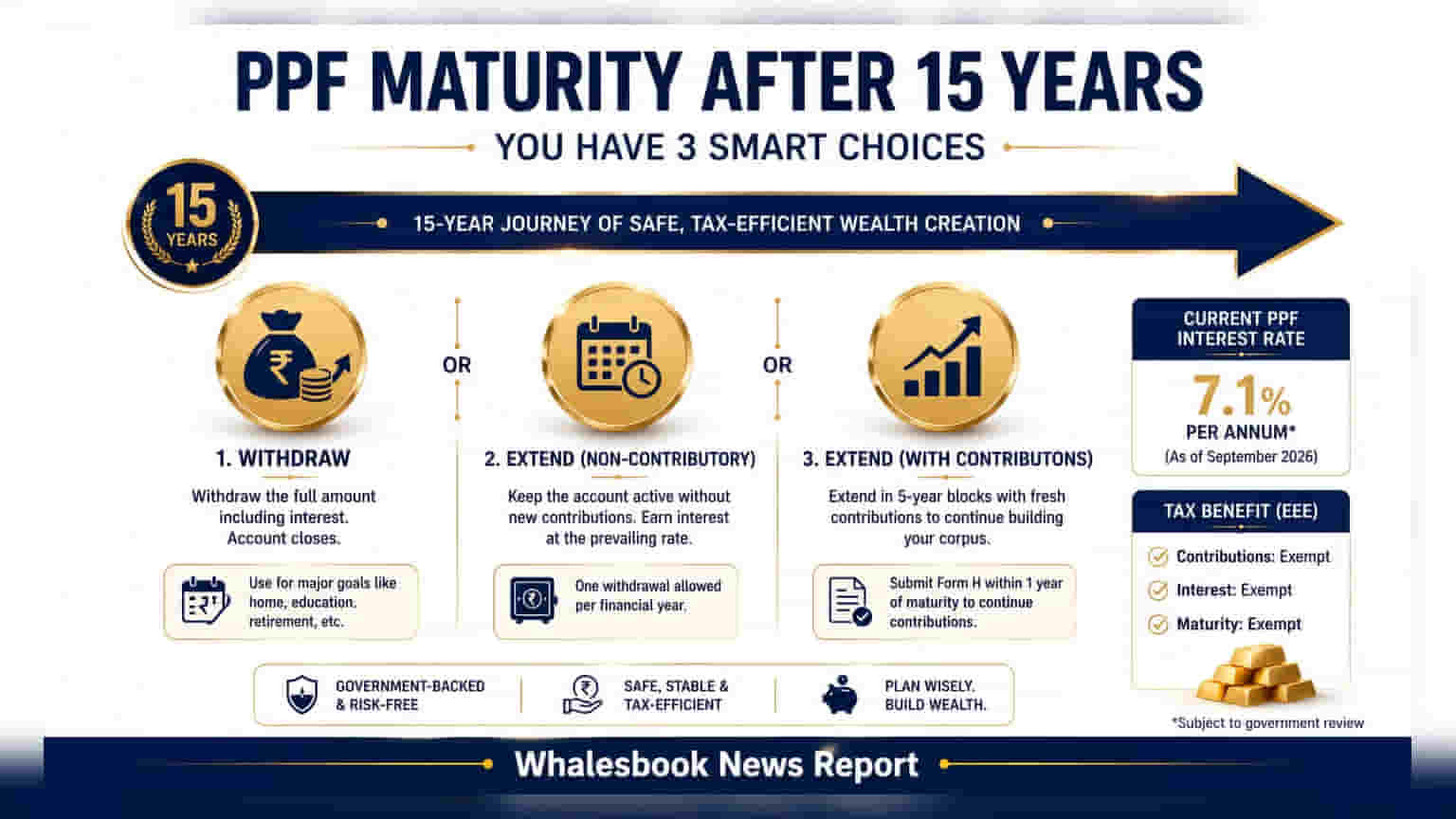
Investors holding a Public Provident Fund account for 15 years have three clear choices: full withdrawal, continuing without new deposits, or extending with fresh contributions. Acting within one year of maturity is essential to maintain the ability to add money to the account.
Reaching the 15-year milestone in a Public Provident Fund (PPF) account is a major point for long-term savers. While the account reaches its maturity period, it does not force an immediate payout. Investors have the freedom to decide how to manage their accumulated corpus based on their current financial goals and liquidity needs.
The Three Post-Maturity Choices
Upon completing the 15-year term, investors can choose from three main paths. The first is to withdraw the full amount. This closes the account, and the entire balance, including interest, is paid out. This option is often used by those who need the money for major life events, such as home buying, higher education, or retirement expenses.
The second path is to keep the account active without making any new contributions. In this case, the existing balance continues to earn the prevailing government-regulated interest rate. Investors can still make one withdrawal per financial year. This is a practical choice for those who want to keep their money in a safe, tax-efficient, government-backed vehicle but do not wish to commit to further annual deposits.
The third option is to extend the account in five-year blocks with fresh contributions. This allows investors to continue building their corpus using the same tax-advantaged framework. To choose this route, the account holder must submit a formal declaration, known as Form H, to the bank or post office within one year from the date of maturity. If this deadline is missed, the account holder loses the right to make further contributions, effectively locking the account into a non-contributory state.
Tax and Interest Context
As of September 2026, the PPF interest rate stands at 7.1 percent per annum, subject to government review. One of the key benefits remains the EEE (Exempt-Exempt-Exempt) tax status, meaning contributions, interest earned, and the final maturity amount are all free from income tax under current laws. This makes the PPF a staple for risk-averse investors looking for stable, long-term wealth protection.
Strategic Considerations
When deciding the next step, it is helpful to look at the entire investment portfolio. PPF is a debt-oriented, low-risk instrument. While it provides safety, relying too heavily on it might limit growth compared to market-linked assets like equity mutual funds or the National Pension System (NPS). The most effective strategy involves balancing the safety of the PPF with other assets to match specific financial milestones. Investors should verify the status of their account and confirm their extension choice with their bank or post office well before the one-year window closes to avoid losing the ability to save further.