

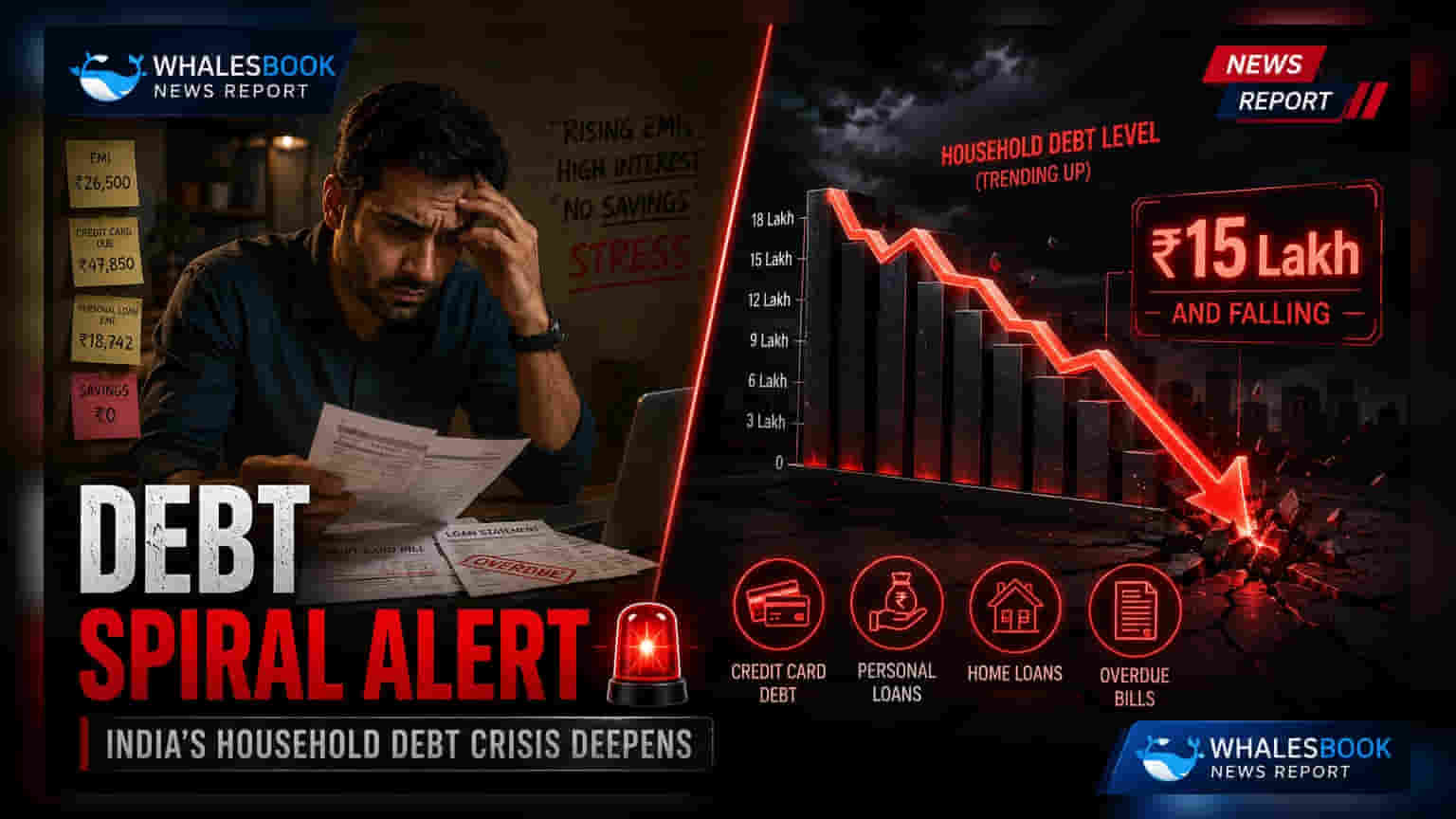
A Pune-based manager's struggle with debt highlights how a single emergency loan can trigger a dangerous cycle if not managed early. With EMIs now consuming 57% of his monthly income, the case illustrates the importance of debt-to-income ratios and interest rate management in personal financial planning.
The Anatomy of a Debt Spiral
A common financial mistake often involves the belief that debt is only a result of excessive lifestyle spending. However, the case of a Pune-based operations manager earning ₹90,000 monthly reveals how unavoidable life events can lead to severe financial distress. According to insights shared by financial advisor Vivek, the individual accumulated ₹15 lakh in debt starting from a single medical emergency. This situation demonstrates how quickly high-interest debt can compound when monthly obligations consistently exceed take-home pay.
How the Financial Gap Widened
The crisis began three years ago when the manager needed ₹5 lakh for his father's surgery. He opted for a personal loan at a 14% interest rate, which added a monthly EMI of ₹13,663 to his existing expenses. This pushed his total monthly outflow to ₹96,000, creating a persistent monthly deficit against his ₹90,000 salary. When income falls short of basic and fixed expenses, many individuals turn to credit cards to cover daily needs, which often carry significantly higher interest rates than personal loans.
The Cost of High-Interest Consolidation
As the manager relied on credit cards to bridge the monthly shortfall, his balance grew to ₹4 lakh. Credit cards in India often charge annual interest rates between 36% and 48%, which can quickly overwhelm an individual's budget. To manage this, he took a consolidation loan of ₹6 lakh at an 18% interest rate. While consolidation is often suggested as a solution, it proved insufficient here because the underlying budget deficit remained. Without addressing the core gap between income and expenditure, the debt eventually ballooned to over ₹15 lakh, forcing the individual to dedicate 57% of his salary just to cover EMIs.
Why Debt Ratios Matter
Financial experts generally advise keeping total monthly EMI payments below 40% of one's take-home pay. When debt servicing exceeds this threshold, an individual has very little room to handle unexpected expenses or emergencies, making them vulnerable to a debt trap. The primary lesson here is the danger of using high-interest credit to pay for living expenses. For those managing debt, the recommended approach is to list all liabilities by their interest rate and prioritize paying off the most expensive debts first, such as credit card balances, to reduce the overall interest burden.
What To Monitor for Financial Health
To avoid similar situations, individuals should prioritize maintaining an emergency fund that can cover at least six months of essential expenses. Furthermore, before taking on new debt, one must calculate the impact on their total monthly cash flow. If monthly EMIs approach or exceed 40% of net income, it serves as a critical indicator that the debt level has become unsustainable and requires immediate restructuring or lifestyle adjustment.