

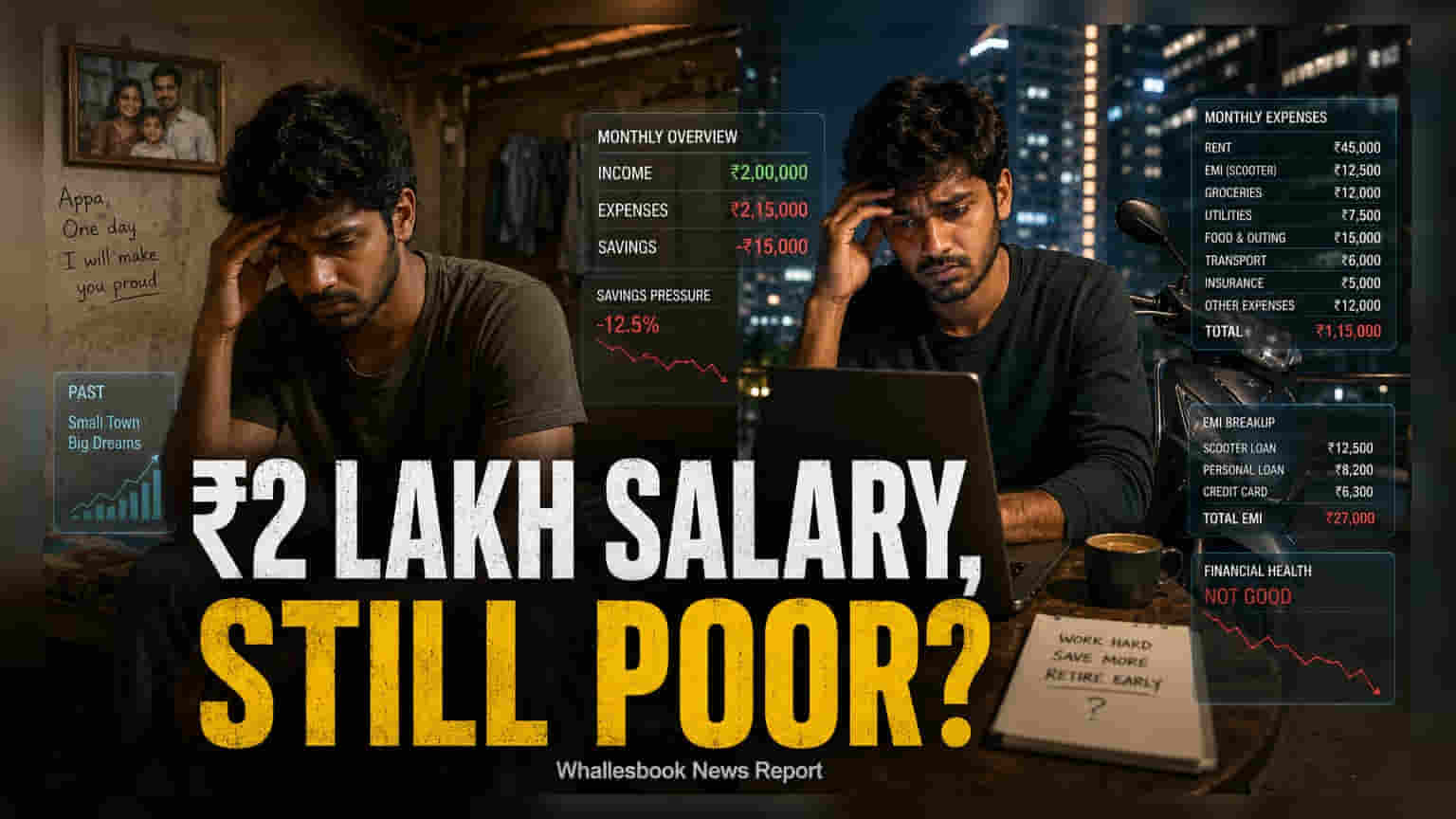
A 26-year-old Bengaluru professional earning ₹2 lakh monthly has sparked debate over financial security and savings habits. This case highlights how lifestyle inflation and family support obligations can impact capital accumulation, even for high-earners. Investors can learn from his breakdown of monthly investments versus living costs to better manage their own financial planning.
Detailed Coverage
The recent online discussion regarding a 26-year-old Bengaluru professional earning ₹2 lakh monthly serves as a practical case study for personal financial management. While the individual’s income level places him in a high-earning bracket, his stated feelings of financial insecurity have resonated with many, highlighting the difference between gross earnings and actual net worth accumulation.
The Impact Of Lifestyle And Family Obligations
Data shared by the professional indicates that a significant portion of his income is directed toward family support. Supporting parents, including facilitating their retirement and funding their housing, is a common reality for many Indian professionals. While these actions provide social and emotional security, they directly reduce the surplus income available for long-term wealth creation. Furthermore, his spending on consumer durables, such as a high-end laptop and smartphone, reflects common pressures of modern professional life in urban centers like Bengaluru, where lifestyle maintenance costs can rise alongside income.
Analyzing Savings And Asset Allocation
From a financial planning perspective, the professional's current asset base—approximately ₹15 lakh in total savings across stocks, gold, fixed deposits, and cash—is a result of his journey since 2021. For investors, this provides a clear look at how capital allocation works in practice. He currently invests ₹50,000 monthly across mutual funds, fixed deposits, and gold. This represents roughly 25% of his monthly income. Financial experts often suggest that higher-earning individuals should aim for a higher savings rate, particularly in the early stages of their career, to build a larger investment corpus. The fact that he holds a significant amount of money in his salary account rather than in growth-oriented assets may be a point for those focusing on optimizing returns to consider.
Managing Financial Insecurity
Financial insecurity often stems from a lack of clear goal-setting rather than income alone. For high-earners, the transition from managing a modest household budget—as in his case, where his family previously lived on less than ₹7,000 monthly—to a high-income lifestyle requires a disciplined approach to inflation. Without clear targets for retirement, emergency funds, or inflation-adjusted spending, even high-income professionals can feel a sense of uncertainty. The key for investors is to move beyond the raw income figure and focus on the 'net savings rate'—the amount left after all necessary obligations are met. Tracking the ratio of essential expenses to discretionary spending remains the most effective way to address the feeling of financial instability, regardless of how much one earns.