

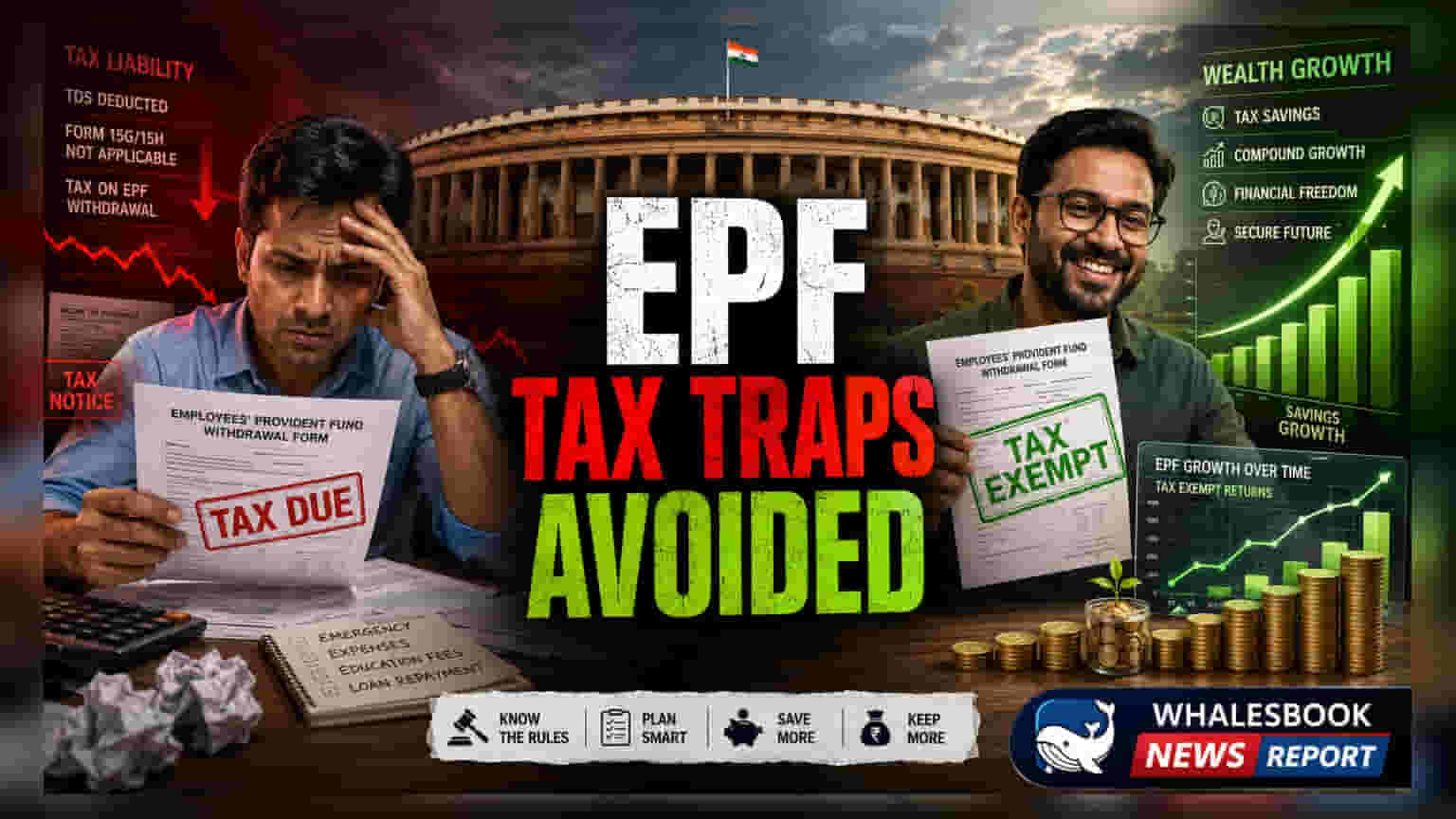
Starting in Assessment Year 2027, the new unified Form 121 will replace Forms 15G and 15H for tax-free EPF withdrawals. Understanding these rules is essential to avoid TDS, which can reach up to 34.6% if your PAN is not linked. Early withdrawals before five years of continuous service generally attract tax unless specific exemptions are met.
Managing your Employees' Provident Fund (EPF) requires a clear understanding of tax rules, especially when planning a withdrawal. The most important rule to remember is the five-year service threshold. If you have completed five years of continuous service, your EPF withdrawal is tax-exempt. This applies to the entire amount, providing a significant benefit for long-term retirement savings.
Early Withdrawal and TDS Risks
If you withdraw your funds before completing five years of service, the amount becomes taxable. This withdrawn sum is added to your total annual income and taxed according to your specific income tax slab. Beyond this, the tax department levies Tax Deducted at Source (TDS) if the withdrawal exceeds ₹50,000 and your Permanent Account Number (PAN) is linked to your EPF account. If your PAN is not linked to your account, the tax deduction can be as high as 34.6%, representing the maximum marginal tax rate. Ensuring your PAN is updated in the EPFO system is a critical step for every member to avoid unnecessary financial loss.
The Shift to Form 121
Currently, members can avoid TDS on early withdrawals by submitting Form 15G (for those under 60) or Form 15H (for senior citizens) via the EPFO Member Portal. However, significant changes are arriving. From the Assessment Year 2027, the government is introducing a unified Form 121. This single document will replace both 15G and 15H, simplifying the declaration process for various income types, including EPF withdrawals, for all age groups. This change aims to streamline the tax exemption process for individuals regardless of their age.
Essential Forms for Different Needs
Navigating the EPFO system involves using the correct forms for your situation. If you are still employed but need money for specific reasons like medical emergencies or home construction, you must use Form 31 for partial advances. Once you leave your job, you will need to use Form 19 for the final settlement of your PF account and Form 10C if you are eligible to claim pension benefits under the Employees' Pension Scheme (EPS). A common point of friction for many employees is the delay in final settlement due to an unverified or missing 'date of exit' in the records. Before initiating any final withdrawal request, always verify that your previous employer has officially updated your date of exit in the EPFO portal. Keeping your UAN, KYC, and employment records updated remains the most effective way to ensure smooth and tax-efficient processing of your claims.