

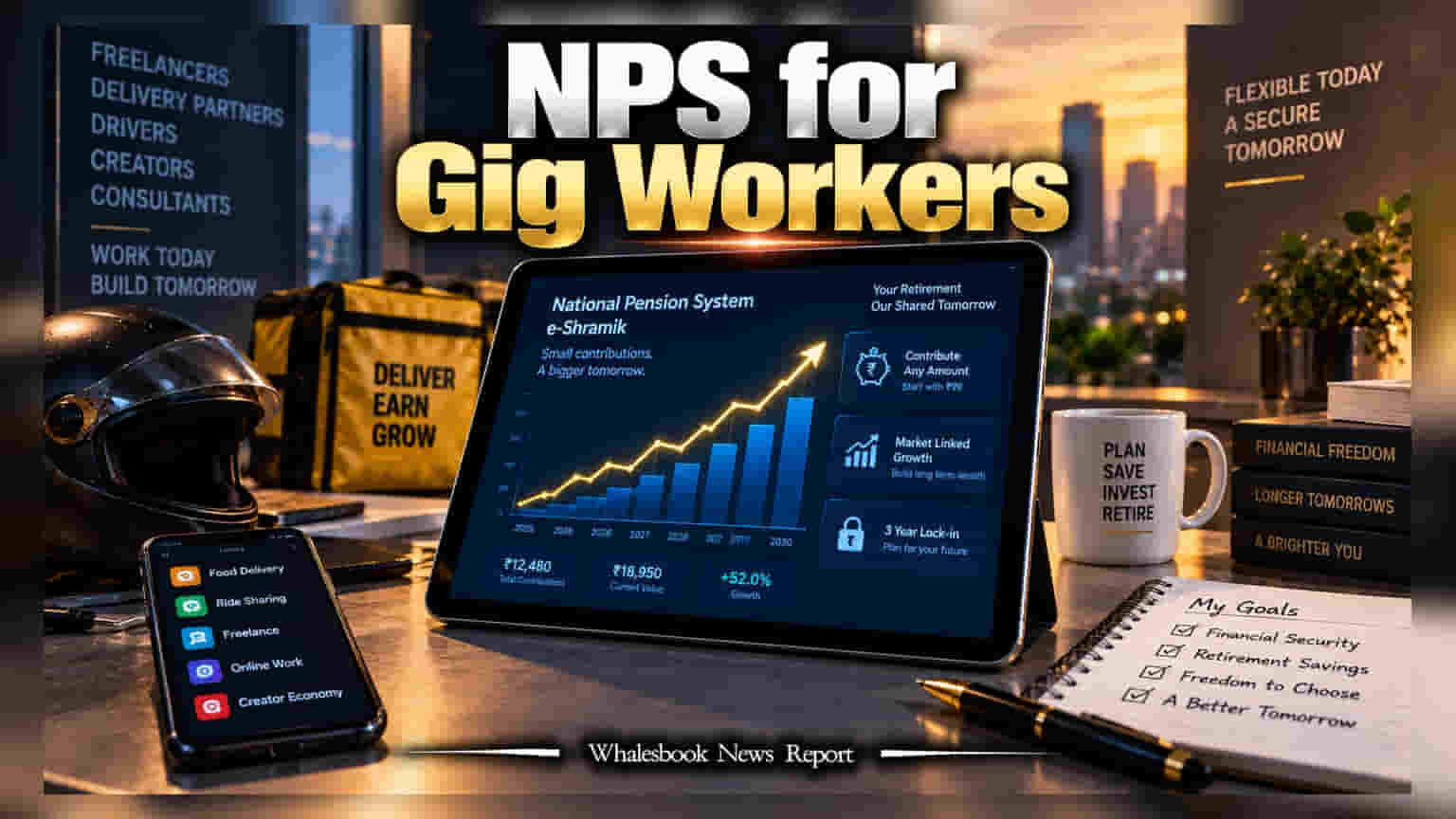
The NPS e-Shramik model allows gig workers to build retirement savings without fixed monthly mandates. By scaling contributions to match irregular income, freelancers can leverage compounding over time. However, participants must understand that returns are market-linked and Tier I accounts have strict withdrawal limitations, making this a long-term commitment rather than a flexible liquid asset.
For many gig workers and freelancers, retirement planning has traditionally been difficult due to the lack of employer-sponsored schemes and the challenge of managing irregular cash flows. The National Pension System (NPS) e-Shramik model, introduced in October 2025, addresses these barriers by removing the requirement for fixed monthly deposits. This system allows workers to make contributions that scale with their earnings, ensuring that retirement savings do not become a financial burden during months of lower income.
Scaling Contributions to Match Earnings
The core design of the e-Shramik model focuses on flexibility. Unlike standard pension plans that often require consistent monthly payments, this structure allows subscribers to adjust their investment amounts whenever they receive payments from platforms or clients. This adaptability is particularly useful for those in the gig economy, where income can vary significantly from month to month. Because there is no regulator-mandated minimum or maximum contribution for this model, workers can begin with small amounts—such as ₹99—allowing them to maintain an active account and benefit from the power of compounding without the pressure of a fixed, recurring expense.
The Reality of Market-Linked Returns
Investors using the NPS must understand that it is a market-linked defined contribution scheme, which is fundamentally different from a guaranteed-return product like a bank fixed deposit. The retirement corpus grows based on the performance of the underlying assets, which include equity, corporate bonds, and government securities. Consequently, the final payout is subject to market volatility. Because there are no guaranteed returns, subscribers should monitor their asset allocation choices—whether they select an active investment strategy or rely on the system’s auto-choice mechanism to adjust risk based on age.
Managing Liquidity and Withdrawal Risks
While the flexibility of the contribution model is a benefit, the liquidity structure of the NPS requires caution. Funds deposited into Tier I accounts are subject to a three-year lock-in period. Even after this period, partial withdrawals are restricted to 25 percent of the subscriber's own contributions and are permitted only for specific life events. This means the NPS should not be treated as a primary emergency fund; gig workers need to maintain separate, accessible savings for immediate financial setbacks to avoid needing to liquidate long-term retirement assets prematurely. Longevity and inflation risks also remain; consistent, long-term contributions are necessary to build a corpus that is sufficient to meet expenses after retirement. The next important step for subscribers is to track their account activity regularly and ensure that their chosen asset allocation aligns with their personal risk appetite as their financial situation evolves.