

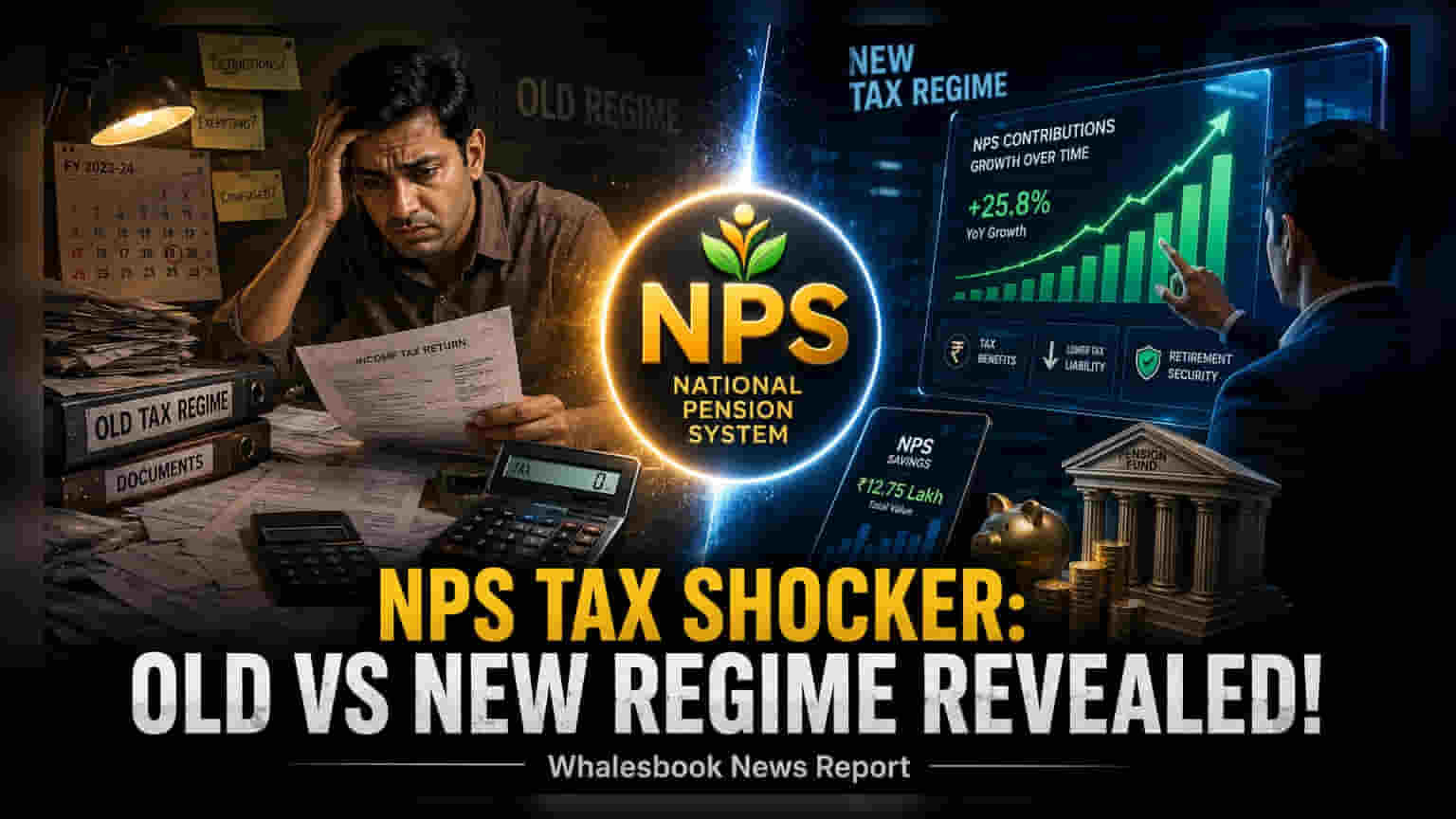
Salaried employees must navigate different tax rules for National Pension System (NPS) contributions. While the old regime offers broader deductions for personal and employer investments, the new regime limits benefits primarily to employer-led contributions. Choosing the right path requires balancing immediate tax savings against long-term retirement planning goals.
Navigating tax planning for the National Pension System (NPS) has become a critical exercise for salaried employees in India as they balance the benefits of the old and new tax regimes. The way these systems treat retirement contributions can significantly impact an individual's total tax liability, making it essential to understand the specific deductions available under each framework.
Tax Deductions in the Old Regime
The traditional tax structure continues to be more favorable for individuals who prioritize tax-saving through personal investments. Under the old regime, employees can claim deductions for their personal contributions to NPS under Section 80CCD(1). This is integrated into the cumulative Rs 1.5 lakh limit applicable to Sections 80C, 80CCC, and 80CCD(1).
Beyond this, the old regime provides a distinct advantage through Section 80CCD(1B), which allows for an additional deduction of up to Rs 50,000 exclusively for NPS investments. This effectively raises the potential tax-free threshold for long-term retirement savings. Additionally, employer contributions to NPS are deductible under Section 80CCD(2), capped at 14% of salary for government employees and 10% for private-sector employees.
Limitations Under the New Tax Regime
The new tax regime simplifies the tax process by removing many exemptions, including those tied to personal NPS investments. Individuals opting for the new regime cannot claim deductions for their personal contributions under Sections 80CCD(1) and 80CCD(1B).
However, the new regime does retain a specific benefit for those whose employers contribute to a Corporate NPS account. Under Section 80CCD(2), employer contributions remain deductible, and for private-sector employees, this limit has been enhanced to 14% of their basic salary plus eligible dearness allowance. This shift highlights a strategic preference in the new tax framework toward employer-driven retirement benefits rather than individual-led tax planning.
Strategic Retirement Planning
When deciding between these regimes, investors should look beyond immediate tax savings. While the old regime provides a higher number of deduction avenues, the new regime often offers lower tax rates on income, which may offset the loss of deductions for some taxpayers.
Investors should evaluate their total taxable income, existing investments, and the structure of their salary package—specifically whether their employer offers a corporate NPS scheme. Ultimately, the NPS serves as a low-cost, long-term wealth creation tool, and the decision to invest should be driven by one's retirement goals and risk appetite rather than solely by the tax benefits available in a given financial year. Readers may find it useful to calculate their tax liability under both regimes using their specific salary components and planned investments to determine which path provides the maximum financial benefit.