

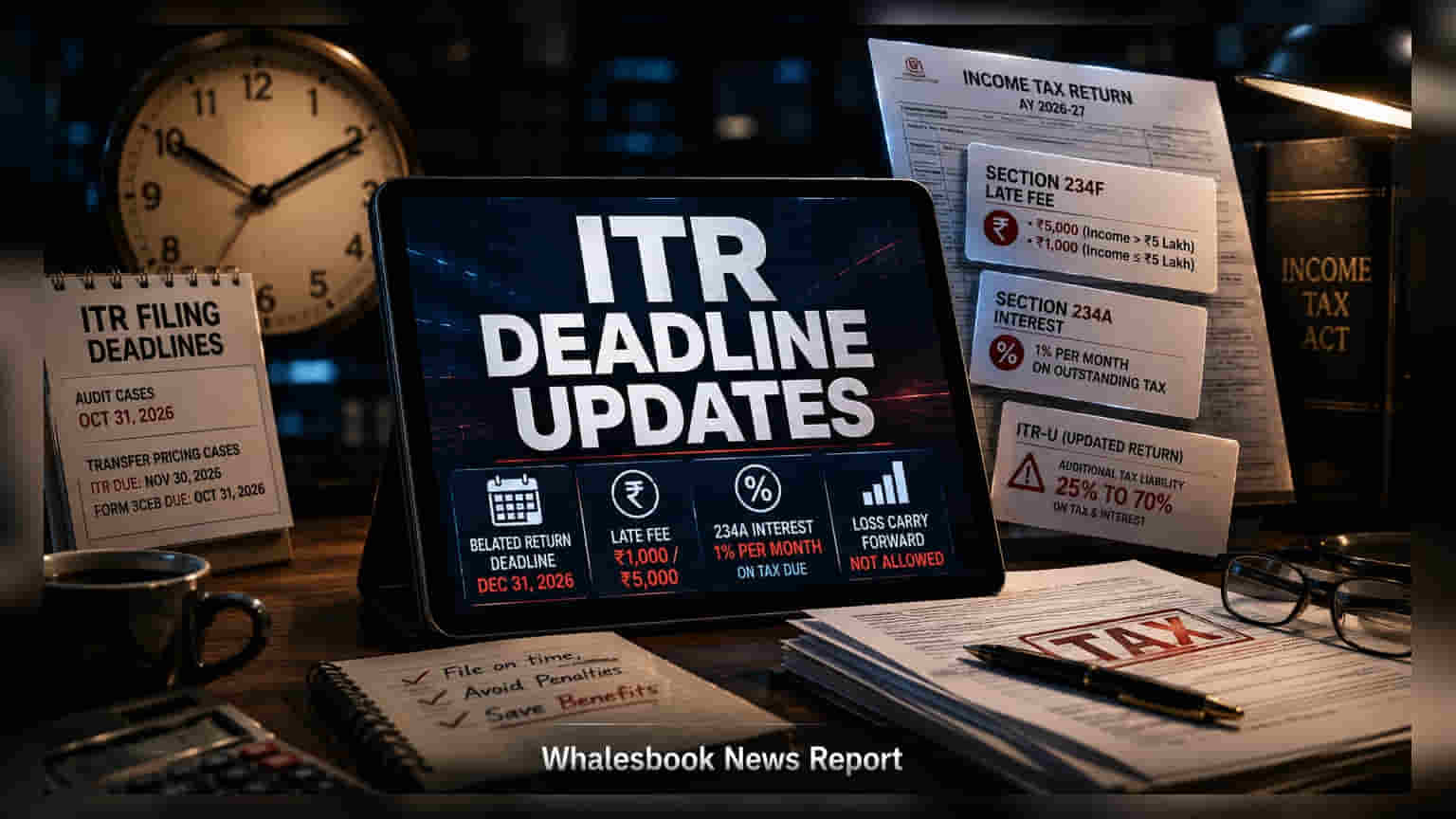
The standard ITR filing deadline for assessment year 2026-27 ended on August 31, 2026. Taxpayers can still file a belated return until December 31, 2026, though this involves late-filing fees, interest charges, and the loss of certain benefits like the ability to carry forward capital losses.
The primary August 31 deadline for filing Income Tax Returns (ITR) for the assessment year 2026-27 has passed. For taxpayers who missed this date, the Income Tax Act provides legal avenues to complete the filing, but these options come with financial consequences and limitations that are important to understand.
Taxpayers can file a belated return until December 31, 2026, under Section 139(4) of the Income Tax Act. While this helps maintain compliance, it is not free of cost. Filing late triggers a penalty under Section 234F. For individuals with a total income exceeding ₹5 lakh, the late fee is ₹5,000. For those with a total income of ₹5 lakh or less, the fee is reduced to ₹1,000.
Beyond the flat penalty, there is the issue of interest. Section 234A interest accrues at 1% per month on any outstanding tax liabilities. This means the longer the delay in paying the tax due, the higher the interest component will become.
For investors and business owners, there is a specific and significant disadvantage to filing a belated return. When a return is filed after the original due date, the taxpayer typically loses the right to carry forward capital losses or business losses to future assessment years. This is a critical loss, as these carried-forward losses are often used to offset future gains, thereby reducing the tax burden in subsequent years. Once this benefit is forfeited, it cannot be reclaimed for that specific assessment year.
It is also worth noting that not all taxpayers were subject to the August 31 deadline. Entities subject to mandatory tax audits have an extended filing deadline of October 31, 2026, provided their audit report is submitted by September 30, 2026. For those involved in transactions requiring transfer pricing reports, the timeline is even further extended, with the ITR submission due by November 30, 2026, and the related Form 3CEB due by October 31, 2026.
For taxpayers who missed the deadline but need to correct errors or declare missed income, the ITR-U (Updated Return) provides another route. This allows for the voluntary filing of returns to report previously unsubmitted income. However, this path is not punitive-free; it involves an additional tax liability ranging from 25% to 70% on top of the original tax and interest due, depending on the time elapsed since the end of the relevant assessment year.
The most important monitorable for those who missed the August 31 deadline is the December 31, 2026, cutoff. Filing before this date is essential to avoid the complications of failing to file a return entirely, which can lead to more severe regulatory scrutiny.