

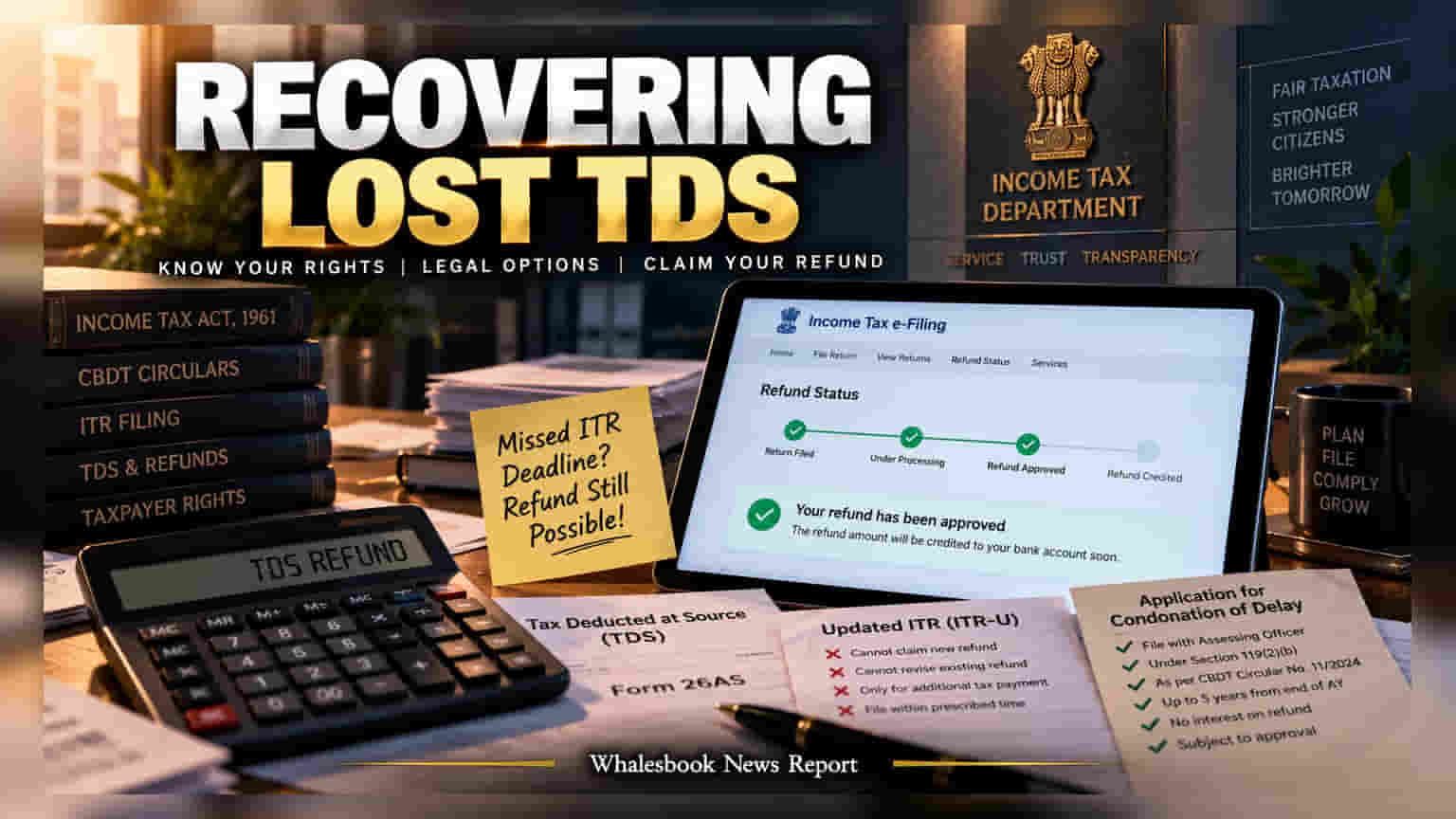
Taxpayers who missed the Income Tax Return deadline cannot use the Updated ITR route for refunds. Instead, they must apply for a condonation of delay under Section 119(2)(b) of the Income Tax Act. This process, governed by CBDT Circular 11/2024, enables taxpayers to seek legitimate refunds, though no interest is paid on the approved amount.
Missing the deadline for filing an Income Tax Return (ITR) often triggers anxiety for taxpayers expecting a refund of Tax Deducted at Source (TDS). While the Income Tax Department provides an 'Updated ITR' (ITR-U) facility for taxpayers to update or correct their returns, it is important to understand its limitations. The ITR-U window is specifically designed for taxpayers to pay additional taxes and file belated returns; it strictly prohibits the claiming of new refunds or the upward revision of existing refund claims.
The Condonation of Delay Mechanism
For taxpayers who missed the deadline but have a legitimate refund due, the legal framework provides an alternative route under Section 119(2)(b) of the Income Tax Act, 1961. This section empowers the Central Board of Direct Taxes (CBDT) to authorize income tax authorities to admit belated applications for refunds.
The current procedure is governed by CBDT Circular No. 11/2024, issued on October 1, 2024. This directive provides a structured process for taxpayers to request a 'condonation of delay.' By filing a formal application, taxpayers can request the tax authorities to accept their return even after the statutory deadline has passed, provided the primary intent is to claim a refund that was otherwise locked due to the missed filing date.
Application and Approval Process
Taxpayers seeking to invoke this provision must file an application with their jurisdictional Assessing Officer. The law allows for a generous window, permitting applications up to five years from the end of the relevant assessment year. Once the application is submitted, it is evaluated based on its merits.
The processing of these requests is not automatic. The CBDT has set specific monetary thresholds that determine which level of income tax authority—ranging from the Principal Commissioner or Commissioner of Income Tax to the Principal Chief Commissioner—is empowered to approve or reject the request. Taxpayers must provide a valid justification for why the original deadline was missed, as the authority exercises discretion in deciding whether to condone the delay.
Critical Caveats for Taxpayers
Before initiating this process, taxpayers should be aware of significant limitations. The most critical constraint is that no interest is paid on refunds granted through the condonation of delay route. While the taxpayer may recover the principal TDS amount, they forfeit the interest they would have earned had the return been filed on time.
Furthermore, the approval process is discretionary and can be time-consuming. There is no guarantee of success, and taxpayers must ensure their documentation regarding the delay is robust. Additionally, if the taxpayer has any outstanding tax demands, the approved refund may be adjusted against those dues under Section 245 of the Income Tax Act. Therefore, this route should be viewed as a final recourse for those with genuine refund claims rather than a standard alternative to timely filing.