

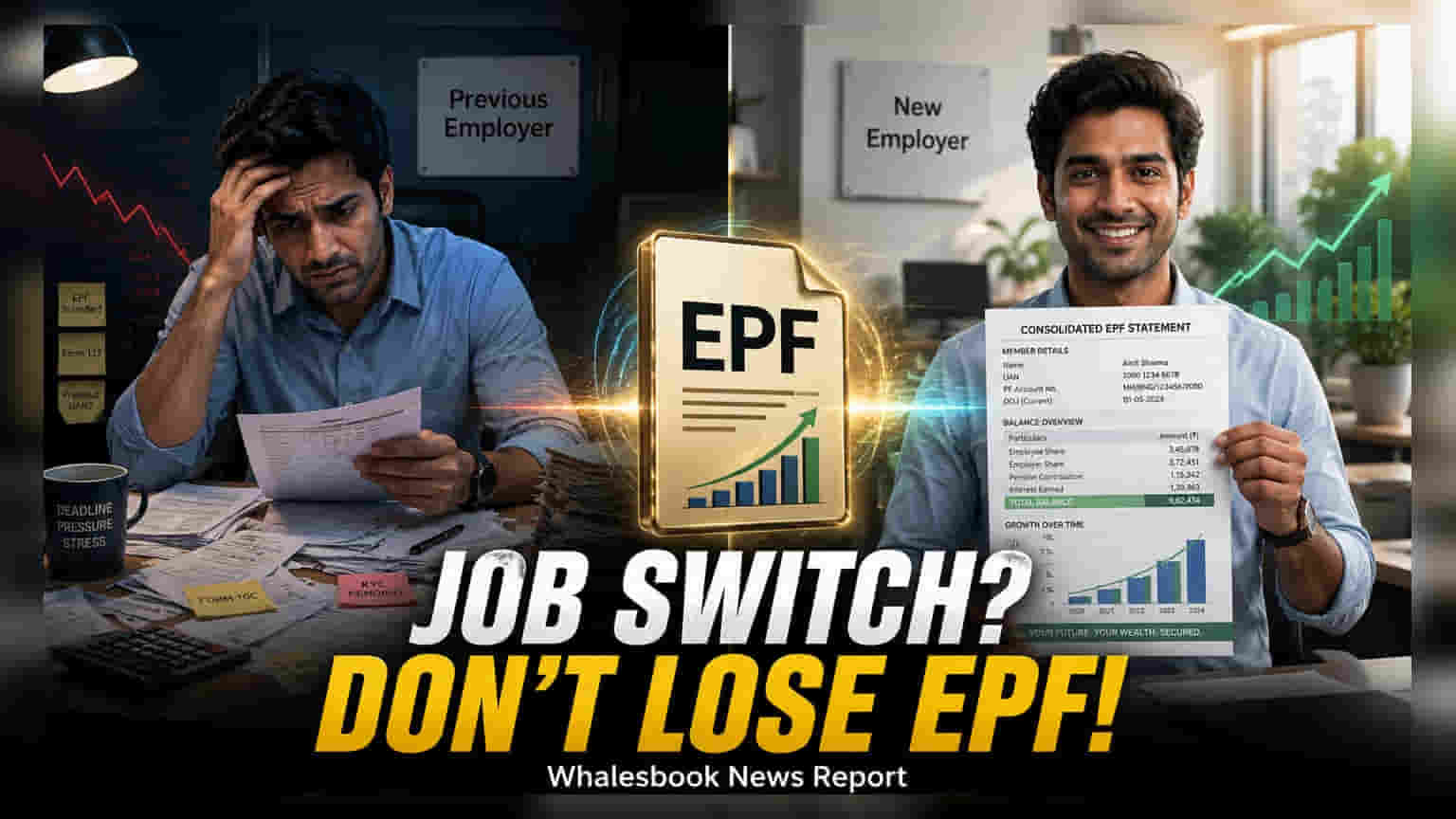
Switching jobs is a critical time to review your retirement corpus. Many employees forget to transfer their old Employees' Provident Fund (EPF) balances, which can lead to fragmented savings and potential tax implications. Consolidating your PF accounts ensures service continuity and allows your retirement money to grow through the power of compounding.
Many professionals focus on salary hikes and role changes when switching jobs, but often neglect a vital part of their financial planning: the Employees' Provident Fund (EPF). Leaving EPF balances in old accounts can disrupt your long-term retirement corpus and create unnecessary administrative hurdles. While the Universal Account Number (UAN) remains the same across different employers, the member IDs linked to each job change require manual consolidation to ensure a unified account.
The Cost of Ignoring Old Accounts
When you move to a new organization, failing to transfer your previous PF balance means your retirement savings remain scattered. This fragmentation can complicate tracking your total corpus. More importantly, withdrawing these funds upon leaving a job is often counterproductive. Early withdrawals before completing five years of continuous service can trigger tax liabilities, as the money is treated as taxable income in certain cases. By keeping the funds in the EPF system, you allow the power of compounding to work, which is a key driver for building a substantial retirement nest egg over decades.
Why Consolidation Matters
Consolidating your accounts is not just about convenience; it is about protecting your pension benefits. The Employees' Provident Fund Organisation (EPFO) calculates pension eligibility based on the total period of service. If your accounts are not linked correctly, your cumulative service record may show gaps, potentially affecting your eligibility for future pension payments under the Employees' Pension Scheme.
Preparing for the Transfer Process
To ensure a smooth transfer, accuracy of data is essential. Before initiating a transfer request on the EPFO portal, you must ensure that your KYC details—specifically your Aadhaar, PAN, and bank account information—are updated and match the records held by your current and previous employers. Even minor discrepancies in names, dates of joining, or dates of exit can lead to rejection of your transfer request.
Most discrepancies arise because the data in your previous employer's records does not align with your current Aadhaar-seeded profile. Employers must digitally verify and approve these requests, so keeping your profile updated on the unified member portal is the first step. If your previous employer is no longer operational, the process may involve additional verification steps, making it even more important to complete the transfer as early as possible after joining a new firm. Investors and employees should monitor the status of their transfer requests on the EPFO portal until the funds are successfully moved to the new member ID.