

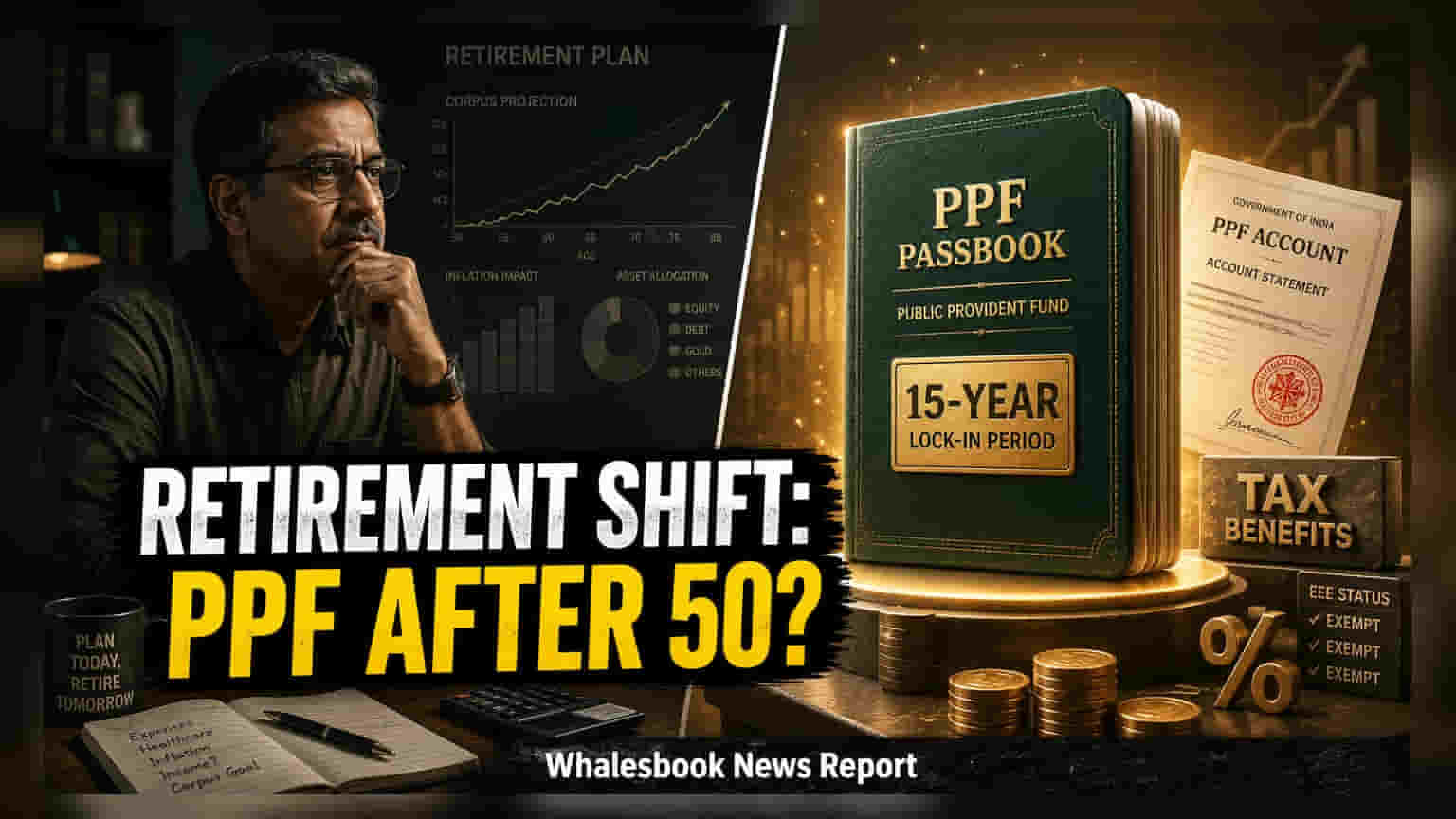
While often viewed as a tool for youth, the Public Provident Fund (PPF) remains a stable retirement option for those over 50. With sovereign safety and tax-free returns, it offers financial stability, but the 15-year lock-in requires careful planning against liquidity needs. Experts suggest using it as part of a balanced portfolio rather than a sole investment.
Many investors believe that the Public Provident Fund (PPF) is a savings tool intended only for the start of one's career. However, for individuals crossing age 50, the scheme can still serve as a foundational pillar for retirement security. Its appeal lies in its combination of sovereign safety and tax efficiency, though it requires a clear understanding of its structure and limitations.
Sovereign Safety and Tax Efficiency
The primary driver for choosing the PPF at any age is the safety provided by the Government of India. For investors nearing retirement, protecting capital often becomes as important as growing it. The PPF offers a stable, sovereign-backed return, which is currently 7.1% per annum. While this rate is subject to quarterly government revisions, it provides predictable income for risk-averse investors who want to avoid the volatility of stock or bond markets.
From a tax perspective, the PPF remains one of the most efficient vehicles available. Contributions up to the limit qualify for deductions under Section 80C of the Income-Tax Act. More importantly, the interest earned and the final maturity proceeds are tax-free under current laws. This 'EEE' (Exempt-Exempt-Exempt) status helps retirees preserve more of their corpus compared to taxable fixed-income options.
The 15-Year Lock-In Challenge
A critical factor for anyone opening a PPF account at 50 is the mandatory 15-year maturity period. This means the funds would generally be accessible around age 65. For those planning to retire soon, this long-term lock-in can create liquidity pressure. While the scheme allows for partial withdrawals starting from the 7th financial year, these are limited and subject to specific rules.
Investors must assess their cash flow requirements before committing funds. If there is a risk that money might be needed for medical emergencies, house repairs, or immediate living expenses within the next few years, parking a large portion of capital in the PPF might not be ideal. The scheme is designed for long-term holding, not for active savings or short-term liquidity.
Portfolio Role and Inflation Risk
Financial planners often emphasize that the PPF should be viewed as a 'safety component' of a larger retirement portfolio rather than a sole wealth-creation engine. While it offers stable returns, it may not always beat inflation significantly over the long term. A balanced retirement strategy typically includes a mix of liquid assets for immediate needs, growth assets for long-term wealth, and safe instruments like the PPF for stability.
Investors who already have a large portion of their savings in volatile assets might find the PPF a useful hedge. However, those who lack a liquid emergency fund should prioritize building that buffer before locking money into a 15-year instrument. The key is to avoid over-allocating capital to the PPF at the expense of necessary financial flexibility. Monitoring government announcements regarding interest rate adjustments and withdrawal rules remains important for maintaining an effective retirement plan.