

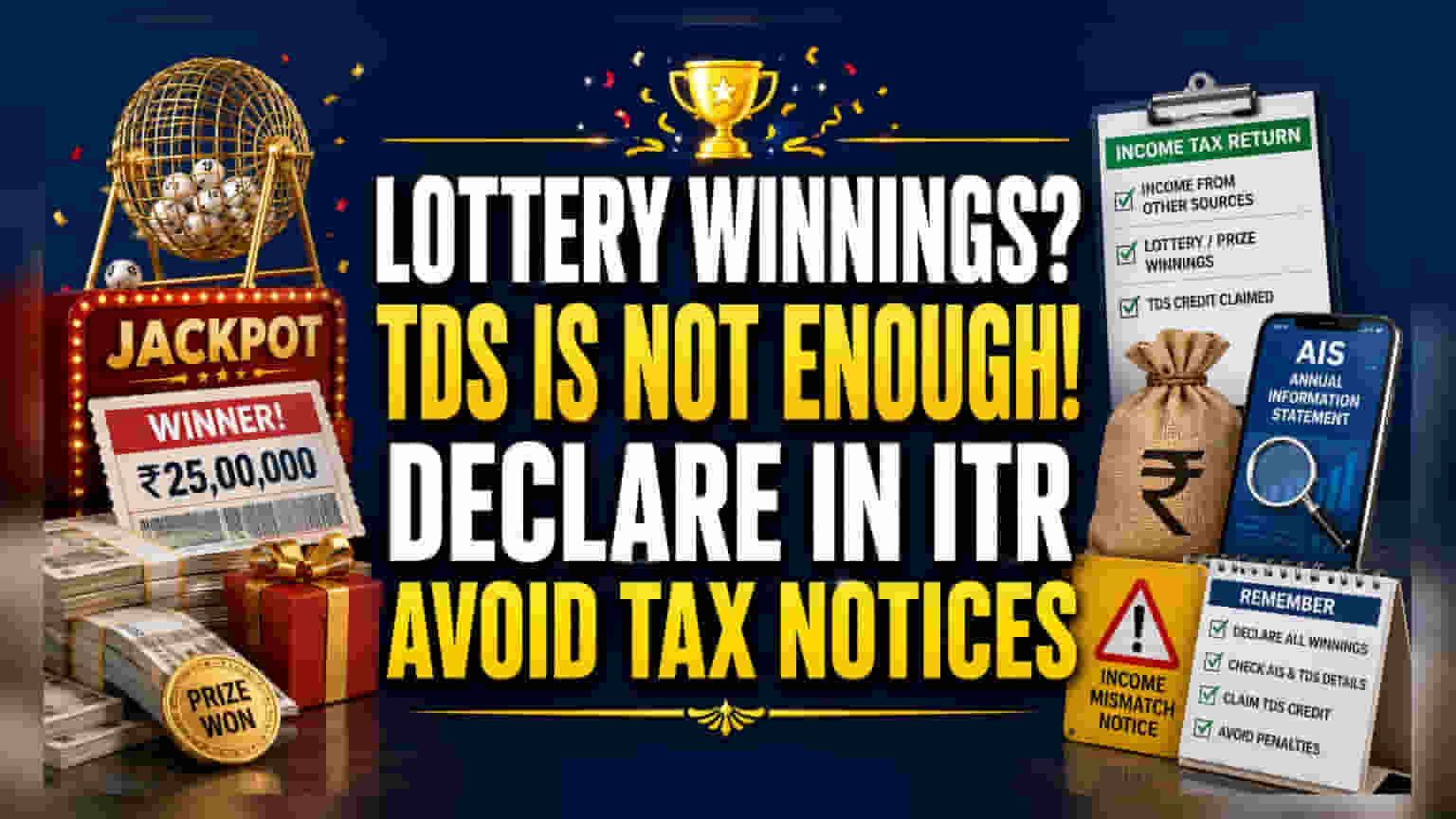
Taxpayers are legally required to report all lottery and prize winnings in their Income Tax Returns, even if Tax Deducted at Source (TDS) has already been applied. Failing to disclose this income often leads to tax department scrutiny, penalties, and mismatches with the Annual Information Statement. These winnings face a flat 30% tax rate with no allowance for deductions or loss set-offs.
Mandatory Disclosure of Lottery Winnings
Many taxpayers assume that once Tax Deducted at Source (TDS) is taken from lottery or prize winnings, the tax obligation is settled. However, tax compliance rules require that all such winnings must be explicitly declared in the Income Tax Return (ITR). Even when the organizer or payer has already deducted tax at the source, this does not exempt the individual from the legal obligation to report the total income received.
How Lottery Income is Taxed
Income categorized under lottery, crossword puzzles, card games, horse races, or online gaming follows a specific tax structure in India. These winnings are taxed at a flat rate of 30%, which is further subject to any applicable surcharge and cess.
One of the most important aspects for taxpayers is that these winnings are treated differently than salary or business income. There are no provisions to claim deductions for expenses, commissions, or allowances against these winnings. Furthermore, taxpayers cannot set off any losses from other investment activities against these specific earnings. The full gross amount of the prize is taxed at the 30% rate, regardless of the individual’s total income bracket.
Avoiding Tax Notices and AIS Mismatches
Every taxpayer has access to an Annual Information Statement (AIS) provided by the Income Tax Department. This statement compiles financial data linked to a Permanent Account Number (PAN), including TDS deducted by third parties. When a taxpayer receives prize money, the organizer reports the TDS transaction to the tax authorities.
If the taxpayer omits this income from their ITR, a mismatch occurs between the income reported by the taxpayer and the information available in the AIS. This discrepancy acts as a red flag for the Income Tax Department, often triggering automated notices seeking clarification. Responding to these notices can be time-consuming and may lead to interest or penalties if the income is found to have been intentionally under-reported.
Understanding the Reporting Rules
To ensure compliance, all lottery and prize winnings should be reported under the "Income from Other Sources" head in the ITR. Reporting this income serves two purposes: it ensures the correct computation of total annual income and allows the taxpayer to claim credit for the TDS already paid. By correctly filling out the ITR, the tax credit is adjusted against the final tax liability.
What Taxpayers Should Keep in Mind
When filing taxes, verify all entries against the AIS to ensure no income or TDS entry is missed. If you have won any prize money exceeding Rs 10,000 where TDS was applicable, verify the specific TDS certificate provided by the payer. Ensuring that the income is disclosed correctly during the initial filing process helps in avoiding unnecessary scrutiny, potential tax demands, and the hassle of filing revised returns later.