

The Mumbai ITAT has granted relief to an NRI, reducing a 200% tax penalty on undisclosed interest income to 50%. The tribunal ruled that the failure to disclose Rs 14.02 lakh was not deliberate misreporting under Section 270A. This decision provides clarity on the distinction between administrative negligence and intentional tax evasion for taxpayers who rely on third-party professionals.
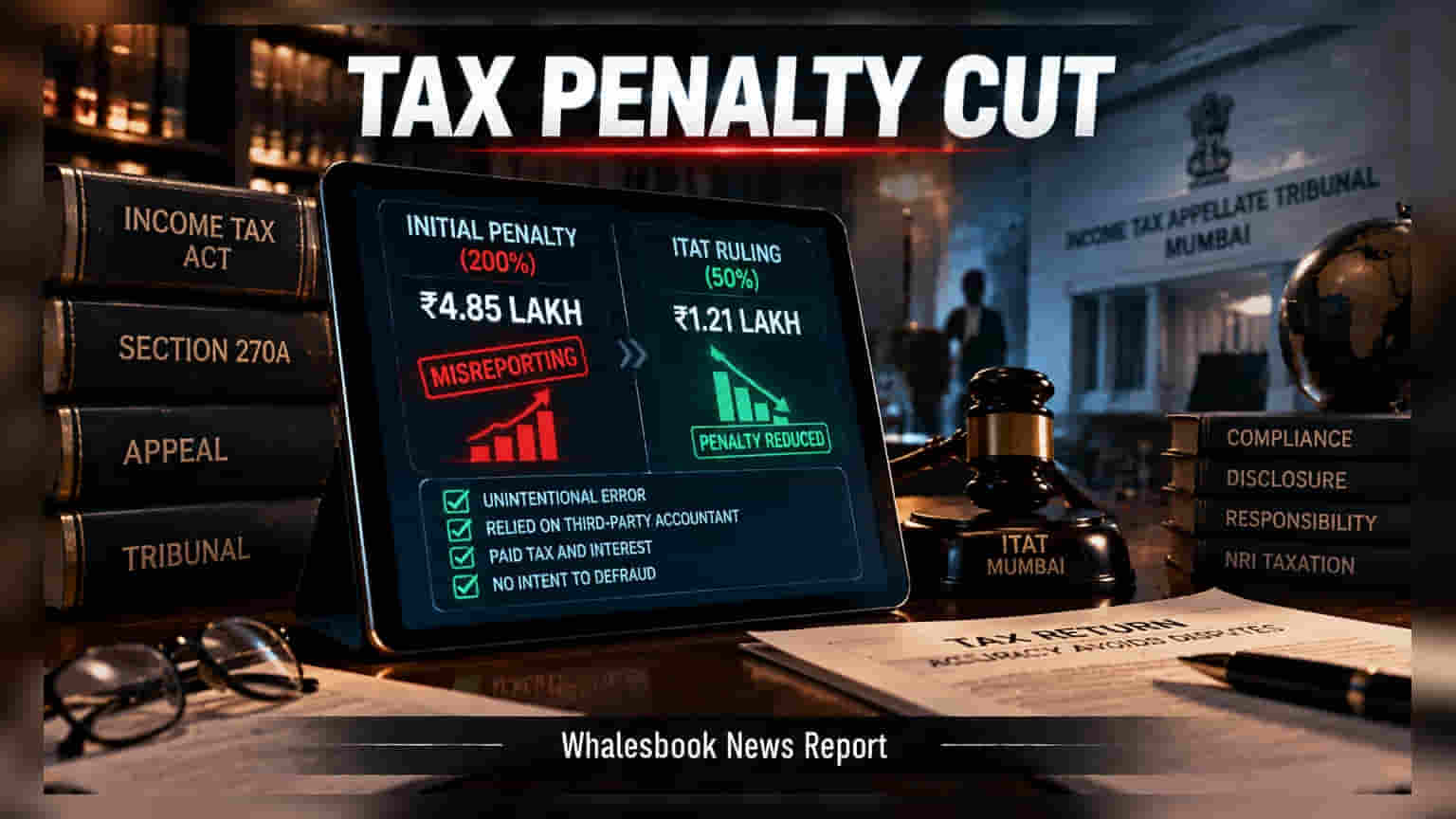
The Income Tax Appellate Tribunal (ITAT) in Mumbai recently provided relief to a non-resident Indian (NRI) regarding a significant tax penalty dispute. The case involved an NRI who had failed to disclose interest income totaling Rs 14.02 lakh for the assessment year 2020-21. Initially, tax authorities categorized this omission as deliberate misreporting, which triggered a 200% penalty under Section 270A of the Income Tax Act, amounting to Rs 4.85 lakh.
Following an appeal, the tribunal examined the intent behind the omission. The taxpayer argued that the error was not intentional but resulted from relying on a third-party accountant and failing to notice electronic notifications from the tax department. The NRI had paid the outstanding tax liability and interest, totaling roughly Rs 5.49 lakh, as soon as the discrepancy was identified in January 2025. Her legal team contended that these actions proved there was no intent to defraud the exchequer.
The ITAT ruled in favor of the taxpayer, distinguishing between under-reporting and deliberate misreporting. Under Section 270A, misreporting carries a steeper penalty of 200%, whereas standard under-reporting generally attracts a 50% penalty. The tribunal concluded that the revenue department must provide concrete evidence of intentional concealment to justify the higher 200% rate. Consequently, the penalty was reduced to 50%, or Rs 1.21 lakh.
This ruling clarifies a critical distinction for taxpayers. Administrative errors, or failures caused by relying on third-party intermediaries, do not automatically qualify as misreporting. However, the decision also carries a cautionary note for taxpayers. While professional accountants are standard for managing tax filings, the tribunal emphasized that the ultimate legal and financial responsibility for accurate disclosures remains with the individual taxpayer. Taxpayers, especially those living abroad, are responsible for verifying their tax returns before submission, regardless of whether they employ third-party services. This case underscores that while unintentional errors may avoid the maximum penalty, preventing the initial error through regular oversight remains the most effective way to avoid tax disputes and litigation costs.