

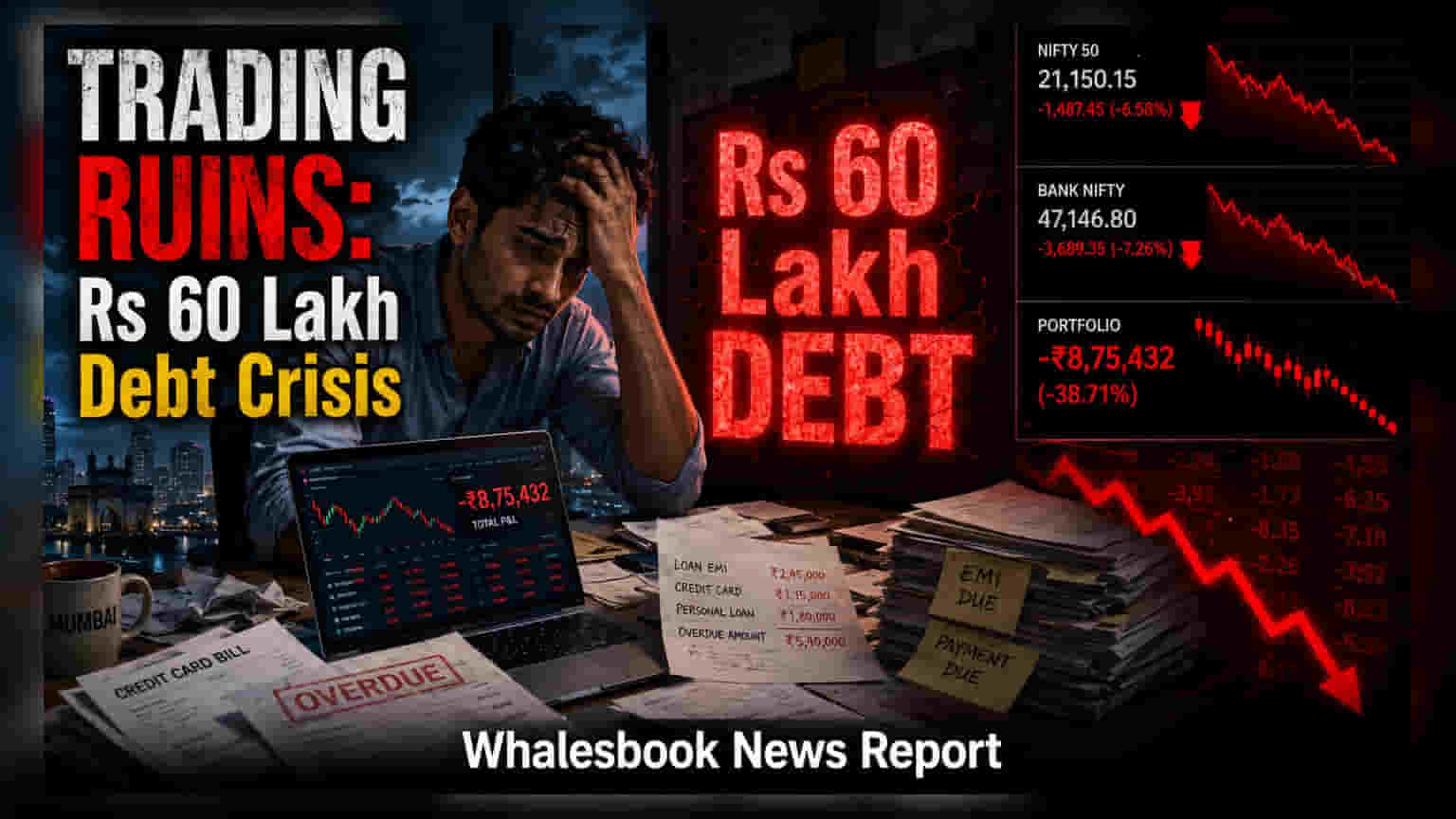
A Mumbai-based IT manager reports Rs 60 lakh in debt following significant losses in futures and options (F&O) trading. With monthly EMI obligations of Rs 1.85 lakh exceeding his Rs 1.6 lakh salary, the situation underscores the extreme financial risks associated with high-leverage derivative trading for retail investors.
A 35-year-old manager at a multinational IT firm in Mumbai has brought attention to the severe financial risks of retail trading after disclosing a personal debt of approximately Rs 60 lakh. The debt, accumulated through losses in futures and options (F&O) trading, has created a critical cash-flow crisis for the individual, who now faces EMI obligations that outpace his monthly income.
The Mechanics of the Debt Trap
The individual’s current financial standing serves as a case study in the dangers of over-leveraged trading. While earning a monthly salary of Rs 1.6 lakh, his total monthly EMI commitments have climbed to Rs 1.85 lakh. This creates a recurring monthly deficit of Rs 25,000, excluding essential household expenses. The debt structure is complex, comprising personal loans, credit card dues of roughly Rs 7 lakh, and various liabilities owed to non-banking financial companies (NBFCs) and digital lending platforms.
For many retail investors, F&O trading is often viewed as a way to generate quick wealth, but the high-leverage nature of these instruments means losses can rapidly exceed capital. When traders attempt to recover these losses by taking on more debt—often through unsecured personal loans or credit cards—the result is frequently a rapid build-up of interest-heavy liabilities that can become unsustainable.
Broader Market and Regulatory Context
The popularity of F&O trading among Indian retail investors has grown significantly in recent years. However, market regulators and financial experts have consistently highlighted that a vast majority of individual traders face losses in the derivatives segment. The primary risk lies in the tendency to treat trading as a source of income rather than a high-risk activity, leading to emotional decision-making and, in cases like this, severe financial distress.
Risks and Financial Implications
When debt obligations exceed income, the first impact is typically on credit scores, which can affect an individual's long-term ability to access credit. The inability to consolidate debt often stems from this weakened credit profile. In such scenarios, individuals usually face limited options: they may attempt to negotiate for longer repayment tenures with lenders, seek debt counseling, or look for ways to reduce interest costs by shifting high-interest debt to lower-interest products if eligibility permits.
Legal and recovery processes can also become a concern for those who fall behind on payments, as NBFCs and banks have specific protocols for debt collection. For many, the mental stress of managing secret debt—keeping the situation hidden from family—further compounds the difficulty of finding a resolution. The individual in this case has reportedly ceased all trading activity and is seeking professional guidance on restructuring, highlighting that the primary step in addressing such a crisis is to stop the underlying behavior that caused the loss and to acknowledge the financial reality to find a sustainable path forward.