 Whalesbook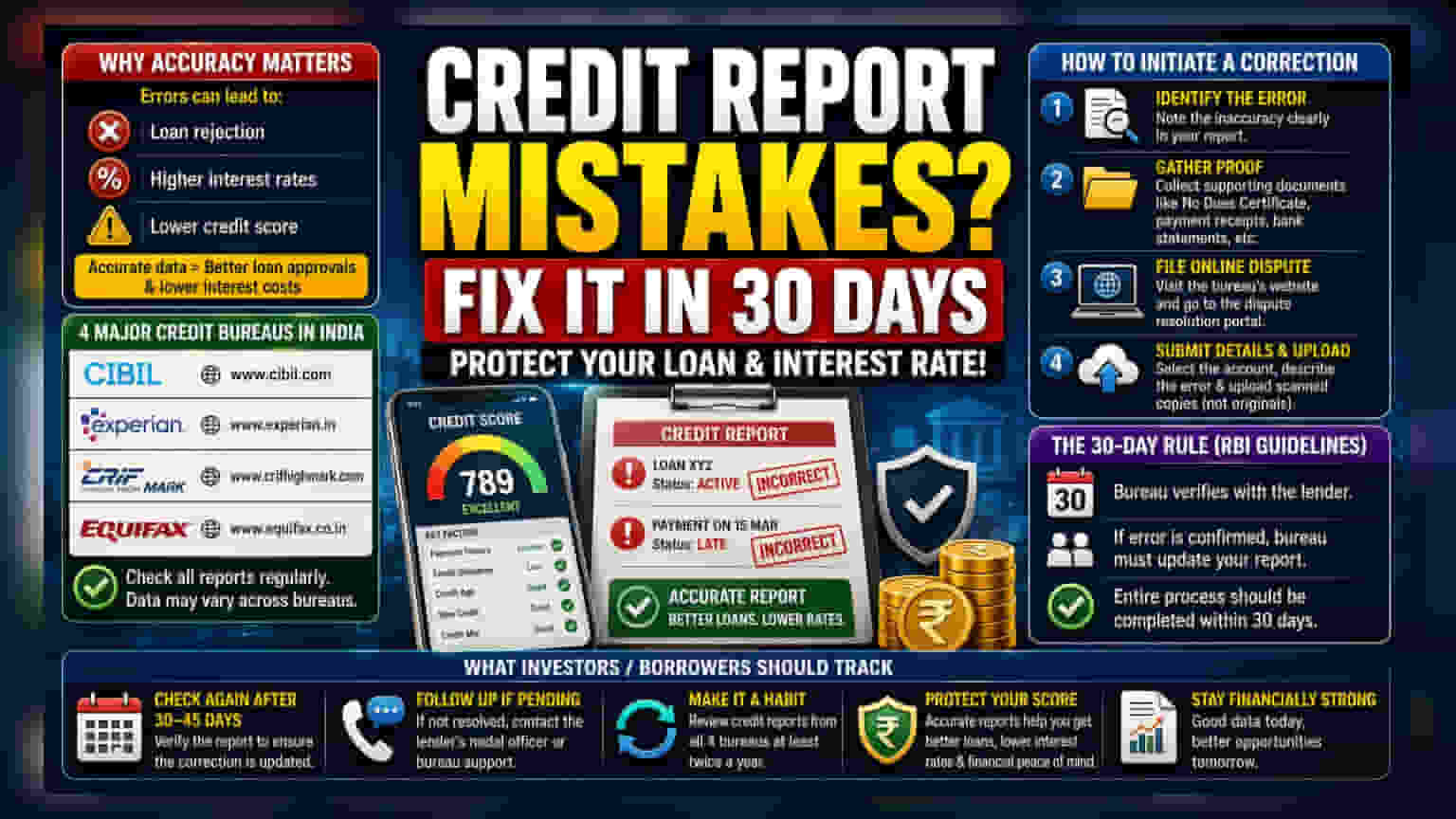


A simple error on your credit report can lead to rejected loan applications or higher interest rates. Learn how to review your report, identify wrong entries, and use the official dispute process to fix them, including the 30-day resolution timeline mandated by regulators.
What Happened
Credit reports act as your financial scorecard. Lenders in India use these reports to decide whether to approve your loan and what interest rate to charge. Sometimes, these reports contain mistakes—such as a loan that is already closed appearing as 'active,' or a late payment marker for a bill that was paid on time. Because lenders rely on this data, any inaccuracy can stop you from getting a loan or force you to pay higher interest costs.
Why Accuracy Matters for Borrowers
Banks and non-banking financial companies perform a risk-based pricing assessment. If your credit report suggests you have high debt or a history of missed payments, you may be categorized as a 'high-risk' borrower. This could lead to a rejection of your loan application or an increase in the interest rate offered. Therefore, ensuring the data in your report is 100% accurate is not just about paperwork; it directly impacts your ability to borrow money at a fair cost.
The Four Major Credit Bureaus
In India, credit data is maintained by four major credit information companies: CIBIL, Experian, CRIF High Mark, and Equifax. It is a common mistake to check only one report. Because different lenders report data to different bureaus, discrepancies can exist in one report but not in others. Prudent financial management involves checking your profile across these bureaus periodically, rather than waiting until you need to apply for a loan.
How to Initiate a Correction
If you find a mistake, the process to fix it is straightforward and mostly digital. First, document the error clearly. If a loan is marked as active when you have already paid it off, gather your 'No Dues Certificate' or a letter of closure from the lender. If the late payment marker is wrong, save your payment receipts or bank statement showing the transaction date.
Once you have proof, visit the website of the specific credit bureau where the error appears. All four bureaus provide an online dispute resolution portal. You will need to select the account in question, describe the error, and upload your supporting documents. Avoid sending original documents; always use clear, scanned copies.
The 30-Day Rule
According to Reserve Bank of India (RBI) guidelines, credit information companies must resolve disputes within a specific timeframe. Once you submit a valid dispute, the bureau contacts the lender to verify the information. If the lender confirms the error, the bureau must update your report. Generally, the entire process should be resolved within 30 days. If the resolution is delayed, you have the right to follow up with the bureau and, if necessary, the lender's nodal officer.
What Investors Should Track
Do not assume a dispute is resolved just because you submitted it. The most important monitorable is the final update on your credit report. Check your report again 30 to 45 days after filing the dispute. If the status has not changed, contact the lender again or reach out to the bureau's support team. For those who frequently borrow or manage multiple credit lines, making this review a bi-annual habit is a simple way to protect your financial standing.