

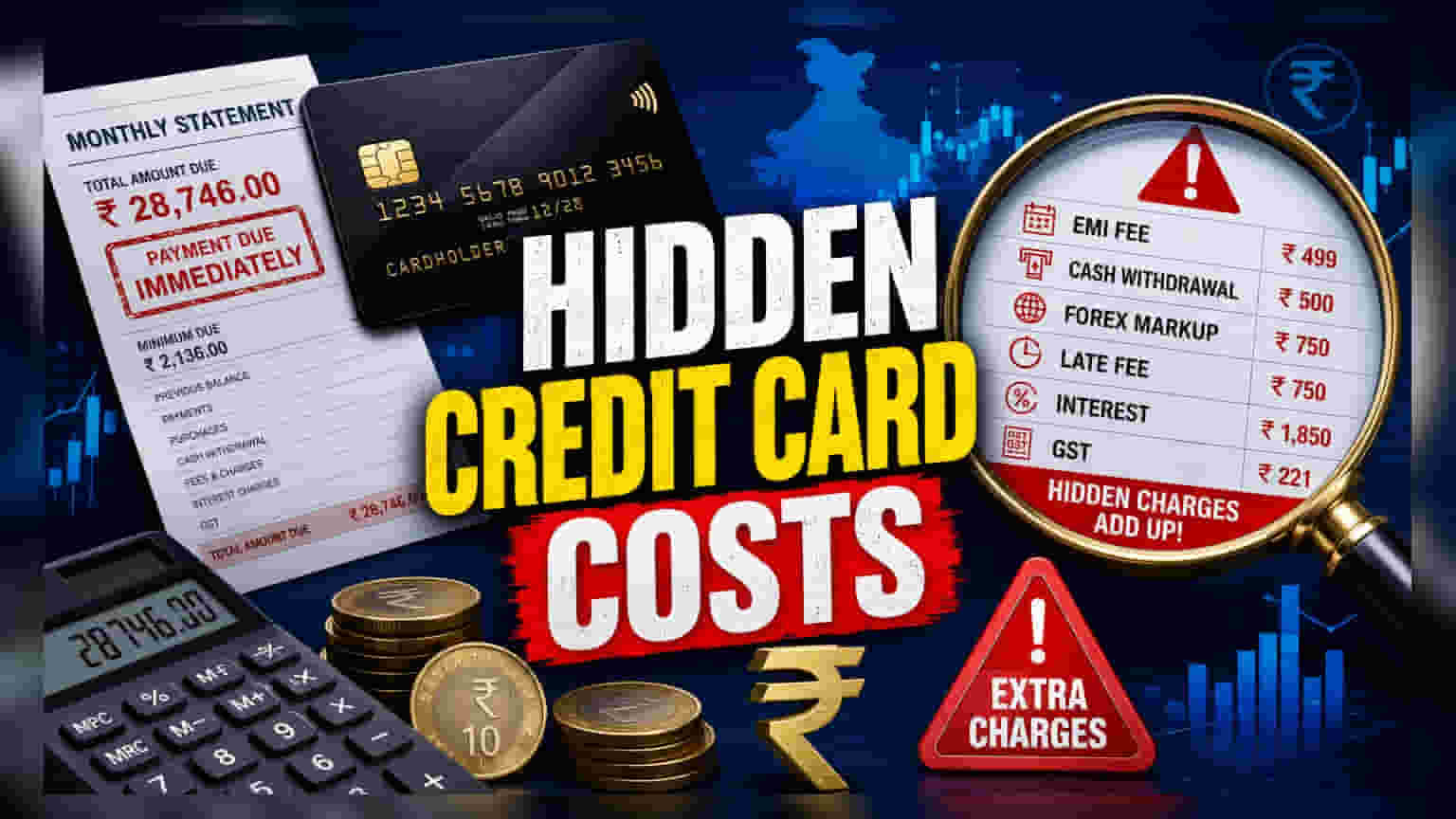
Credit card users often pay more than expected due to charges hidden in the fine print. From high-interest cash withdrawals to forex markups and EMI processing fees, these costs can quickly drain personal savings. Understanding the specific fee structure and GST impact is vital for maintaining a healthy financial balance.
Understanding The Hidden Costs Of Credit Cards
Many credit card users in India often focus on the annual fee or the interest rate, but the real impact on personal savings frequently comes from incidental charges. These costs are often bundled into the monthly statement, making them easy to miss. Understanding how these fees work is the first step toward effective financial management.
The Reality Of No-Cost EMIs
One of the most common features used by shoppers is the Equated Monthly Instalment (EMI) option. While marketing often promotes "No-Cost EMIs," consumers should be aware that these plans are rarely truly free. Banks typically charge a processing fee on the principal amount, and this fee itself attracts an 18% Goods and Services Tax (GST). Furthermore, if the processing fee is paid upfront, it reduces the immediate cash balance, or if it is added to the EMI, it increases the total monthly payout. Consumers should verify if the product price has been inflated to cover the interest cost, which is a common practice in such schemes.
The High Price Of Cash And Forex
Using a credit card to withdraw cash is one of the most expensive financial habits. Unlike standard purchases that offer an interest-free period (usually 30 to 50 days), cash advances attract interest from the very day of withdrawal, often at a higher rate. Additionally, a flat transaction fee or a percentage of the withdrawn amount is levied immediately. Similarly, international transactions carry a foreign currency markup fee. This fee, which can range from 2% to 3.5% of the transaction value, is applied before GST. Frequent international usage without a specialized card can significantly increase the final bill.
The Compounding Effect Of Late Fees And GST
Missing a payment deadline triggers a cascade of expenses. Card issuers charge a late payment fee, which is tiered based on the total outstanding amount. Because the credit card balance also accrues interest (often ranging from 30% to 42% per year), the cost of a missed payment grows quickly. Importantly, all bank charges—including annual fees, late fees, and interest—are subject to 18% GST. This effectively adds a significant layer to every penalty paid to the bank.
What Users Should Track
To keep costs under control, cardholders should regularly monitor their monthly statements for automatic subscription renewals, which often continue after the user has stopped using a service. Checking the "Schedule of Charges" document provided by the bank is also recommended, as it lists all potential fees, including those for card replacement, duplicate statements, or reward point redemption. Maintaining a track of these incidental charges helps in preventing unnecessary spending and ensures that credit card usage remains a tool for convenience rather than a source of financial drain.