

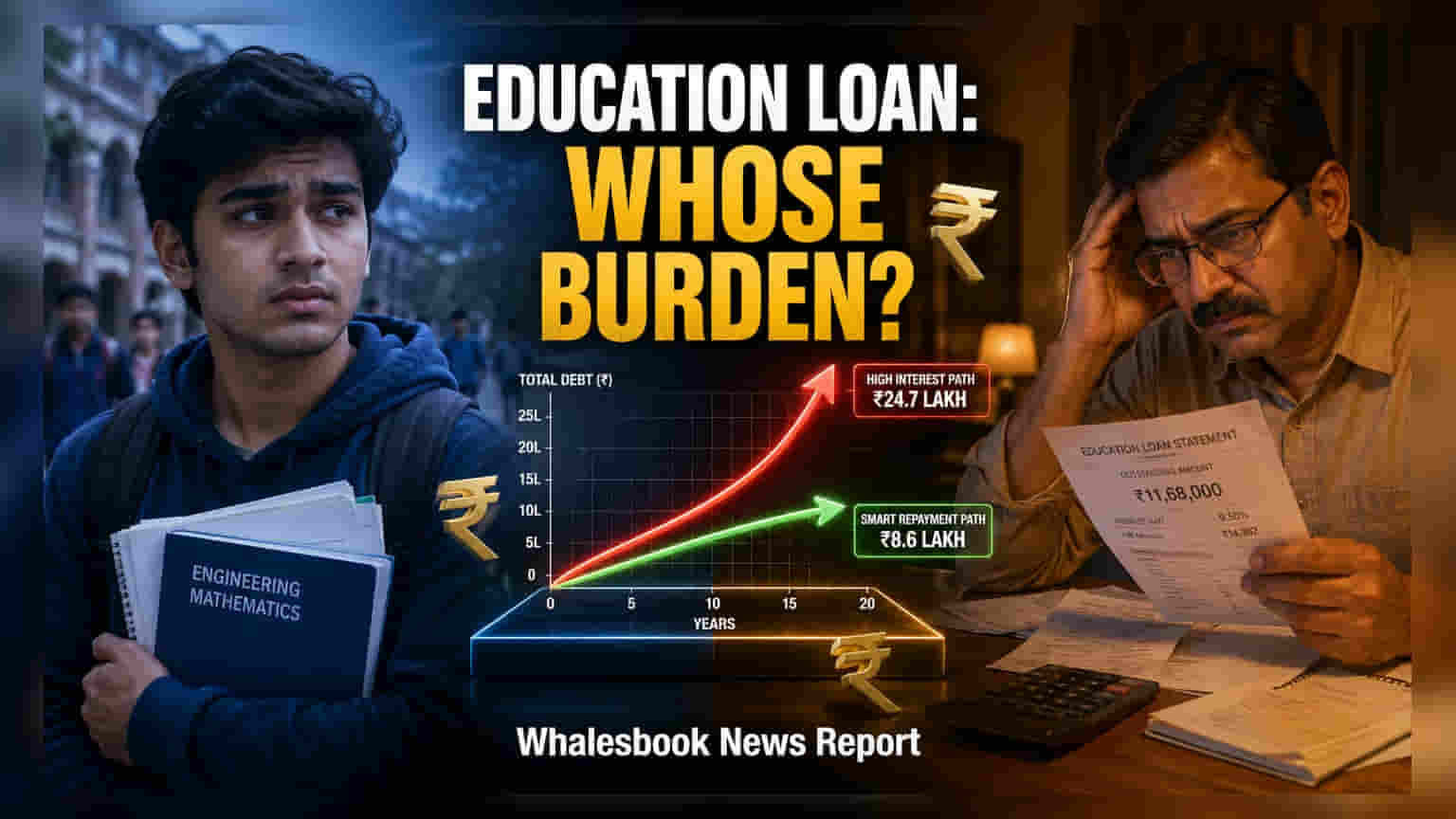
Deciding who acts as the primary borrower for an education loan is a strategic choice. While students often aim to take loans in their own name, banks typically mandate a parent or guardian as a co-borrower. This makes the parent's credit profile, income, and existing debt levels essential factors in determining loan approval and interest rates.
When planning for higher education financing, families often face a common question: should the loan be in the student's name or the parent's name? While the loan is for the student's future, the reality of the Indian banking system is that lenders almost always require a parent or guardian to act as a co-borrower. This is primarily because students, at the start of their academic journey, lack a steady independent income or an established credit history.
The Role of the Co-Borrower
Banks view education loans as long-term liabilities. To manage the risk of potential default, lenders require a co-borrower whose financial stability provides a safety net. In this structure, the co-borrower—usually the parent—becomes legally responsible for the repayment of the debt. Because of this, the bank assesses the co-borrower’s creditworthiness just as strictly as they would for any other loan, such as a personal or home loan.
Recent legal and regulatory guidance highlights that lenders have the right to evaluate the financial health of the co-borrower. For instance, rulings from bodies like the Kerala High Court have established that banks are within their rights to reject a loan application if the co-borrower holds a poor credit score or a high debt burden. This means a student's excellent academic record alone is not enough to secure funding; the family’s collective financial profile is the true determinant.
Impact of Credit Scores and Debt
Lenders typically check the CIBIL score of the co-borrower to assess their repayment track record. A low credit score or a high Fixed Obligation to Income Ratio (FOIR)—which measures the percentage of monthly income going toward existing loan repayments—can lead to loan rejection or higher interest rates. Before applying, families often find it useful to review their own financial statements. A parent with multiple existing loans might find their application scrutinized more closely, as the bank wants to ensure that taking on an education loan will not push the household into financial distress.
Tax Benefits and Long-Term Planning
Understanding the tax implications under Section 80E of the Income-Tax Act is another vital step for families. This section allows for deductions on the interest paid on higher education loans. However, these benefits are only available to the person who is the legal borrower or co-borrower paying the EMI. Families should clarify who will be making the payments to maximize this tax advantage.
Beyond tax benefits, the decision involves balancing education goals with long-term financial stability. Taking a large loan can impact a parent’s retirement savings or other financial goals. When evaluating the loan, families often look at the total cost of interest over the tenure, not just the monthly EMI. Reducing the loan burden through personal savings or opting for a more cost-effective educational institution can sometimes be a more sustainable path than taking on excessive debt that could pressure the household for years to come.