

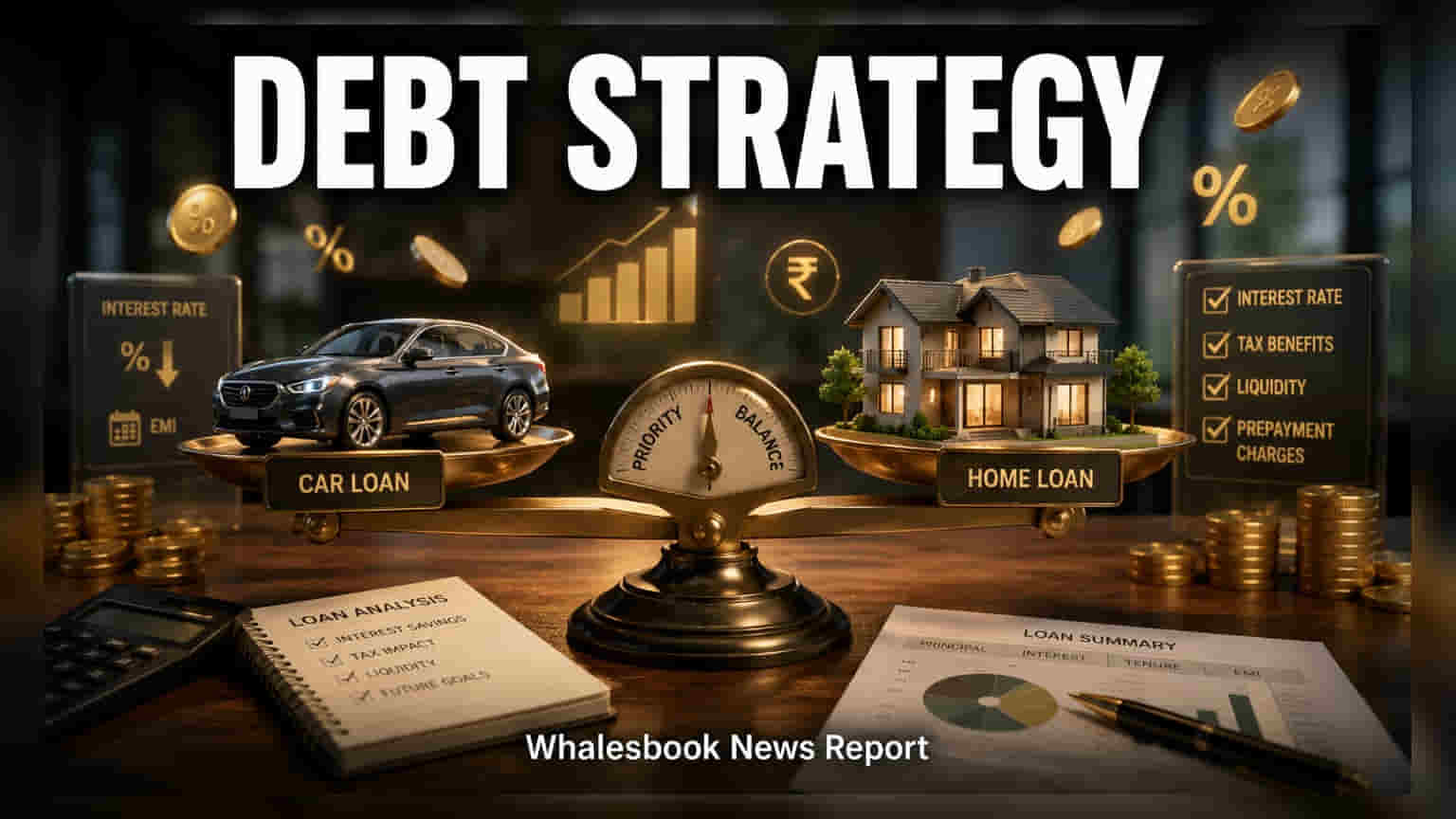
Deciding which debt to settle first requires a careful balance between interest costs, tax efficiency, and liquidity. Investors should prioritize high-interest debt while retaining emergency reserves to ensure long-term financial stability.
For many, managing debt is as important as building an investment portfolio. When faced with surplus capital, a common dilemma arises: should you prepay your car loan or your home loan? The answer is rarely a simple one and requires a look at the actual cost of borrowing rather than just the nominal interest rates.
Analyzing the Real Cost of Debt
The first step in any debt repayment strategy is to compare the effective interest rates of your loans. While car loans are often marketed with specific interest rates, borrowers should look at the remaining principal and the interest component left to pay. A car loan, typically taken for a shorter tenure, may have a smaller total interest burden compared to a long-term home loan. However, if the car loan carries a significantly higher interest rate than the home loan, it often becomes a drag on disposable income and may be the priority for early closure.
Conversely, home loans often come with lower interest rates but stretch over decades. While the absolute interest paid over 20 years is high, the monthly EMI burden is usually lower. Investors must calculate whether the interest savings from prepaying the car loan outweigh the long-term cost of the home loan.
The Role of Tax Efficiency
Tax benefits can change the math significantly. Under the old tax regime, interest paid on a self-occupied property loan qualifies for a deduction of up to ₹2 lakh under Section 24(b) of the Income Tax Act. This tax break effectively lowers the cost of borrowing for homeowners, making the home loan 'cheaper' than it appears on paper.
However, this is not an excuse to carry debt unnecessarily. If the interest rate on the home loan is high, the tax deduction may only offset a portion of the cost. Investors should avoid the trap of holding onto debt solely for tax planning if the net outflow remains burdensome.
Liquidity and Risk Management
Before allocating large sums of money to close any loan, financial health must take priority. Liquidity is essential for navigating market volatility or personal financial emergencies. If an investor uses up their entire cash reserve to pay off a loan, they may be forced to borrow at higher rates or liquidate investments during a market downturn if a crisis occurs.
Experts suggest that an emergency fund covering essential household expenses should be fully funded before making aggressive loan prepayments. Once liquidity is secure, freeing up monthly cash flow by closing a car loan can be a strategic move, as it increases the monthly surplus available for systematic investment plans or other financial goals.
Checking Loan Terms and Penalties
Finally, borrowers should review their original sanction letters for prepayment charges. While regulations often restrict penalties on floating-rate loans for individual borrowers, fixed-rate loans or specific bank policies may still carry foreclosure charges.
Investors are advised to request a foreclosure statement from their lender to understand the exact cost of exit. This ensures that the decision to prepay is based on the actual financial impact rather than assumptions. The ultimate goal is to reduce interest outflows while maintaining the flexibility to manage life's unexpected financial demands.