

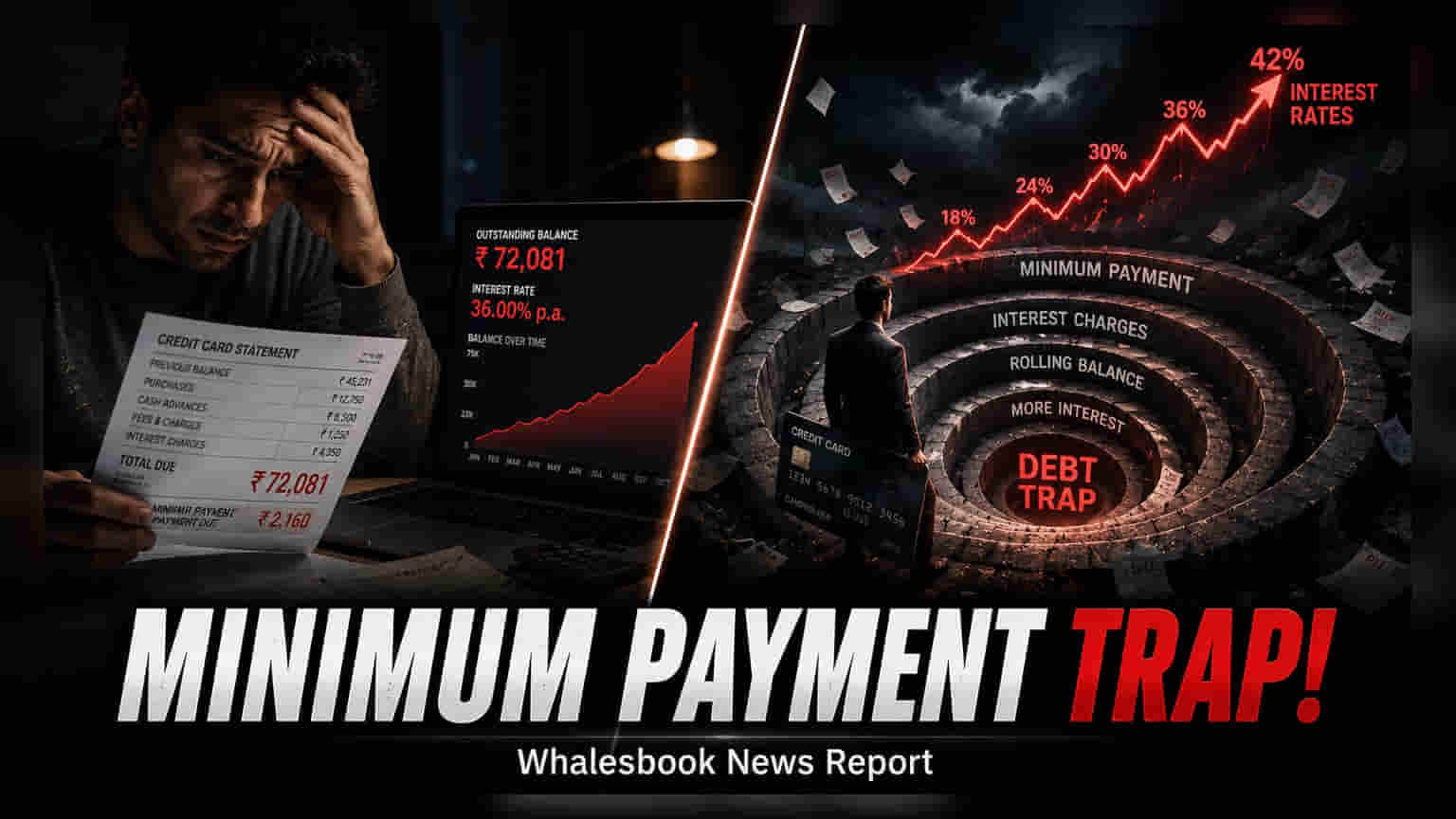
Making only the minimum payment on a credit card bill allows banks to keep your account active, but it comes at a high cost. Failing to pay the full amount triggers interest charges on the entire balance, not just the remainder. This practice can inflate debt rapidly and increase your credit utilization ratio, which eventually lowers your credit score.
Credit card issuers offer the 'Minimum Amount Due' (MAD) facility to provide relief during tight months, ensuring that the account remains in good standing and avoiding immediate penalty charges. However, relying on this option creates a significant financial burden that many cardholders underestimate. In the Indian credit card system, paying only the minimum amount effectively voids the interest-free grace period that most banks offer on new purchases.
Once a cardholder fails to pay the full statement balance by the due date, interest is typically calculated on the entire outstanding amount, often starting from the date of the transaction. This mechanism means that even if a small balance remains unpaid, interest accumulates on the total spent, including new purchases made during the billing cycle. These annual percentage rates (APR) in India often range between 30% and 45%, turning what appears to be a small, manageable debt into a rapidly compounding liability.
Beyond the immediate interest costs, the practice directly impacts a cardholder's creditworthiness. Credit bureaus and lenders closely monitor the credit utilization ratio, which is the percentage of a total credit limit that a borrower uses at any given time. By consistently carrying a high unpaid balance, a cardholder's utilization ratio stays elevated. Financial experts generally recommend keeping this ratio below 30% to maintain a healthy credit score. When balances remain high due to partial payments, it signals to lenders that the borrower is financially stretched, which can lead to a lower credit score over time, potentially impacting future loan approvals and interest rates.
For most consumers, the minimum payment is designed as a tool to prevent default reporting, not as a sustainable method for managing personal finance. The structure of these payments often covers only a small portion of the principal, meaning the time required to clear the debt can stretch into years. This creates a cycle where interest payments consume a large part of each subsequent repayment, leaving little room to reduce the original debt.
For those managing credit cards, the most effective strategy is to treat the card as a payment tool rather than a source of credit. Clearing the full statement balance before the due date is the only way to avoid the high interest costs associated with revolving debt. If a significant balance has already accumulated, financial planning should prioritize paying down the debt faster than the minimum requirements to regain control over monthly cash flow and protect long-term credit health.