

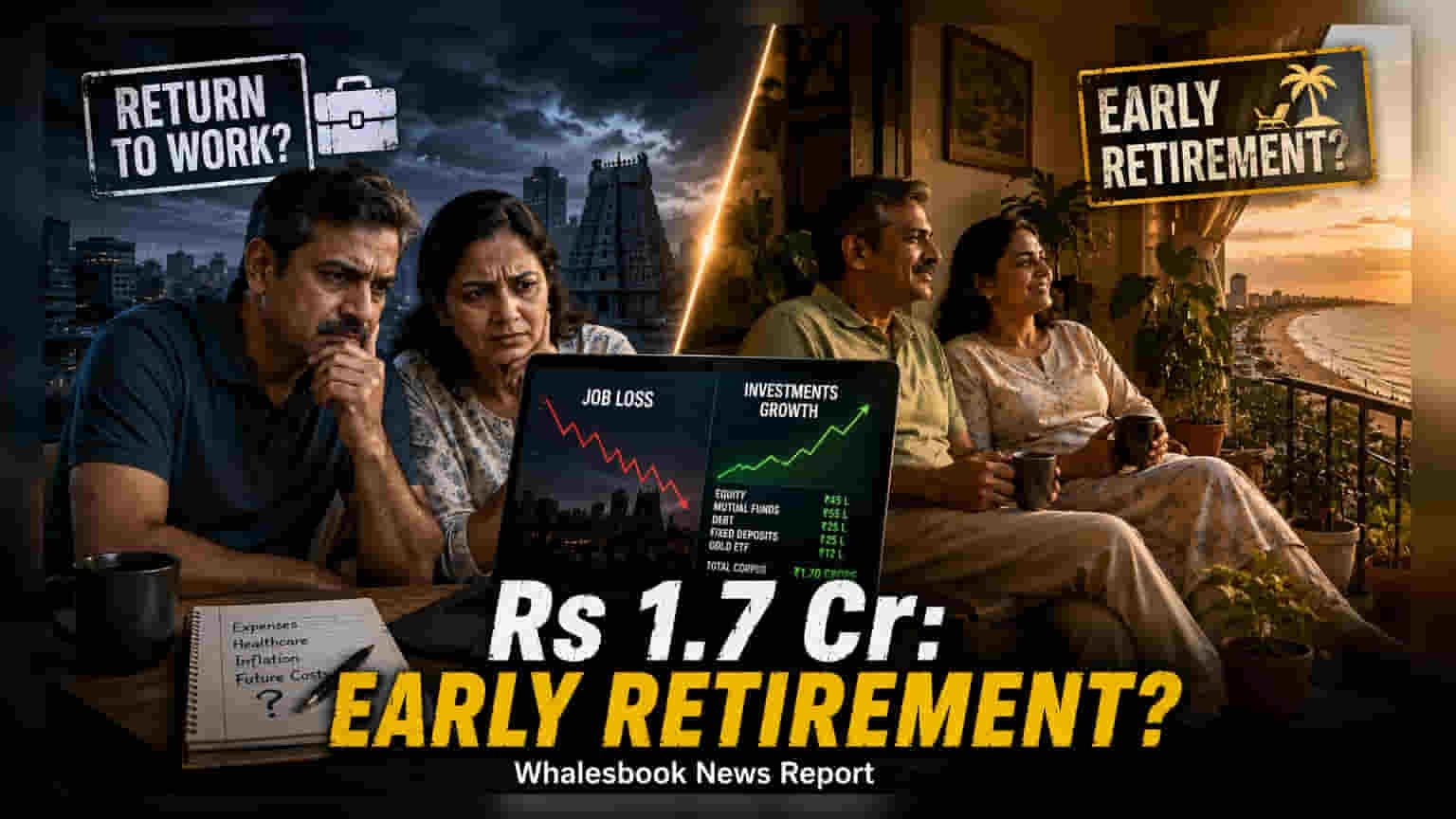
A Chennai couple is evaluating early retirement after losing their jobs, with a Rs 1.7 crore portfolio and no home debt. Their annual expenses of Rs 9 lakh create a critical challenge: can this corpus beat long-term inflation without active income?
A Chennai couple, recently laid off from their long-term jobs, is currently at a financial crossroads that many long-term investors eventually face. Shared by financial content creator Amit Arora, the case study highlights the realities of relying solely on an investment corpus for sustenance. With a total portfolio of Rs 1.7 crore and no home loan, the couple is now weighing whether to re-enter the workforce or attempt early retirement.
Breaking Down the Corpus
The couple’s financial security rests on a diversified portfolio. Their assets include Rs 45 lakh in equities, Rs 55 lakh in mutual funds, Rs 25 lakh in debt instruments, Rs 25 lakh in fixed deposits, and Rs 12 lakh in Gold ETFs. Because they own their home outright, they have eliminated the burden of monthly rent or home loan interest payments. This allows them to manage their current lifestyle with an annual expense of approximately Rs 9 lakh.
The Inflation Risk
The most significant threat to a long-term retirement plan is inflation, which erodes purchasing power over time. While Rs 9 lakh might cover their needs today, the cost of healthcare, daily living, and transportation will inevitably rise over the next three to four decades. Investors often overlook that a steady salary acts as an inflation hedge; without it, the investment portfolio must generate not just enough returns to cover current expenses, but also enough surplus to grow the capital ahead of inflation.
Managing the Strategy
To address this, the couple is considering a strategy where they use only about 35% to 40% of their annual investment income. The remainder will be reinvested. This approach is intended to ensure that the total corpus continues to grow, protecting their ability to meet higher costs in the future. For investors, this highlights a critical principle: early retirement requires keeping a significant portion of investments in growth-oriented assets like equities and mutual funds, rather than just relying on fixed-income instruments like fixed deposits, which may struggle to beat long-term inflation.
Risks and Considerations
The absence of a regular salary places the entire weight of financial security on existing savings. Without an income stream, any major unforeseen expense—such as a medical emergency or a sudden market downturn—could force the couple to withdraw capital at an unfavorable time. This scenario serves as a practical reminder for investors: a retirement corpus must include an emergency fund that is separate from long-term investments to avoid liquidating productive assets during a market dip. The sustainability of their plan will ultimately depend on their ability to generate consistent returns across different asset classes while keeping total annual withdrawal rates low enough to preserve the principal.