

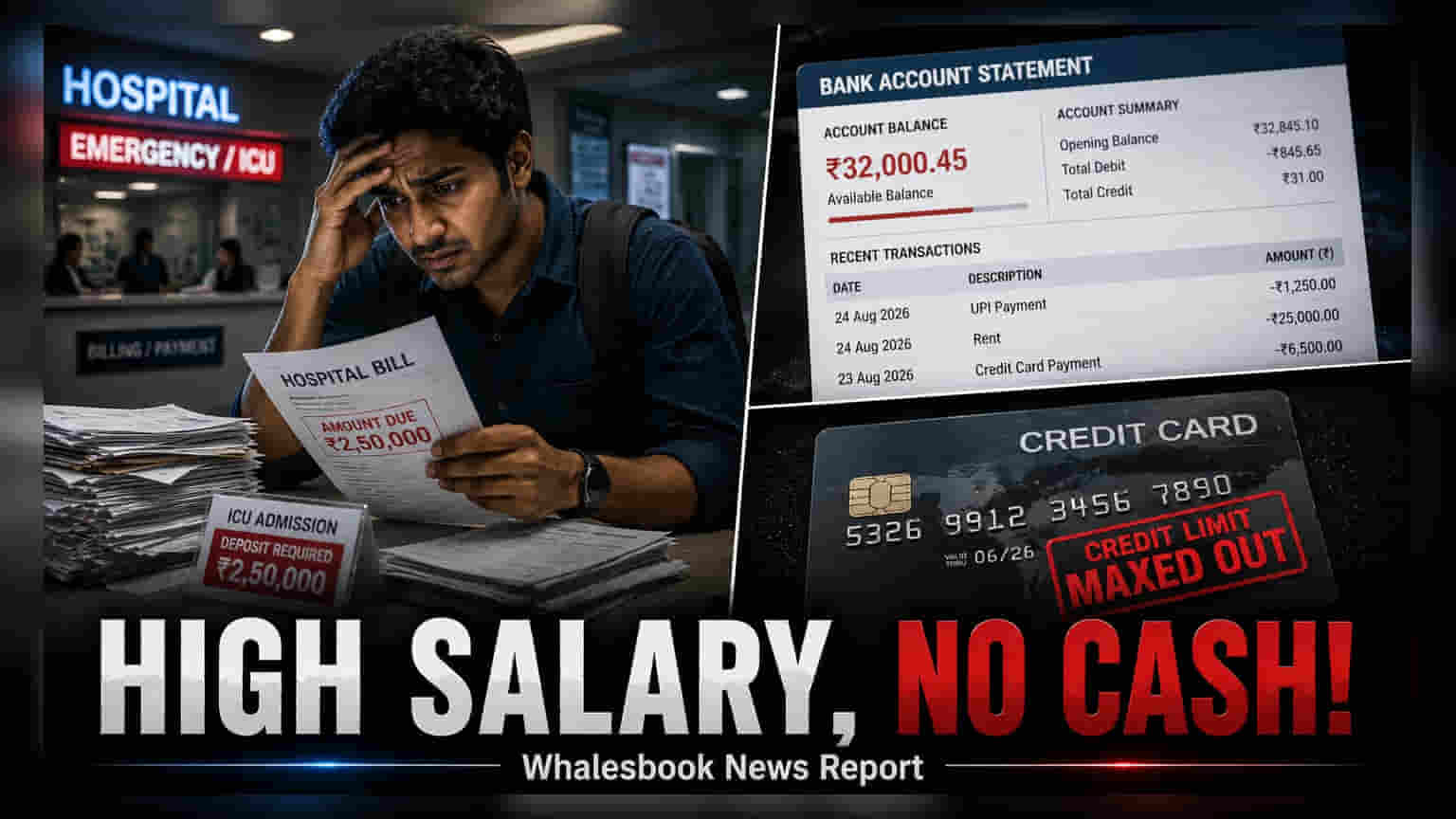
A Bengaluru technology professional earning ₹1.8 lakh monthly struggled to pay a ₹2.5 lakh hospital deposit during an urgent family ICU admission. The incident highlights the critical difference between having a high income and having immediate access to liquid cash, serving as a reminder for professionals to prioritize dedicated emergency funds over aggressive long-term investing.
A recent personal finance situation reported in Bengaluru has brought the focus back to a critical aspect of financial management: the difference between net worth and liquidity. A technology professional earning ₹1.8 lakh per month found himself struggling to meet an immediate ₹2.5 lakh hospital deposit for an ICU admission. Despite a disciplined approach to monthly investments, the incident revealed a significant gap between high earnings and immediate financial preparedness.
The Trap of Illiquid Investments
The professional was investing ₹80,000 monthly through systematic investment plans. While this is a positive habit for long-term wealth creation, it created a liquidity trap during the crisis. Mutual fund redemptions are rarely instant. Depending on the scheme and the timing of the request, funds can take one to three working days—or sometimes longer—to reach a bank account. In a medical emergency where hospitals often demand upfront payments, this delay can be critical.
Credit Limits Are Not Emergency Funds
The situation was worsened by a maxed-out credit card. Many professionals mistakenly view credit card limits as a form of an "emergency fund," but they are actually debt instruments. Once a credit limit is exhausted—often due to monthly expenses or EMI payments—it cannot be used in a crisis. With only ₹32,000 in a savings account, the individual had no immediate cash buffer to navigate the emergency.
Building Financial Resilience
Financial planning generally requires maintaining three distinct buckets: long-term investments for wealth growth, medium-term savings for specific goals, and a dedicated emergency fund for liquidity. The emergency fund should ideally cover three to six months of essential living expenses and be kept in a high-liquidity instrument, such as a basic savings account or a liquid fund that allows for near-instant access.
When income rises, the temptation to increase investments or lifestyle spending often follows. However, without a cash buffer that is separate from market-linked investments or debt instruments, even high earners can face sudden crises. The primary takeaway for professionals is that while investing for the future is essential, maintaining accessible cash is equally important to handle unforeseen events without the need for urgent borrowing.