

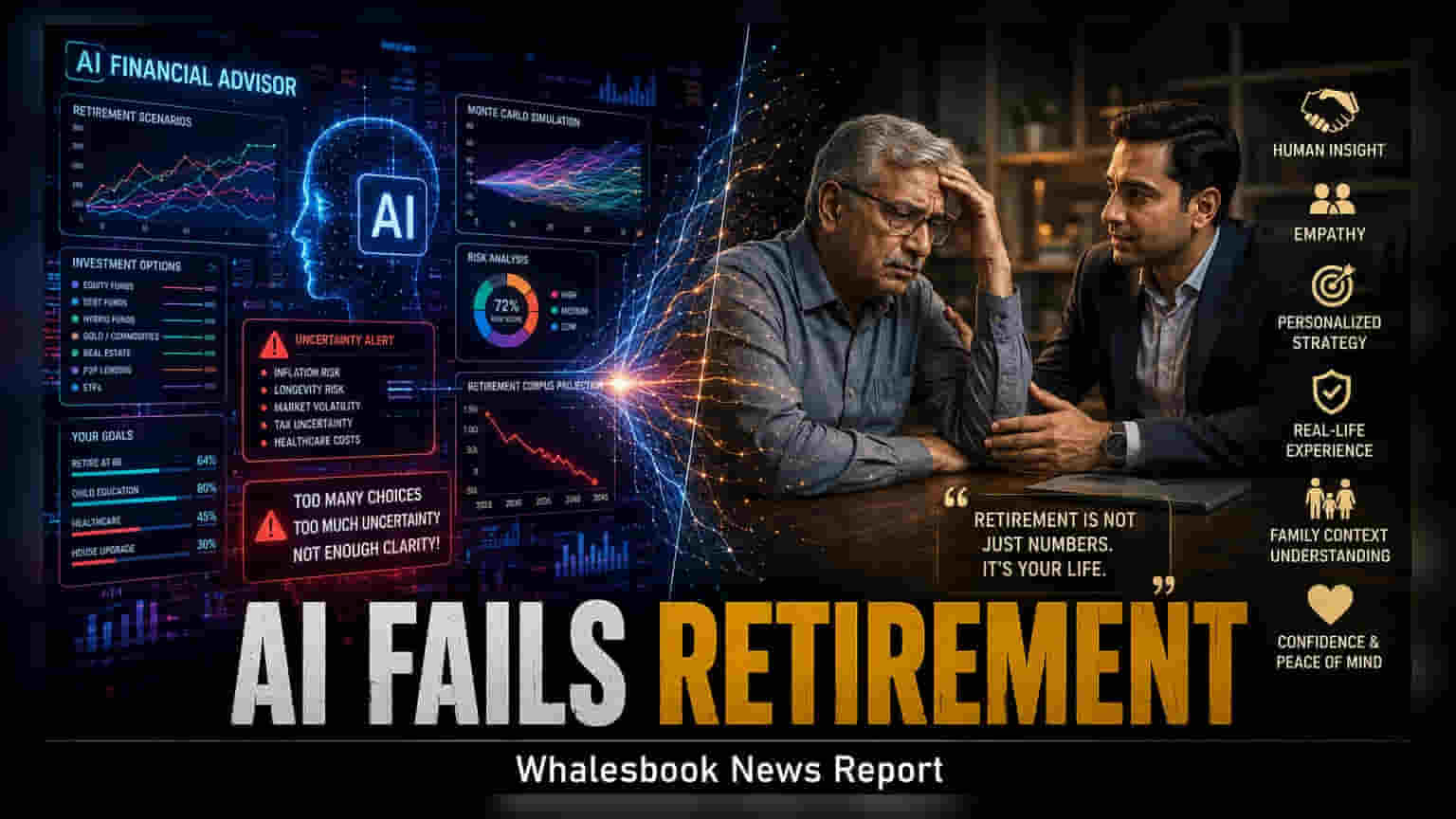
As AI-based financial tools gain popularity in India, their limits in retirement planning are becoming clear. While technology handles basic calculations well, human advisors remain vital for navigating the complex, emotional, and long-term risks associated with retirement decisions.
Artificial intelligence is changing how Indians manage their money. From budget trackers to automated investment platforms, technology is making financial services faster and more accessible. However, as the use of AI in personal finance grows, a clear divide is emerging between basic money management and the high-stakes world of retirement planning.
The Choice Overload Problem
AI excels at processing large amounts of data and offering quick solutions. For someone looking to pick a mutual fund for a short-term goal, this is often helpful. But retirement planning is different. It is a long-term, complex process that involves balancing inflation, healthcare costs, tax implications, and changing lifestyle needs.
When investors use AI for these big decisions, they often face "choice overload." The AI might present dozens of scenarios and investment strategies. Instead of simplifying the path, this flood of information can paralyze the investor. The uncertainty of whether they have saved enough or if they have accounted for every possible risk often leads to anxiety rather than the intended peace of mind.
The Risk of Reinforcing Bias
Another challenge with AI models is how they interact with users. These tools are designed to be helpful and compliant, often agreeing with the user's inputs. If an investor has a natural bias—such as being too afraid of stock market risk or over-optimistic about future returns—the AI may inadvertently confirm those biases rather than challenging them. In retirement planning, this can be dangerous. A human advisor, by contrast, acts as a sounding board, identifying emotional biases and offering a perspective that aligns with the investor's long-term reality rather than their short-term feelings.
Why Human Judgment Remains Vital
For many Indian families, retirement is not just about a retirement corpus; it involves managing family assets, estate planning, and addressing deeply rooted anxieties about the future. Human wealth managers provide something that software cannot: empathy and contextual understanding. They understand the nuances of an Indian family’s financial structure, tax laws, and the specific fears associated with stopping a regular monthly income.
Investors are finding that while AI is excellent for transaction execution and data analysis, it struggles to manage the human side of wealth. The most effective approach appearing in the market is a hybrid model. This combines the speed and efficiency of AI tools for tracking and reporting with the strategic, empathetic guidance of human advisors for decision-making.
As the industry evolves, investors may want to evaluate their financial partners not just by their tech capabilities, but by their ability to provide custom, human-led advice. The next phase of wealth management will likely see professionals using AI to do the "heavy lifting" on data, allowing them to focus more on the critical, personalized conversations that define a secure retirement.