 Whalesbook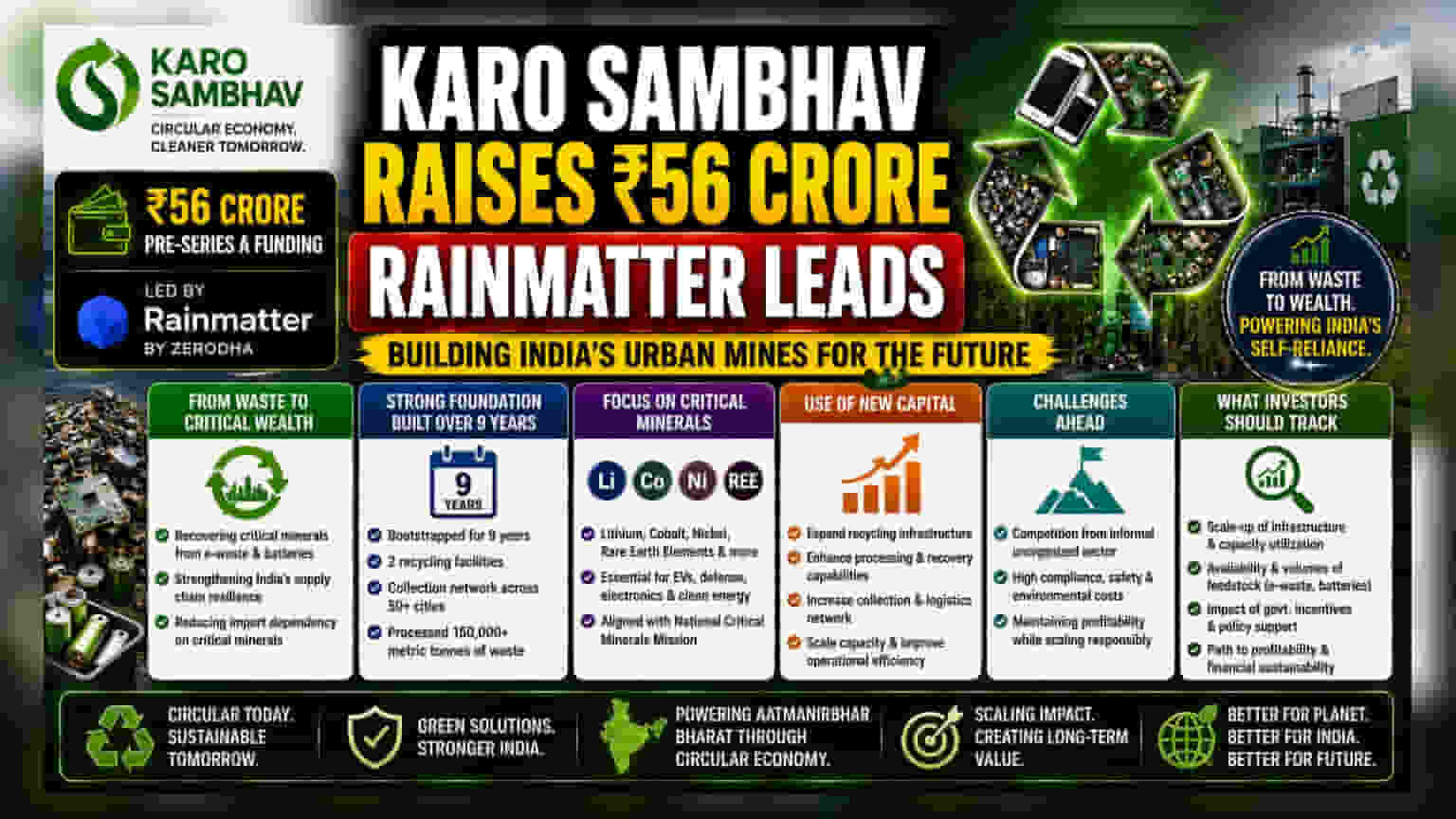
Karo Sambhav has raised Rs 56 crore from Zerodha’s Rainmatter in a pre-Series A round. The startup, which manages e-waste and battery recycling, plans to use the capital to scale infrastructure for recovering critical materials—a strategic priority for India’s manufacturing supply chain.
What Happened
Karo Sambhav, a Gurugram-based company focused on circular economy and waste management, has secured Rs 56 crore in a pre-Series A funding round. The investment was led by Rainmatter, the investment arm of Zerodha. This capital injection marks a significant milestone for the firm, which has operated as a bootstrapped entity for nine years. The company plans to use these funds to expand its recycling infrastructure, specifically targeting the recovery of critical raw materials from end-of-life products like electronic waste and batteries.
The Strategic Pivot to Critical Minerals
While recycling is often viewed through the lens of waste management, this investment highlights a different, more strategic angle: supply chain resilience. India is heavily dependent on imports for critical minerals like lithium, cobalt, nickel, and various rare earth elements needed for electric vehicles, defense, and high-end electronics. By focusing on recovering these materials from old products, companies like Karo Sambhav are essentially creating an 'urban mine.' This effort aligns with the Ministry of Mines’ National Critical Minerals Mission, which aims to reduce India's import dependency by promoting domestic recycling and mineral processing.
Business Context and Execution
Having run its operations for nine years without external venture capital, Karo Sambhav has built a track record of operational stability. The company currently manages two recycling facilities and has established collection networks across more than 50 cities. To date, it reports processing over 150,000 metric tonnes of waste. Unlike startups that focus solely on software, this business model requires significant physical assets, logistics, and compliance with environmental regulations. The transition from a bootstrapped model to one supported by institutional capital suggests a shift toward faster infrastructure scaling and capacity building.
Challenges in the Recycling Sector
For investors, it is important to understand that the formal recycling industry in India faces significant challenges. The largest hurdle is competition from the unorganized, informal sector. Informal recyclers often operate with lower costs because they bypass strict safety, environmental, and labor regulations. This creates a difficult environment for compliant companies like Karo Sambhav, which must bear the costs of high-standard recycling technology and regulatory reporting. Successfully maintaining profit margins while competing with cheaper, informal alternatives will remain a central business challenge.
What Investors Should Track
Going forward, the success of this capital infusion will depend on execution. Investors and observers may track how effectively the company scales its infrastructure and whether it can secure enough waste volume to operate its facilities at high capacity. Additionally, monitoring the impact of the government’s 'Incentive Scheme for Promotion of Critical Mineral Recycling' will be useful, as policy support and regulatory shifts in how e-waste is handled in India will likely dictate the long-term growth potential for the sector.