

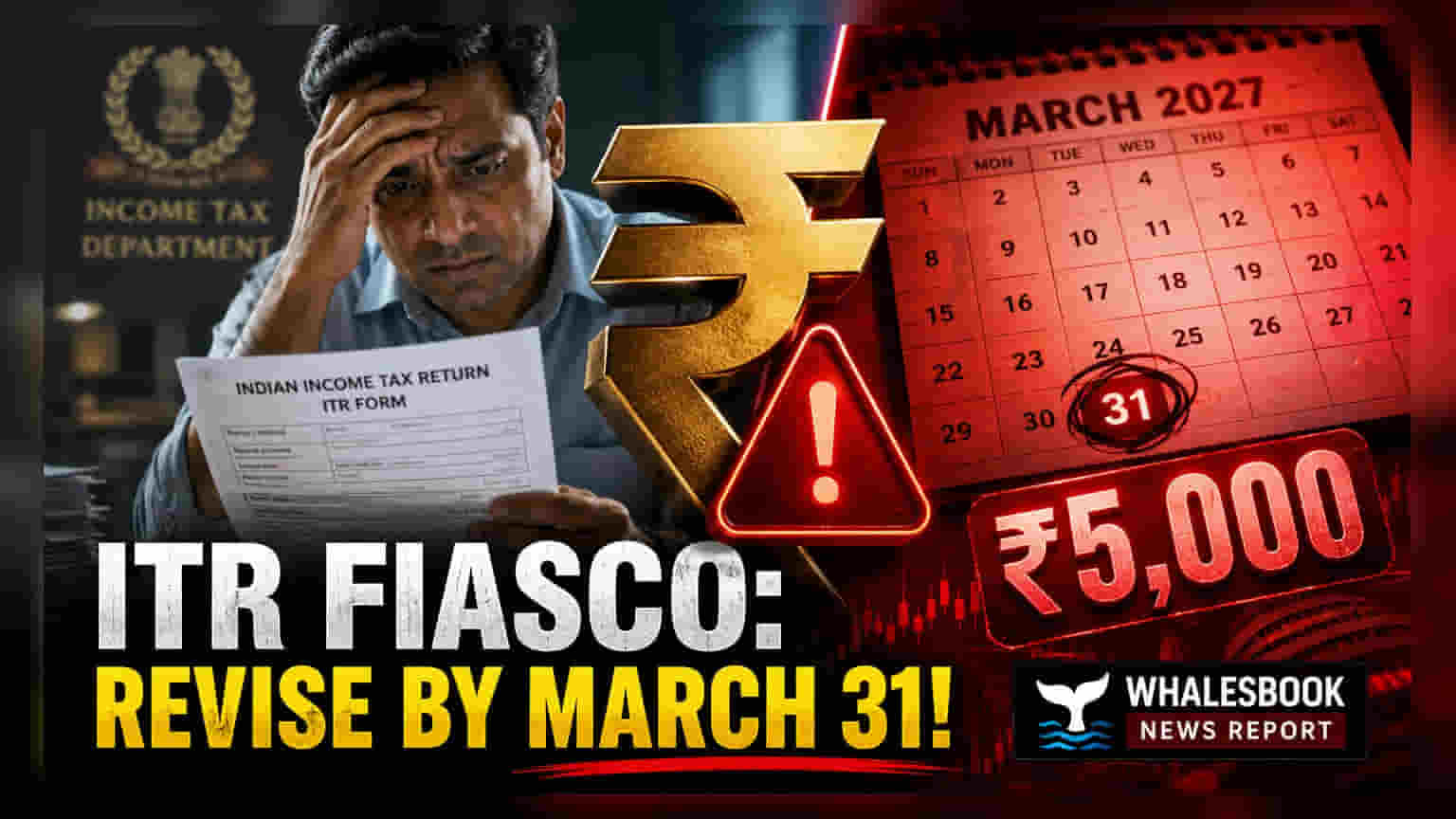
Taxpayers who mistakenly filed the wrong income tax form can now submit a revised return until March 31, 2027. Filings made after December 31, 2026, will attract a penalty of up to Rs 5,000. Correcting errors promptly is essential to avoid tax notices, refund delays, or the loss of the ability to carry forward business and capital losses.
What Happened
Taxpayers who inadvertently submitted their Income Tax Return (ITR) using an incorrect form now have a longer window to rectify the error. The deadline for filing a revised return has been extended to March 31, 2027. This update, which follows provisions from Budget 2026, shifts the previous cutoff date of December 31 to allow more breathing room for taxpayers to identify and correct filing mistakes.
The Cost Of Late Revisions
While the extended timeline offers flexibility, it is not free for those who delay. Revisions submitted on or before December 31, 2026, remain free of late fees. Taxpayers who miss this cutoff but file by the March 31, 2027, deadline will face a penalty of Rs 5,000. For individuals whose total income does not exceed Rs 5 lakh, the penalty is capped at a lower amount of Rs 1,000. Tax professionals typically suggest completing these corrections as soon as possible to avoid the added financial burden.
Risks Of Uncorrected Errors
Neglecting to correct an incorrect ITR form can lead to complications with the Income Tax Department. An invalidly filed return can trigger tax notices, delay the processing of expected refunds, and result in the application of interest on any tax shortfalls. Furthermore, errors may prevent taxpayers from claiming specific benefits, such as the ability to carry forward business or capital losses to future years. If the filing remains uncorrected past the legal deadline, the tax authorities may treat the return as if it was never filed, which significantly increases the risk of financial penalties.
Understanding The Process
A revised return is filed under Section 139(5) of the Income-tax Act and serves to replace the original, erroneous filing. This process is generally intended for taxpayers who realize they made a mistake, such as selecting the wrong ITR form—for example, filing ITR-1 instead of ITR-2 when capital gains were involved. However, if the tax department has already issued a formal notice regarding a defective return under Section 139(9), taxpayers must respond directly to that specific notice rather than filing a standard revised return. Once the revision window finally closes, taxpayers may be forced to use the ITR-U (updated return) route, which often requires the payment of additional taxes and interest.