

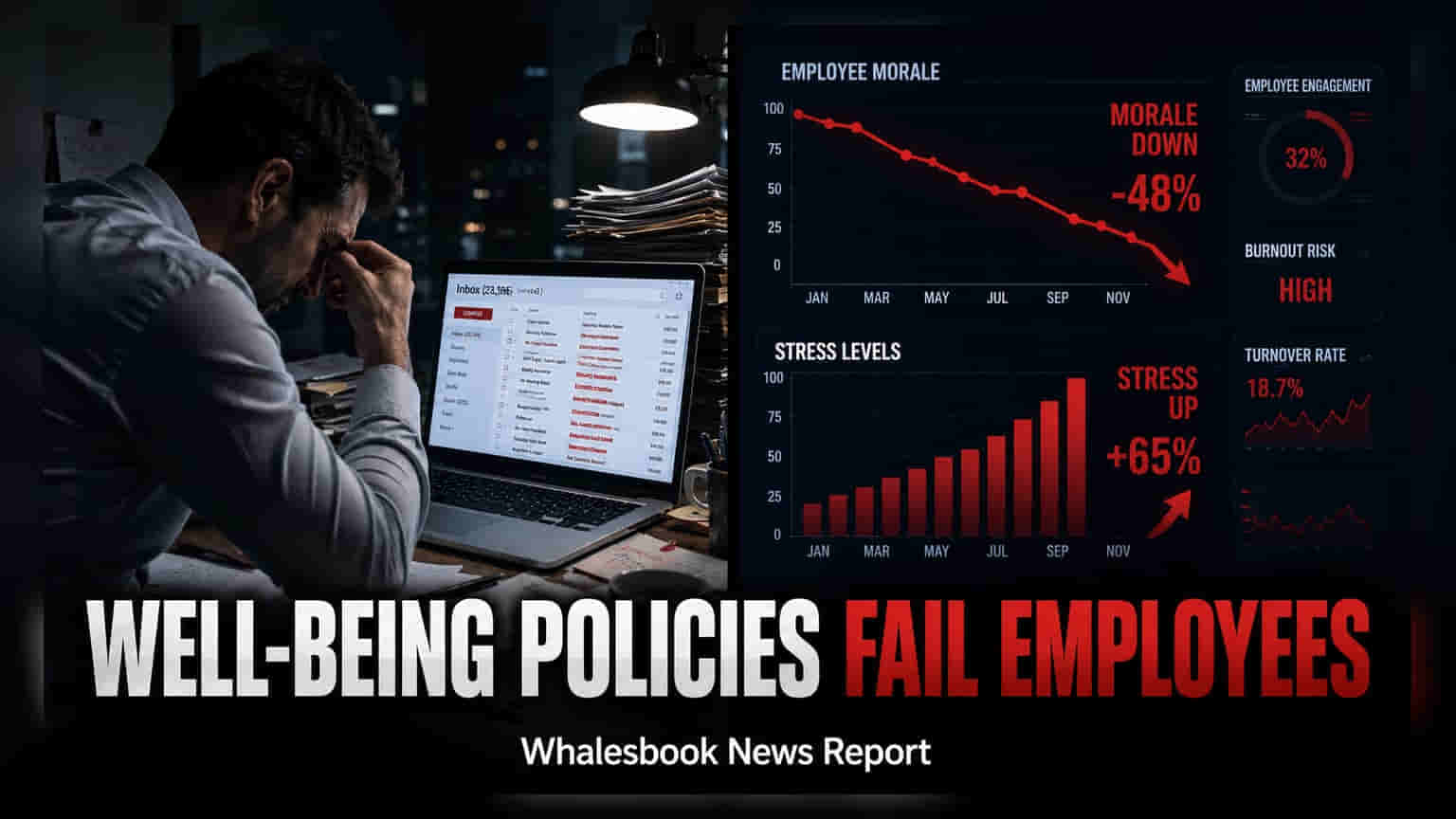
A survey of 1,884 employees reveals that 42% feel their companies' well-being policies are not effectively implemented. With an 'always-on' work culture identified as a major stressor, the findings highlight potential risks to productivity and staff retention. For investors, this gap between formal policy and daily practice is an increasingly important measure of operational health and human resource management.
A significant gap exists between what companies promise in their well-being policies and what employees actually experience on the ground. A new report titled 'Beyond the Policy: Lived Experience and Micro-Rituals in Employee Wellbeing' highlights that 42% of the 1,884 employees surveyed feel their employers fail to effectively implement these initiatives. While many organizations now advertise wellness programs, the study suggests these often do not address the core issues driving workplace stress.
The 'Always-On' Culture and Its Impact
The research points to an 'always-on' work culture as the leading cause of stress, impacting 42% of the workforce. This expectation of constant availability, often fueled by digital connectivity, appears to be negating the intended benefits of wellness policies. Unrealistic deadlines and high-pressure expectations, cited by 21% of respondents, further exacerbate the issue. These findings indicate that without a shift in daily work habits, formal programs—such as meditation apps or gym memberships—may have limited success in improving overall employee health.
What Truly Drives Well-being
The data reveals that employees place high value on trust and empowerment, with 52% of respondents identifying these as the most significant contributors to their well-being. Furthermore, 47% of employees stated that empathetic management is essential for feeling comfortable enough to discuss stress or burnout. Simple changes, such as fair workload distribution (prioritized by 36% of employees) and meaningful recognition, were ranked as more impactful than complex wellness benefits. This suggests that the solution to workplace stress is often rooted in management style and team culture rather than HR policy alone.
Investor Relevance and Operational Risk
For investors and market analysts, the effective management of human capital is no longer just an internal HR matter. It is a critical operational component that directly impacts the bottom line. High employee stress and poor culture often correlate with higher turnover rates. When a company loses experienced staff, it incurs significant costs related to recruitment, onboarding, and training, which can weigh on profit margins over time.
Furthermore, productivity is closely tied to the mental well-being of the workforce. An environment characterized by burnout can lead to lower output, higher absenteeism, and potential errors, all of which pose risks to long-term performance. In recent years, environmental, social, and governance (ESG) reporting has increasingly focused on social factors, including employee welfare and retention. Companies that bridge the gap between their stated policies and the lived reality of their staff may be better positioned to maintain stable productivity and control costs.
Investors may monitor how management teams prioritize culture and retention in future quarterly updates. The key metric to watch will be whether companies can sustain their workforce while maintaining growth, as high attrition often serves as a lagging indicator of internal stress or cultural misalignment.