

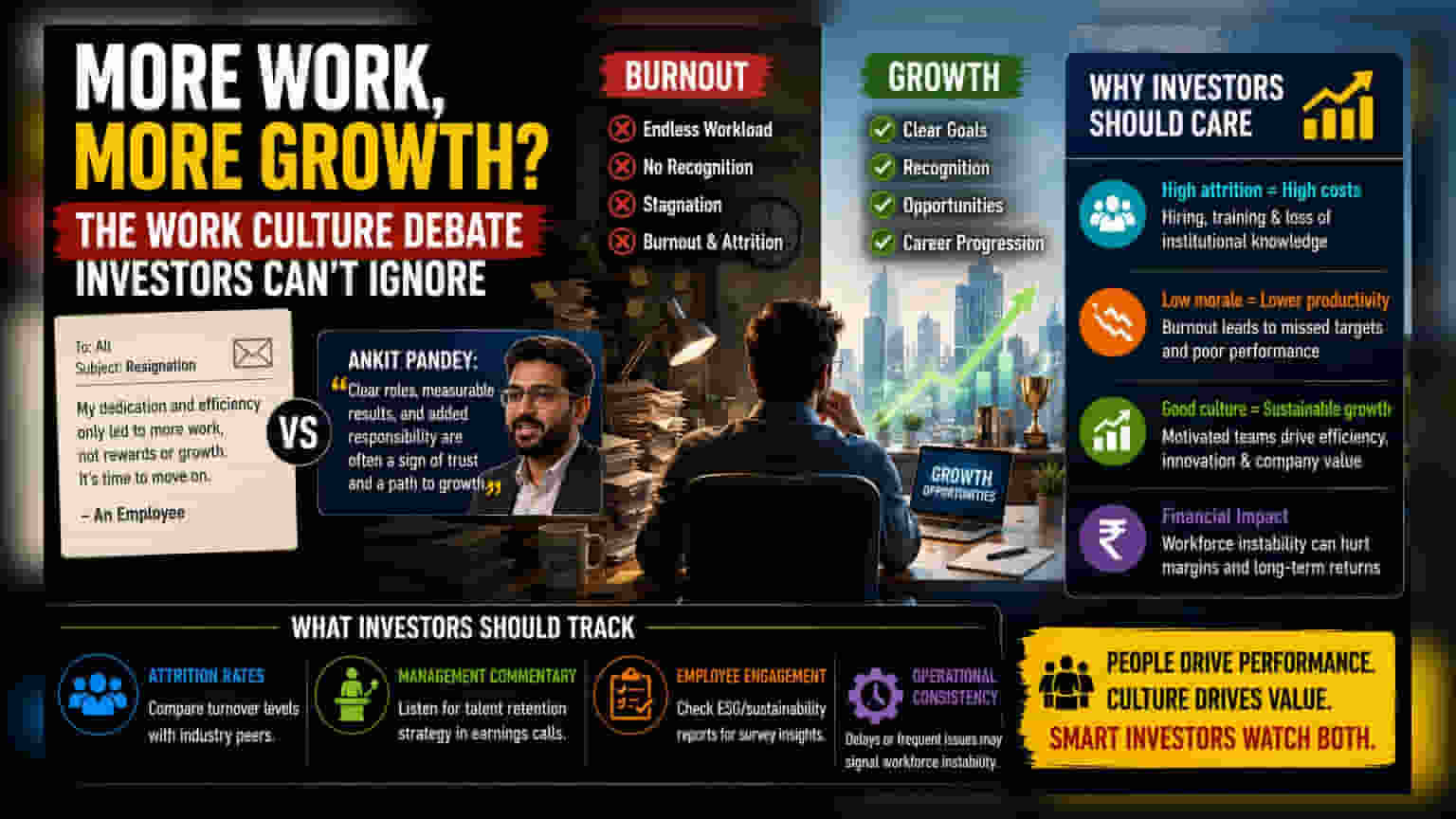
A viral resignation email highlighting the tension between extra work responsibilities and rewards has sparked a debate on corporate culture. For shareholders, this conversation shines a light on organizational productivity, talent retention, and management quality, which are crucial factors for sustaining long-term operational health in companies.
The Work Culture Debate
A recent resignation email has ignited a wide discussion regarding workplace expectations. The employee cited a frustration that dedication and efficiency often led to increased workloads without corresponding rewards or career progression. This perspective clashed with a counter-argument from entrepreneur Ankit Pandey, who emphasized that corporate environments rely on clear roles and measurable results, suggesting that added responsibility is often a sign of trust and a pathway to growth.
While this specific event involves private individuals, it reflects a broader challenge that businesses of all sizes face: how to balance operational efficiency with human capital management. For investors, this debate highlights the often-ignored intangible risks associated with personnel management and organizational culture.
Why Investors Should Care About HR Metrics
For investors analyzing public companies, talent retention and employee morale are not just human resources issues; they are financial ones. High attrition rates lead to increased costs for hiring and training, loss of institutional knowledge, and potential disruptions in project delivery.
When a company's culture is perceived as demanding without fair recognition, it can lead to burnout and lower productivity. Conversely, a culture that aligns rewards with performance typically sees higher operational efficiency. Investors often look for stability in management and low employee turnover as indicators of a healthy business model. When key personnel leave frequently, it can raise concerns about leadership quality and the company’s ability to retain talent necessary for growth.
The Link Between Efficiency And Burnout
The core of the current debate—whether hard work is rewarded with more work or more opportunities—is a critical question for operational success. In many sectors, particularly in fast-paced industries like technology and services, the line between high-performance expectations and burnout is thin.
If a company relies on overloading its most efficient employees to cover gaps in the workforce, the long-term sustainability of its profit margins may be at risk. Reliable profit growth usually requires a scalable, motivated workforce rather than one that is constantly churning due to dissatisfaction. Investors may observe whether management provides clear career paths and performance-based incentives, which are generally more effective at retaining top talent than simply increasing individual workloads.
What Investors Should Track
While it is difficult to measure culture through a single news item, investors can track several indicators in public filings and reports to gauge how a company manages its people:
- Attrition Rates: Check if the annual report mentions turnover levels and how they compare with sector peers.
- Management Commentary: Pay attention to how leadership describes their talent retention strategy during quarterly earnings calls.
- Employee Engagement Surveys: Some companies report findings from internal culture or engagement surveys in their annual sustainability or ESG (Environmental, Social, and Governance) reports.
- Operational Consistency: Persistent delays in project execution or service delivery can sometimes signal deeper issues with workforce stability or burnout.