

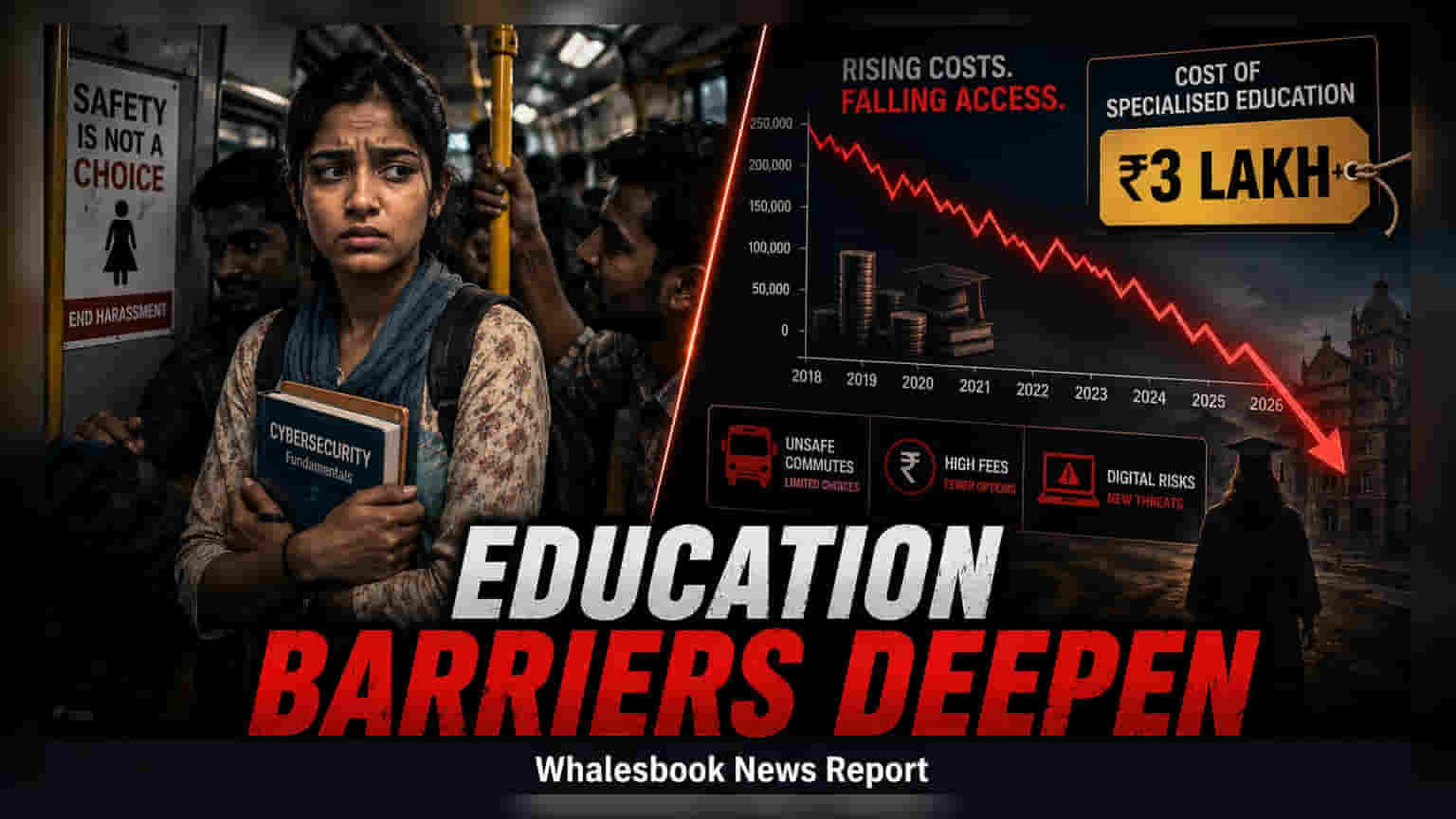
During a recent interaction in Pune, students highlighted how safety fears and financial constraints hinder women's access to education. These barriers, ranging from unsafe public transport to the high costs of specialized technical courses, are key factors that influence female workforce participation and long-term economic mobility.
In a recent discussion held in Pune, students brought forward the structural challenges currently impacting women's access to higher education and economic independence. The interaction, which included Congress leader Rahul Gandhi, focused on how everyday systemic issues—specifically safety concerns and financial barriers—continue to restrict the educational choices available to female students.
Students detailed the impact of safety risks on their academic journeys. Accounts shared during the event emphasized that sexual harassment during commutes creates a pervasive climate of fear, often forcing families to make decisions that prioritize the education of sons over daughters. Academic research supports these real-world observations, frequently noting that female students often compromise by choosing lower-ranked institutions or avoiding evening classes to ensure safer transit. This phenomenon, sometimes described in economic studies as an 'avoidance tax,' requires women to pay higher costs in time, money, and career potential just to navigate their environment safely.
Financial barriers were also a primary concern, particularly for students pursuing high-demand, specialized fields. For instance, students highlighted that the rising costs of technical education, such as courses in cybersecurity, can be prohibitive for those from lower-income backgrounds. The current system often lacks sufficient state-funded options for such specialized training, which limits the ability of talented students to enter high-growth sectors of the economy.
Beyond traditional education, the conversation touched upon the evolving risks in the digital age. Students flagged the growing concern of artificial intelligence misuse, which poses specific threats to women, including the creation of non-consensual imagery and online extortion. This highlights a dual challenge: the need for safer physical infrastructure and the requirement for robust digital safety awareness as an essential part of the educational curriculum.
For the broader economy, these barriers represent a drag on human capital development. When societal and environmental factors restrict women's ability to pursue education or select optimal career paths, the economy loses out on a significant portion of its potential workforce. The discussion underscored that addressing these issues requires more than just policy-level changes; it involves creating safe, affordable, and accessible pathways that allow women to pursue education without being forced to compromise on their security or their financial stability.