 Whalesbook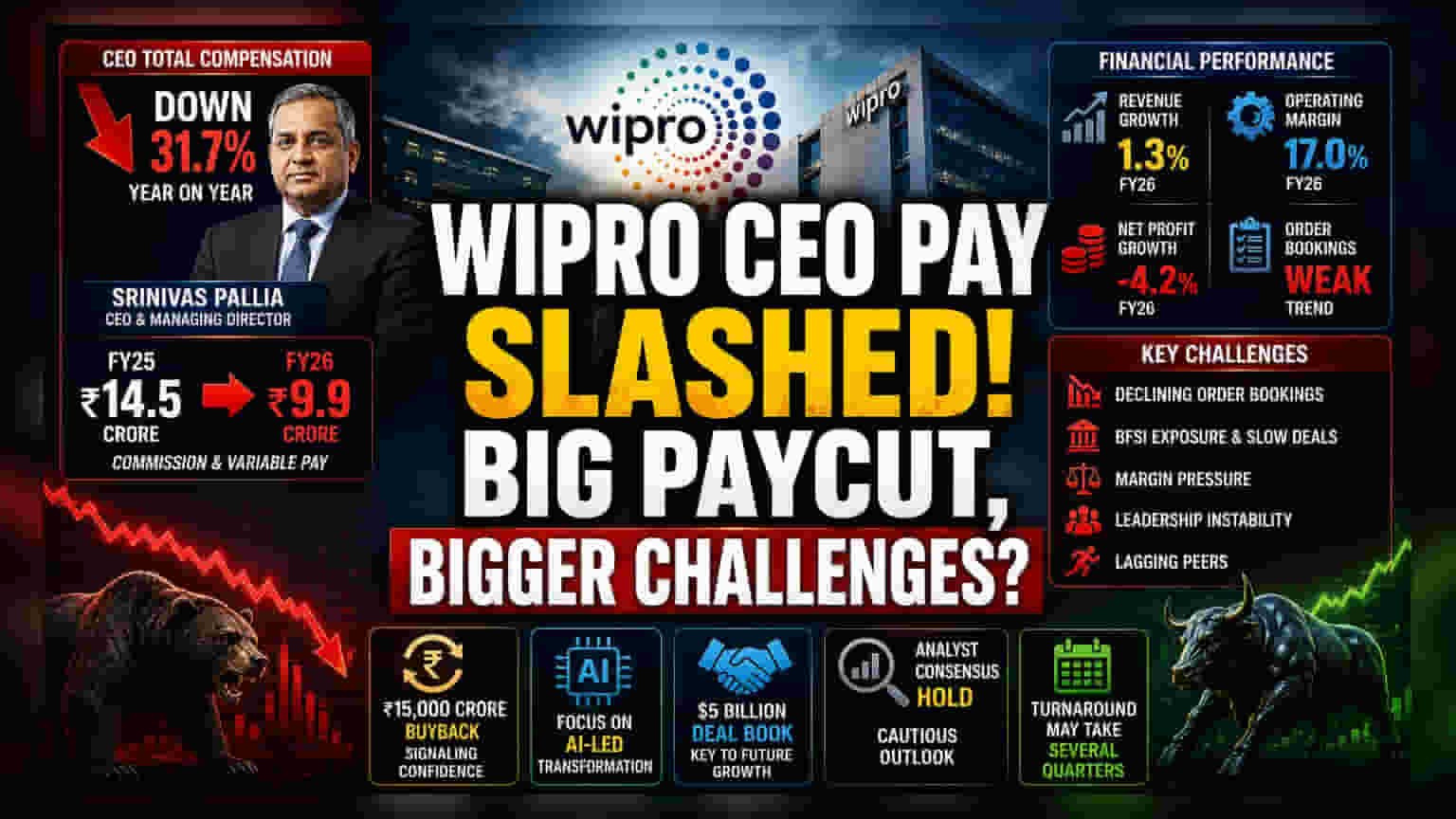


The Valuation Gap and Incentive Pressure
The reduction in executive compensation at Wipro serves as a stark metric for the company’s recent performance. While base salaries for leadership saw marginal increases, the sharp decline in variable and performance-linked pay highlights the direct impact of missing ambitious financial targets. Srinivas Pallia’s commission and variable compensation dropped to ₹9.9 crore in FY26, down significantly from ₹14.5 crore in the prior fiscal year. This trend aligns with the broader financial reality faced by the organization, which reported only limited traction in its core IT services segment despite a strategic pivot toward AI-led solutions.
Analytical Context: A Sector in Transition
Unlike its larger peers in the Indian IT services sector, Wipro has faced a complex multi-year turnaround. The company’s growth trajectory remains hampered by project ramp-downs and heavy exposure to the BFSI sector, which has seen delayed decision-making from clients. While the recent ₹15,000 crore buyback program aims to bolster shareholder confidence, the underlying performance data paints a picture of a company still finding its footing. Compared to the double-digit expansion seen in historical periods, current revenue growth has struggled to keep pace, leaving executive remuneration vulnerable to the cyclical nature of performance-linked payouts.
The Forensic Bear Case
The leadership pay structure is inherently tied to incremental consolidated net profit, a metric that has come under fire due to recent volatility. Critics point to the company’s declining order bookings and a persistent inability to gain market share against rivals like TCS and Infosys. Wipro’s operating margins, though stabilized near 17%, remain under pressure from high operational costs and the need for significant capital allocation toward AI capabilities. Furthermore, frequent shifts in top management—a recurring theme over the last three years—have created a perception of instability that continues to weigh on the stock’s valuation, which has significantly lagged behind the broader IT index over the past twelve months.
Future Outlook
Moving into FY27, the focus shifts to whether the current leadership can translate its $5 billion deal book into sustained revenue growth. Market sentiment remains cautious, with analyst consensus largely hovering in the 'Hold' category. Success will depend on reducing the working capital cycle and achieving consistent quarterly revenue growth that surpasses the current low single-digit averages. For now, Wipro’s management remains optimistic that its focus on large-client retention and AI transformation will yield results, though historical trends suggest that significant performance improvements may still be several quarters away.