

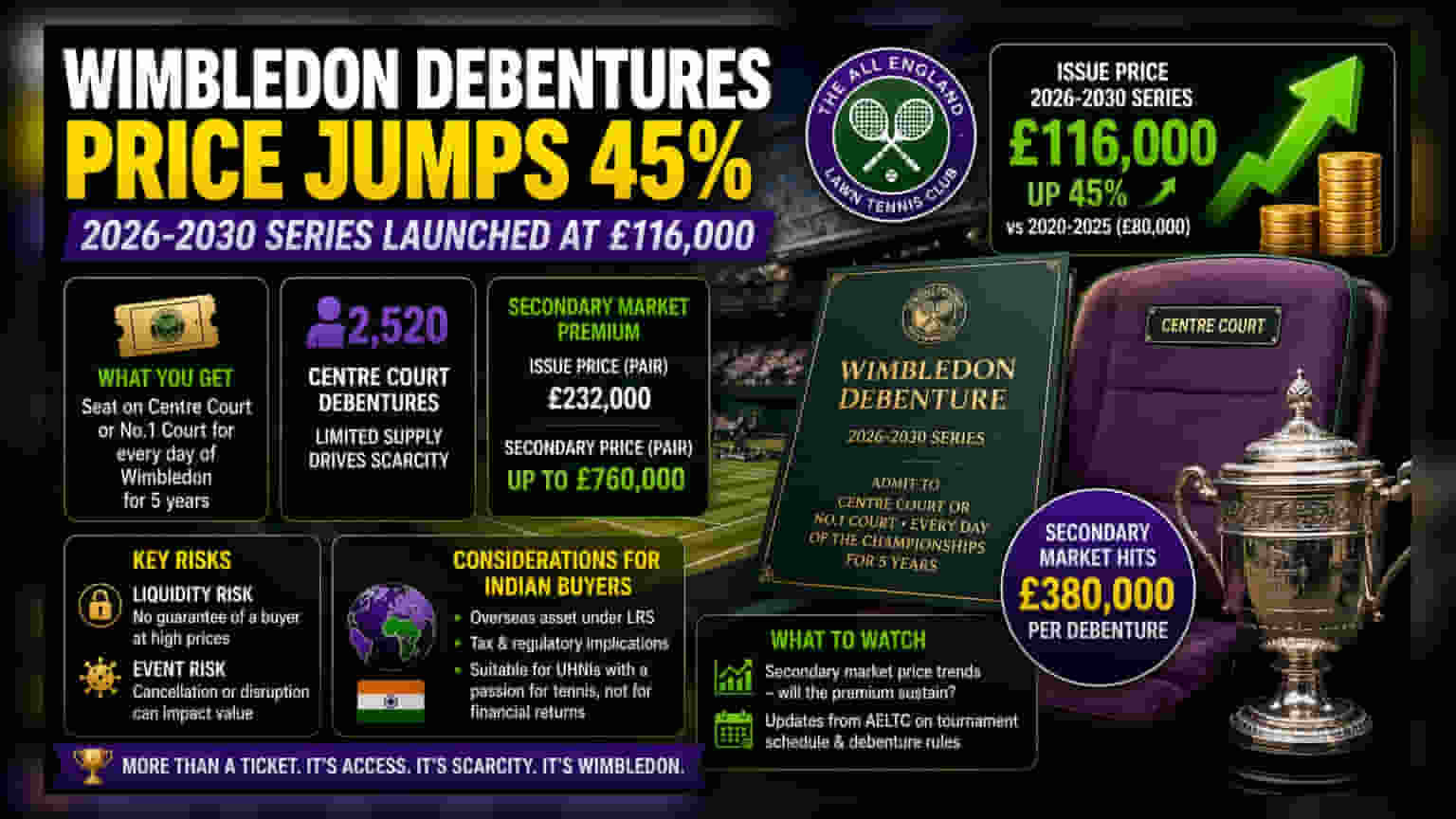
The 2026-2030 Wimbledon debentures have launched at £116,000, marking a 45% increase from the previous series due to high global demand. While these assets offer exclusive, transferable seating, prices in the secondary market have reached as high as £380,000. Investors should carefully consider risks like low liquidity, high capital outlay, and potential event cancellations before viewing these as financial assets.
What Happened
The All England Lawn Tennis Club has released its 2026-2030 series of Wimbledon debentures, pricing them at £116,000 each. This represents a 45% increase compared to the £80,000 issue price for the 2020-2025 series. These debentures, which provide holders with a seat on Centre Court or No. 1 Court for the duration of the five-year series, are currently seeing significant activity in the secondary market, with some trades reported as high as £380,000 per debenture.
Why These Assets Are Unique
Unlike standard event tickets, Wimbledon debentures are financial instruments that grant the holder the right to a seat for every day of the tournament over five years. Crucially, they are the only transferable tickets at Wimbledon, meaning they can be sold to third parties. This transferability, combined with a limited supply of 2,520 Centre Court debentures, creates a niche market driven by scarcity rather than traditional financial yields.
The Secondary Market Dynamics
The gap between the official issue price and secondary market valuations highlights intense demand. While the official cost for a pair of debentures is £232,000, secondary market prices have climbed significantly above this level. This price appreciation reflects a global appetite for premium sporting access, with interest noted from regions including India, Dubai, and across Europe.
Risks For Potential Investors
Investors must distinguish these from traditional investments like stocks or bonds. A primary risk is liquidity; finding a buyer in the secondary market at high prices is not guaranteed. If demand cools, the resale value could drop, potentially leading to losses.
Another significant risk is the event itself. As seen during the Covid-19 pandemic, the cancellation or disruption of the tournament directly impacts the value of the debenture. Because these instruments rely entirely on the occurrence of the event, any regulatory or health-related disruption introduces a binary risk that holders cannot hedge against.
Considerations For Indian Buyers
For Indian investors, these debentures fall under the category of overseas assets. While the Liberalised Remittance Scheme (LRS) allows Indian residents to remit funds abroad for various purposes, individuals considering such high-value, niche acquisitions should understand the tax and regulatory implications of holding foreign assets. Financial experts generally categorize these as products suitable only for ultra-high net worth individuals (UHNIs) who have a specific personal interest in tennis, rather than those seeking a standard financial return.
What To Watch Next
Potential buyers and observers should track the secondary market pricing trends to see if the current valuation premium remains sustainable. Furthermore, any official statements from the All England Lawn Tennis Club regarding future tournament scheduling or potential changes to debenture rules will remain the most critical monitorable for current and prospective holders.