

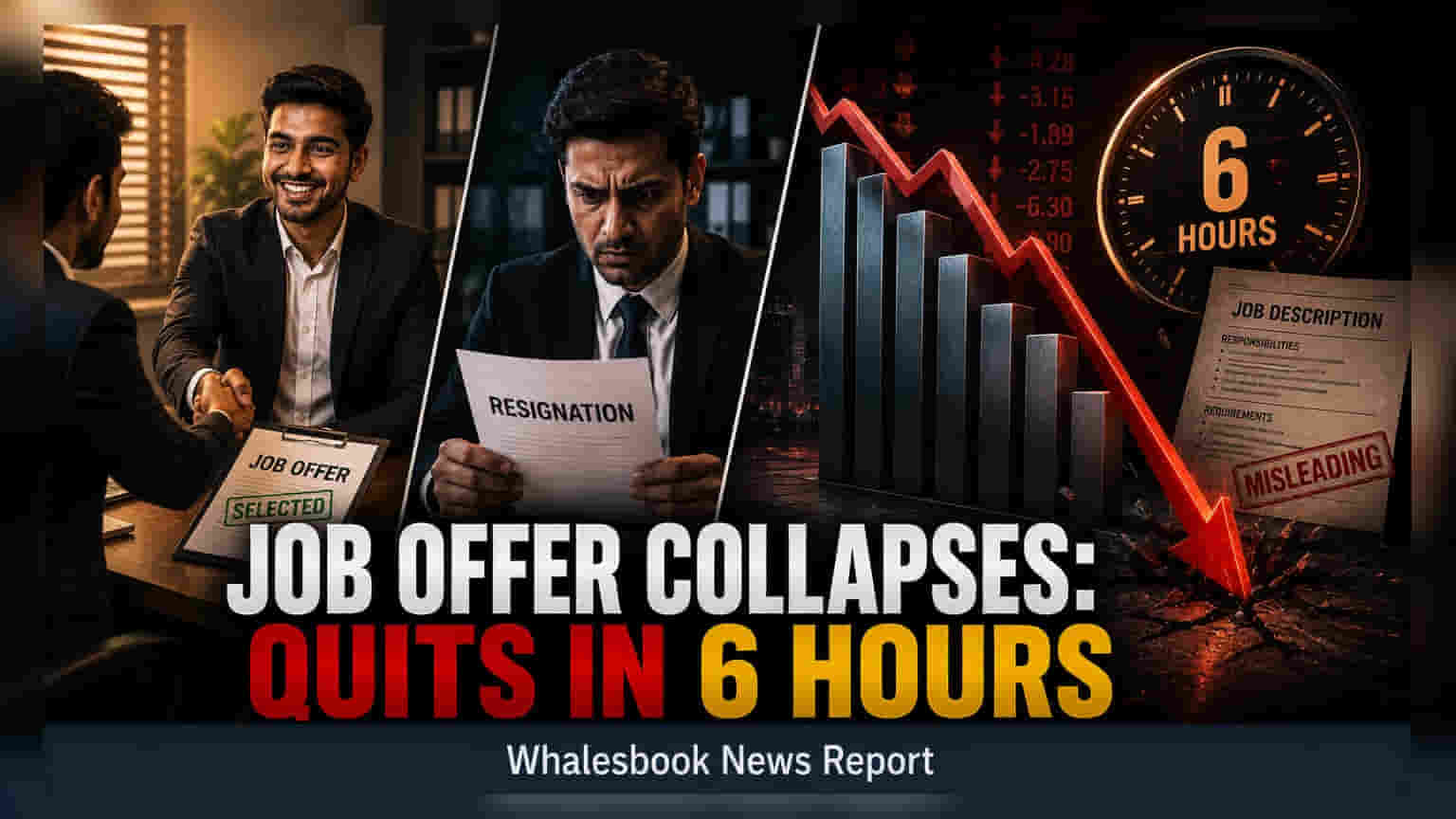
Recent social media trends about employees resigning shortly after joining highlight a broader challenge for Indian companies: the rising cost of recruitment and training. For investors, high early-stage attrition can signal inefficiencies in HR processes, potentially impacting operational expenses and profit margins over time.
Recent viral anecdotes regarding employees resigning within hours of starting have sparked debates on hiring transparency and corporate culture. While these stories often circulate as isolated experiences on social media, they point to a significant operational challenge that investors and analysts frequently monitor: the efficiency of human capital management in India's competitive corporate sector.
The Cost of Recruitment Misalignment
For any business, the hiring process is a significant investment. When a new hire leaves almost immediately, the company incurs sunk costs that include recruitment agency fees, interview time, administrative onboarding, and initial training. In sectors like IT, services, and fast-moving retail, these expenses can accumulate rapidly. When companies fail to align job expectations with reality, it does not just lead to higher turnover; it creates a direct drag on operational efficiency.
Investors typically view rising attrition rates as a yellow flag. High turnover often necessitates increased spending on recruitment to backfill roles, which can pressure EBITDA margins. Furthermore, frequent hiring churn requires management to spend disproportionate time on HR issues rather than strategic growth, which can impact productivity.
Monitoring HR Efficiency
Publicly listed companies in India are increasingly transparent about their workforce metrics in annual reports and investor presentations. When analyzing companies, especially in service-heavy sectors, it is useful to look beyond just top-line revenue growth. Metrics such as the employee benefit expense as a percentage of total revenue and reported attrition rates offer insights into how well a company manages its workforce.
Management commentary during quarterly earnings calls often addresses hiring trends, particularly regarding how companies are managing talent in a competitive market. A sudden spike in employee costs or a decline in employee productivity can sometimes be early indicators of underlying structural or management issues.
What Investors Should Track
While viral stories about workplace experiences serve as a reminder of the importance of corporate culture, investors should rely on data rather than individual anecdotes. The primary monitorable is the trend in recruitment and employee-related costs relative to revenue growth.
Additionally, investors may look for stability in key management and leadership positions, as high turnover at senior levels often signals deeper governance or strategic alignment issues. Ultimately, a company that maintains a stable, productive workforce is better positioned to control costs and execute on long-term business goals compared to one struggling with high churn and recurring hiring cycles.