 Whalesbook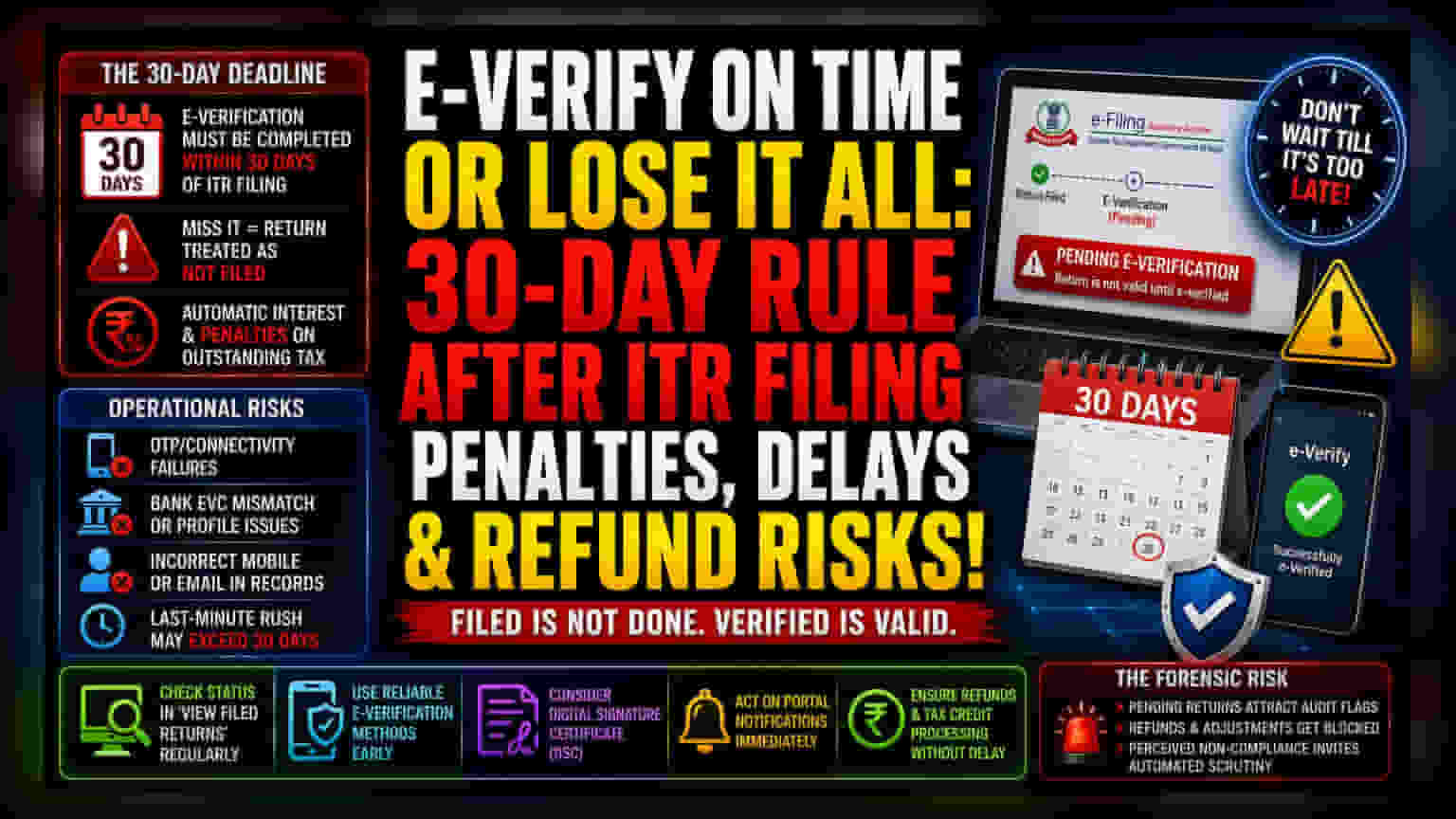


The Validity Threshold
Administrative compliance often hinges on finality. For the current assessment cycle, the submission of tax data serves only as a preliminary stage. The actual legal acceptance of the filing is contingent upon the secondary step of e-verification. By establishing a rigid 30-day window following the initial upload, tax authorities have effectively automated the penalty process for those who treat filing as a final act. When this window lapses, the submission is categorized as non-existent, stripping the taxpayer of the protections associated with timely filing and triggering automatic interest penalties on any outstanding tax liability.
Operational Risks and Systemic Latency
The shift toward digital-only authentication has removed the safety net of physical ITR-V mailings to the Centralized Processing Centre. While this eliminates transit-related disputes, it creates a high-dependency model on portal stability and mobile authentication infrastructure. Taxpayers relying on Aadhaar-linked OTPs or bank-based EVCs must account for intermittent connectivity issues or data mismatches between banking profiles and tax records. Even minor discrepancies in registered mobile numbers or email addresses can result in an inability to complete the process within the statutory timeline. Consequently, those waiting until the final days of the filing season risk a bottleneck that may extend beyond the 30-day verification grace period.
The Forensic Risk of Inaction
Beyond the immediate threat of late fees, unverified returns invite deeper institutional scrutiny. When a return remains in a 'Pending' state, the system flags the file as incomplete, preventing the initiation of refund disbursements or the adjustment of taxes paid against future liabilities. From a risk-mitigation perspective, the inability to verify often signals poor record-keeping or identity discrepancies, which can elevate a taxpayer's profile for automated audits. By treating e-verification as a secondary concern, taxpayers essentially grant the authorities leverage to delay administrative cycles or initiate automated compliance reviews that would otherwise be avoided by a finalized, verified return.
Managing the Compliance Lifecycle
Proactive management requires more than just submitting data. Taxpayers should treat the verification notification as a mandatory task that is inseparable from the filing process. Utilizing the portal’s 'View Filed Returns' interface allows for a real-time audit of status codes, ensuring that the transition from 'Pending' to 'Successfully e-Verified' is captured before the statutory deadline. Reliance on secondary authentication methods, such as Digital Signature Certificates, is advisable for high-net-worth individuals or frequent filers to bypass the fragility of mobile-based OTP systems, thereby ensuring that the regulatory burden is satisfied well ahead of the exhaustion of the 30-day window.