

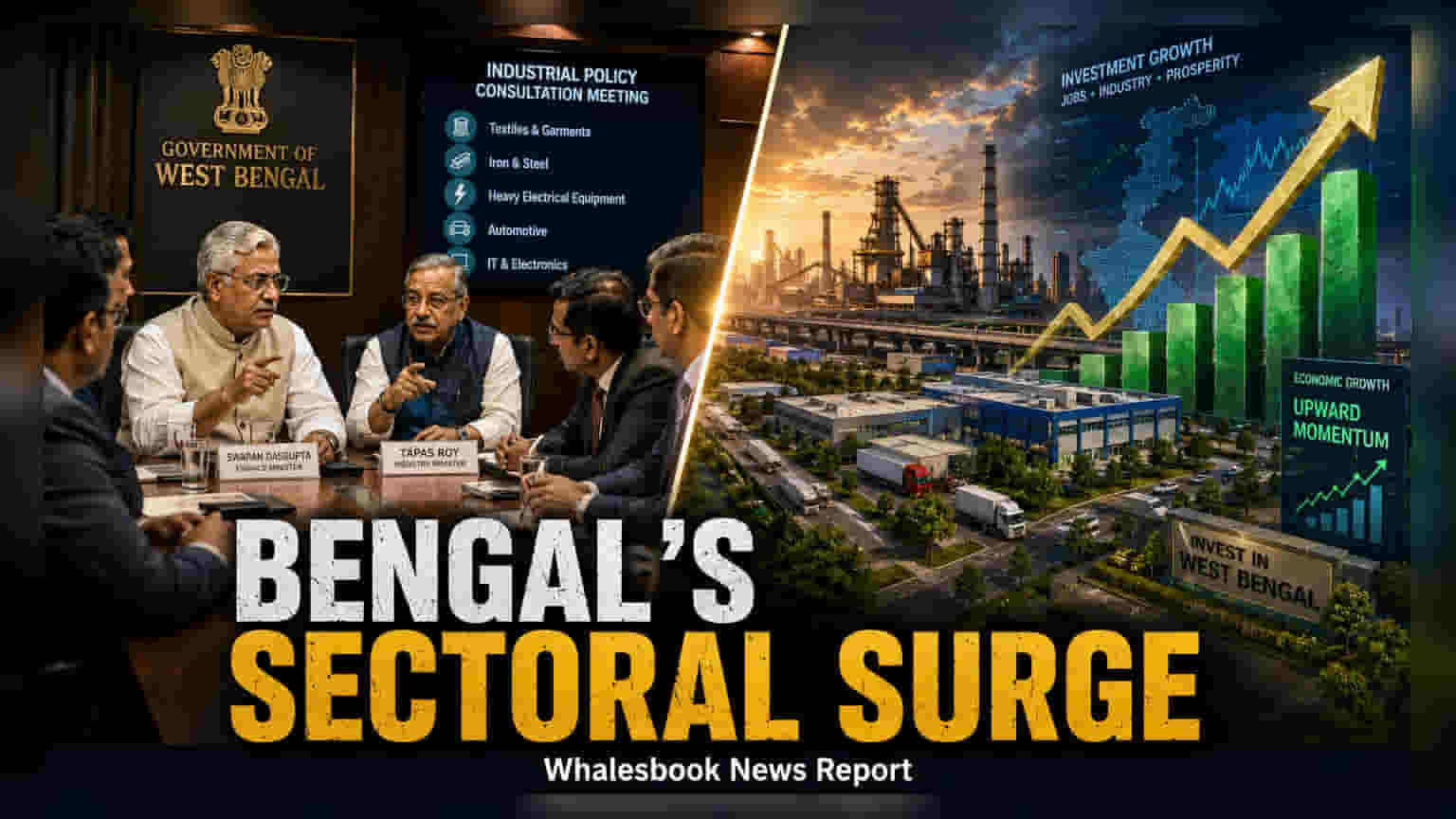
West Bengal government officials held a key consultation on August 11, 2026, to draft a new industrial policy that moves toward a sector-specific approach. The plan targets growth in areas like textiles, steel, and electronics. Investors and businesses are watching how the state will address long-standing challenges, including land acquisition and fiscal management, to improve the investment climate.
The West Bengal government is preparing a new industrial policy that prioritizes a sector-specific strategy to boost investment and economic growth. On August 11, 2026, state ministers and senior officials met with industry leaders and chambers of commerce to finalize key elements of the proposed framework. The government aims to move away from a one-size-fits-all model, instead creating tailored support for industries with significant potential in the region.
Strategic Focus on Key Sectors
During the consultation, officials identified priority sectors that could act as growth drivers for the state. These include textiles and garments, iron and steel, heavy electrical equipment, the automotive industry, and the IT and electronics sector. The goal is to develop specialized industrial clusters where companies can benefit from shared infrastructure, skilled labor, and better market connectivity. By focusing on these specific areas, the state aims to attract new investments and support the growth of existing ancillary units that rely on these core industries.
Addressing Land and Approval Challenges
A central theme of the discussions was the need to simplify the process of setting up new businesses. Representatives from industry bodies recommended streamlining project approvals through a more effective single-window mechanism. A significant portion of the dialogue focused on land, which has historically been a complex issue for industrial projects in the state. To facilitate new investments, the government is exploring the creation of a land bank, including plans to unlock unused land owned by public sector undertakings. This is seen as a critical step toward providing investors with ready-to-use sites and reducing project delays.
Fiscal and Operational Context
While the industry stakeholders expressed optimism about the collaborative approach, investors often monitor several long-standing risks when evaluating the state's industrial landscape. West Bengal faces fiscal pressure, with a high debt-to-GSDP ratio, which may limit the scale of financial incentives the state can offer compared to other regions. Additionally, past difficulties regarding land acquisition and the need for consistent policy implementation remain key monitorables for potential investors. The state’s ability to ensure transparent and reliable regulatory processes will be vital for sustaining long-term business confidence.
There are also broader efforts to revitalize the state’s financial infrastructure, though plans to revive the Calcutta Stock Exchange still face significant regulatory hurdles, including the need for SEBI approval and governance improvements. The final version of the industrial policy is expected to be unveiled later this year. Investors and businesses will watch for the official draft to understand the specific incentives, the timeline for the land bank, and the practical steps the state will take to improve the ease of doing business.