

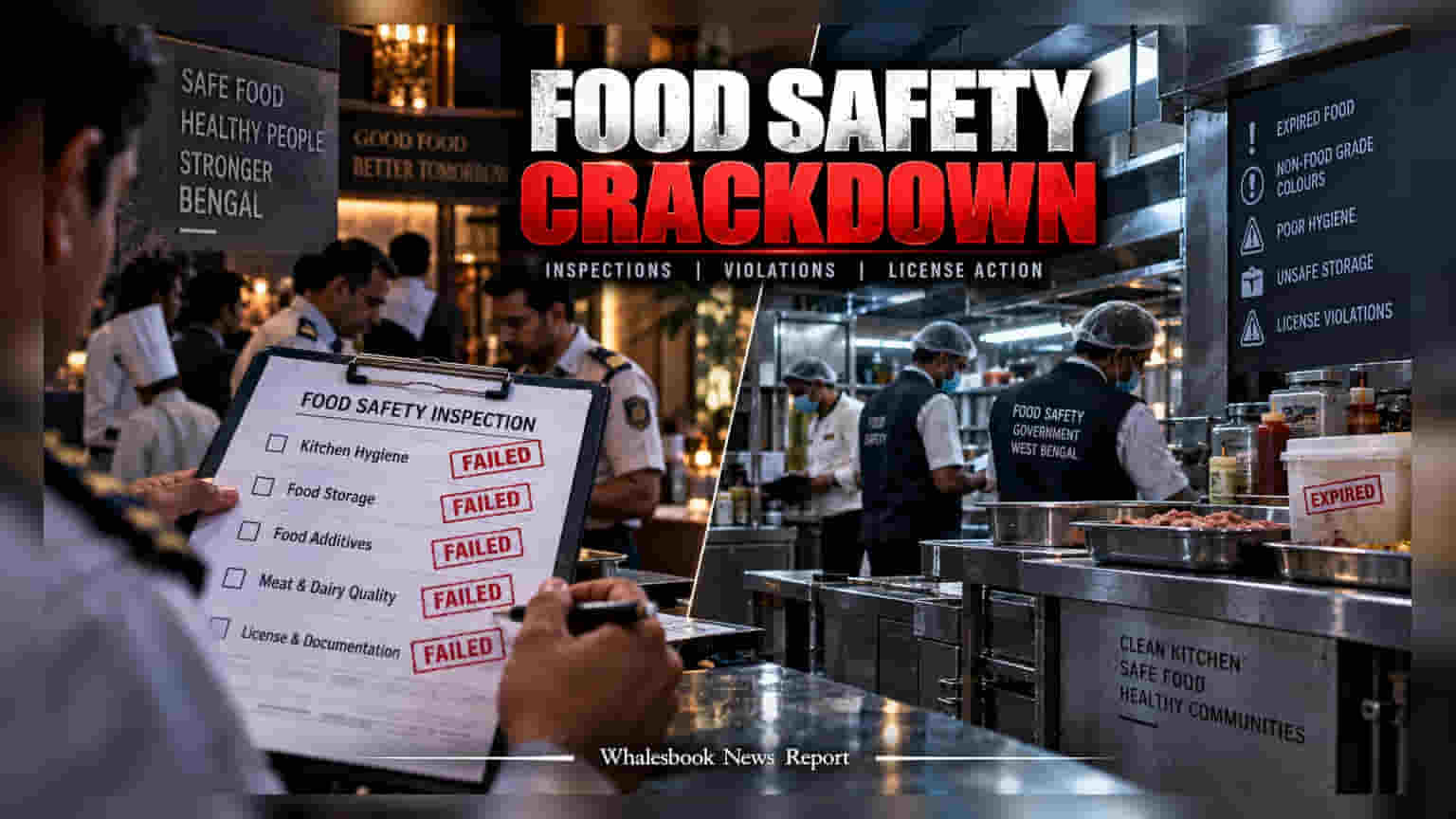
West Bengal’s 'Food Safety Week' campaign has inspected over 1,730 eateries, uncovering irregularities in nearly 88% of them. The regulatory crackdown, resulting in license suspensions and premise closures, creates operational and reputational risks for the hospitality sector. Investors should monitor how these stricter compliance requirements impact short-term profit margins and footfall, particularly with the festive season approaching.
The West Bengal government has escalated its food safety enforcement, conducting over 1,730 inspections between September 1 and September 7, 2026, as part of its 'Food Safety Week' campaign. The state-wide drive, which spans from high-end dining establishments in Kolkata to local vendors in districts like Jalpaiguri, has revealed significant operational failures. Official data indicates that irregularities, including the use of non-food-grade coloring agents, poor kitchen hygiene, and the presence of expired or unhygienic meat and dairy, were detected in approximately 1,525 establishments, representing a violation rate of nearly 88%.
Impact on Hospitality Operations
The enforcement action has moved beyond simple warnings, with authorities executing temporary license cancellations and sealing multiple food processing and dining premises. For restaurant operators, this represents a sudden and acute operational risk. Businesses affected by these closures must now manage the immediate loss of revenue during the shutdown period, the disposal of contaminated inventory, and the additional costs associated with deep cleaning, staff training, and necessary infrastructure upgrades to meet the heightened safety standards mandated by regulators.
Financial and Strategic Risks
Beyond the immediate operational disruption, the hospitality sector faces the risk of sustained negative publicity, which can impact consumer footfall during the critical upcoming festive season. This period is historically vital for the industry, and any perceived reduction in food quality standards can have a direct impact on revenue. Furthermore, the state government has signaled that this is not a one-off inspection but a persistent shift in strategy. For investors, this implies a long-term increase in compliance costs. Companies across the sector may need to allocate more capital toward maintenance, quality control systems, and regulatory audits to avoid future disruptions, which could put pressure on operating margins in the coming quarters.
The regulatory environment is clearly tightening, with the FSSAI also taking separate action against non-compliant entities in the food processing space. While this drive aims to improve public health, it creates a challenging environment for operators who may have relied on lax historical enforcement. The ultimate financial impact on any specific company will depend on its existing hygiene standards, the cost of bringing operations into full compliance, and its ability to maintain consumer trust amidst the heightened scrutiny. Investors may track future announcements from the state administration regarding inspection results and any follow-up policy changes that could further dictate the cost of doing business in the region.