

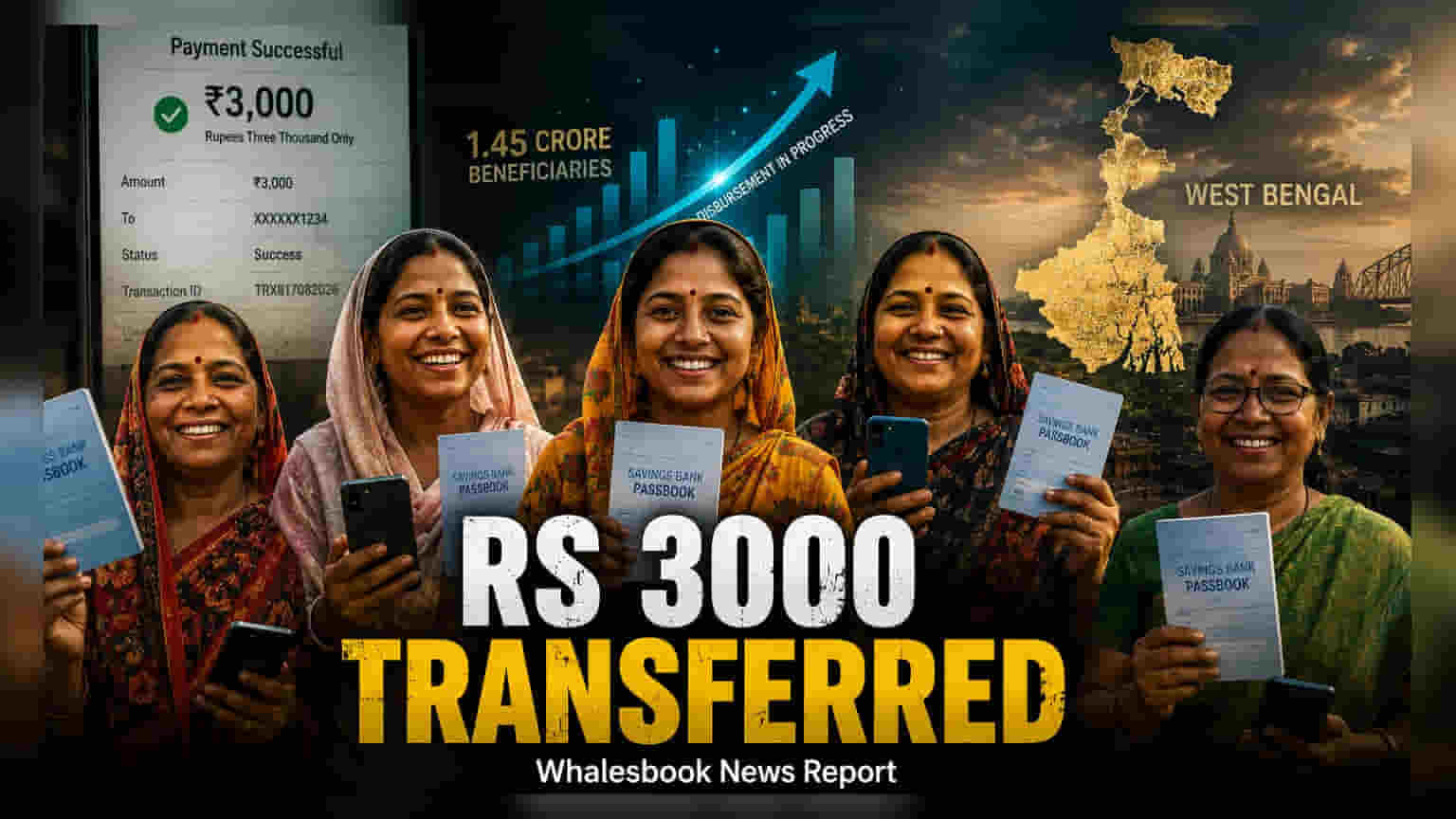
The West Bengal government is disbursing a monthly ₹3,000 installment to 1.45 crore eligible women under the Annapurna Yojana. Payments began on August 17 and are scheduled to conclude by August 20. With an annual budget of ₹48,000 crore, this welfare program replaces the former Lakshmir Bhandar scheme.
The West Bengal government is currently in the process of transferring funds to eligible beneficiaries under the Annapurna Yojana. This initiative, which provides a monthly assistance of ₹3,000, is a major social welfare program for the state. The current disbursement cycle, representing the third monthly installment, started on August 17, 2026, and is expected to be completed by August 20, 2026.
The scale of this program is significant, with approximately 1.45 crore women currently identified as beneficiaries for this phase. To support this level of coverage and accommodate a high volume of applications totaling around 2.16 crore, the state government has set an annual budget allocation of ₹48,000 crore. This scheme serves as the successor to the previous Lakshmir Bhandar program.
Payment Process and Monitoring
Beneficiaries should note that payments are being processed electronically through direct bank transfers. Because the disbursement occurs in batches, it is common for some recipients to receive their funds earlier than others within the designated window. Government authorities have advised that those who have not received the ₹3,000 payment by the end of the day on August 20 should wait for the process to conclude before raising concerns.
If the funds remain uncredited after this date, individuals are encouraged to visit the official state government social registry portal to verify their application status. This platform serves as the primary channel for grievance redressal and updates on eligibility status. The government expects to open facilities for re-application or correction of details after the current payment cycle finishes.
Fiscal and Operational Risks
For citizens tracking the implementation of this scheme, there are a few practical challenges that can lead to payment delays. The most common technical hurdle involves discrepancies between Aadhaar records and bank account details, which can prevent the successful transfer of funds. Furthermore, the program operates under strict eligibility verification criteria. Applicants must meet specific requirements regarding income levels, employment status, and land ownership. Those who do not satisfy these conditions may find their applications rejected or placed on hold.
Another important monitorable for beneficiaries is the rise of unofficial portals and websites. Users should be cautious of non-government platforms claiming to offer status checks or direct application services, as these pose a risk of data compromise. All official transactions and status inquiries should be conducted exclusively through verified government channels to ensure security and accuracy.