 Whalesbook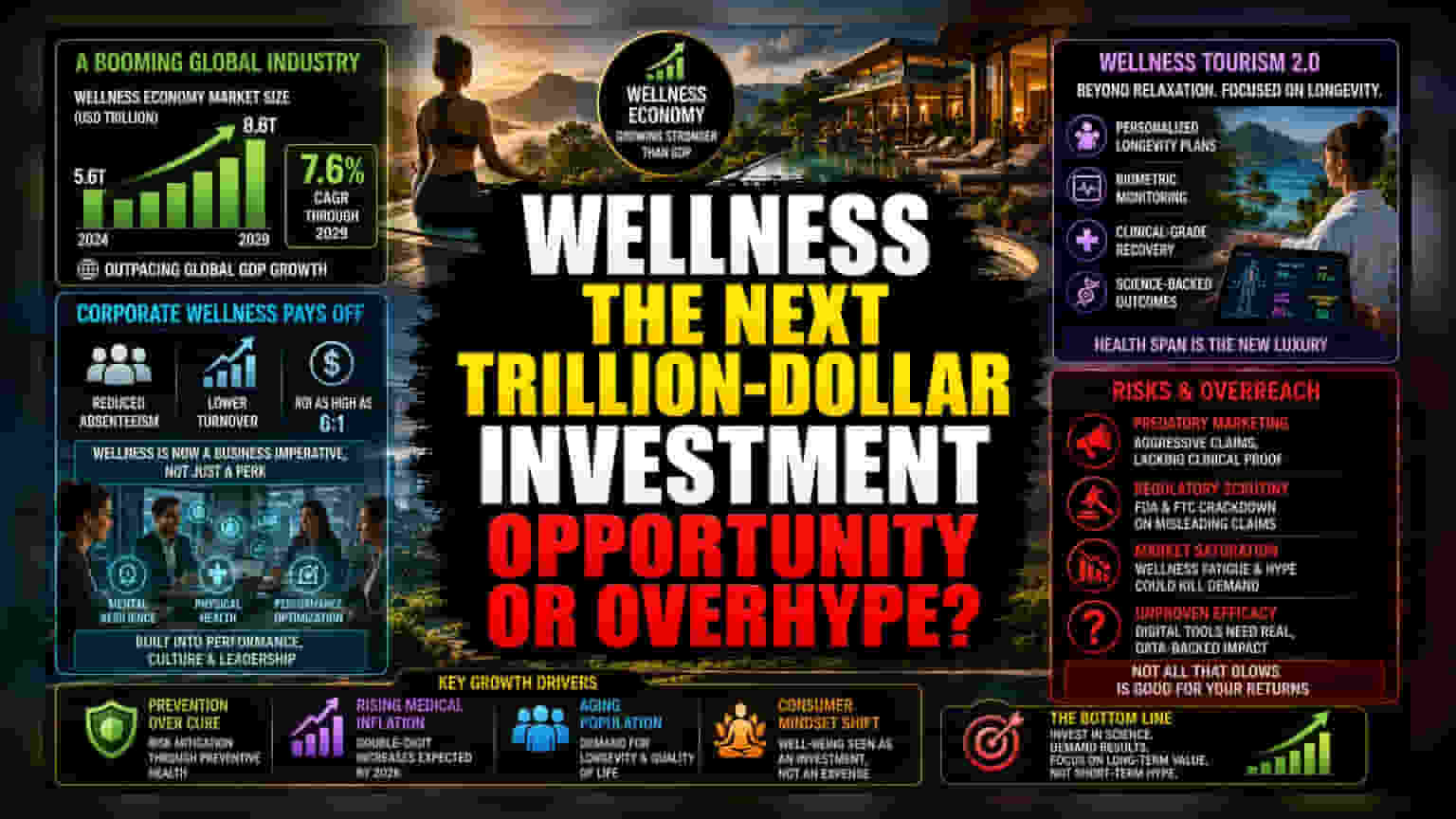


The Capitalization of Well-Being
The global wellness economy is undergoing a structural transformation. No longer confined to the periphery of consumer discretionary spending, health and longevity protocols are being reclassified as core capital investments. This shift is substantiated by macroeconomic data, with the industry projected to expand at an annual rate of 7.6% through 2029, consistently outpacing global GDP growth. Consumers are increasingly viewing preventive health as a mechanism for risk mitigation—a way to safeguard long-term productivity and avoid the ballooning costs of acute medical intervention.
The Institutional Integration
The most aggressive expansion is occurring within corporate infrastructure. Leading organizations are pivoting away from legacy, tick-the-box wellness perks toward systemic integration. By embedding mental and physical resilience into operational models—performance management, workspace design, and leadership training—firms are targeting a measurable return on investment. Research indicates that successful programs can yield returns as high as six-to-one, primarily through the reduction of absenteeism and turnover. As medical inflation continues to rise globally, expected to reach double-digits in many markets by 2026, C-suite executives are treating these wellness initiatives as essential balance-sheet protection rather than peripheral HR expenses.
Wellness Tourism: Beyond the Spa
The hospitality sector is capitalizing on this transition, abandoning the traditional "relaxation-only" model. The wellness tourism market, now scaling rapidly, is shifting toward evidence-led longevity infrastructure. Resorts are re-engineering their value propositions, offering hyper-personalized itineraries that leverage real-time biometric data and clinical-grade recovery protocols. Travelers are increasingly prioritizing destinations that promise tangible health span improvements, effectively treating these expenditures as functional investments in their own biological longevity rather than mere leisure.
The Forensic Bear Case: Risks and Overreach
Despite the bullish projections, the industry faces significant structural headwinds. The rapid commercialization of "longevity" and "wellness" has created a fragmented market prone to predatory marketing and regulatory scrutiny. Aggressive health claims—often lacking clinical validation—invite intervention from bodies like the FDA and FTC, which may impede scalability for newer, niche players. Furthermore, there is a looming threat of market saturation and "wellness fatigue." Critics point out that while corporate spending is rising, the actual efficacy of many digitized wellness tools remains unproven. If programs fail to provide a demonstrable, data-backed impact on employee health or long-term consumer outcomes, the sector risks a sharp contraction, leaving only the firms with the most robust, science-backed infrastructure to survive. Investors must distinguish between brands offering measurable, longitudinal value and those merely capitalizing on a transient cultural trend.